Reading Solidarity and Aesthetics in the Al-Zaytun Community Service Unit (UPK PKBM) Exam Room
INDRAMAYU-JAYANEWS.COM – The air in Sandrem Mekarjaya Gantar that afternoon, Saturday (May 16, 2026), was starting to feel like it was burning, but the sun’s heat couldn’t dampen the smiles and sweat of the students studying Equivalency Education. For them, age and limitations were no barrier to continuing to absorb useful knowledge. After a rather energy-sapping group exercise in the Bazaar courtyard, the open space suddenly erupted with laughter as an icebreaker session began to lighten the mood ahead of the exam.
As an Arts and Culture tutor, I tried to get the students to form a circle while waiting for some of their classmates who were still collecting their bags in the classroom. A microphone randomly changed hands as I deliberately stopped the song. This tactic of stopping the song sporadically: sometimes to the right, then to the left, then diving forward, successfully created a very lively atmosphere.
The students, surprised by the sudden need to state their names, quickly burst into laughter, until the tension leading up to the practical Equivalency Education Exam (UPK) completely dissolved.
After all the students had gathered and declared their readiness with the shout “Ready, Ustadzah!”, a touching moment suddenly changed the original plan for the exam venue.
I had originally planned the exam stage to be in the cool, shady, open air. However, seeing them already carrying their bags and equipment, one student suggested moving the exam indoors. The reason behind this was heartbreaking: Mrs. Karyani, one of their colleagues, had been feeling unwell since leaving home but insisted on attending out of her responsibility as a good student.
Upon hearing this suggestion, feelings of admiration and emotion immediately surged forth due to the strong sense of solidarity and togetherness displayed by the other students. They were willing to forgo the comfort of the cool, open air exam to ensure their sick friend wouldn’t have to struggle up and down the stairs.
After everyone agreed and moved into the classroom, I reiterated the technical aspects of the exam so that Ms. Karyani, who had been staying in the classroom, would also have a shared understanding. I reiterated that this Arts and Culture practice encompassed four aesthetic pillars: vocal art through regional songs, Indonesian dance, visual art through free creativity using recycled materials or specific batik techniques, and literary writing through poetry and storytelling.
The classroom atmosphere immediately transformed into a progressive talent showcase as everyone began unpacking the tools and materials they had carefully prepared from home.
At precisely 10:00 a.m. WIB, the Class A practical exam officially began, opening with a stunning performance by Ms. Karyani. Despite her physical weakness and inability to stand for long, she charged to the front of the class with a burning passion and recite verse after verse of the poem she had prepared with great feeling. This was followed by Ms. Parinten, the most senior student in the class, who defied all stereotypes about aging with a confident and expressive rendition of the East Javanese folk song “Perahu Layar” (Sailing Boat).
The classroom atmosphere became even more lively when Ana, the class president, took the stage with a rendition of the popular Sundanese song “Domba Kuring” (Domba Kuring) accompanied by karaoke music. Ana sang with great confidence, delivering a free and soulful vocal style that sparked the rhythmic flexibility of the other students, who spontaneously asked permission to join in the dance. The collective joy continued with the subsequent performance by the Nusantara dance group, whose synchronized and captivating performance overcame their own doubts, as they admitted to forgetting some moves midway due to limited time for group practice.
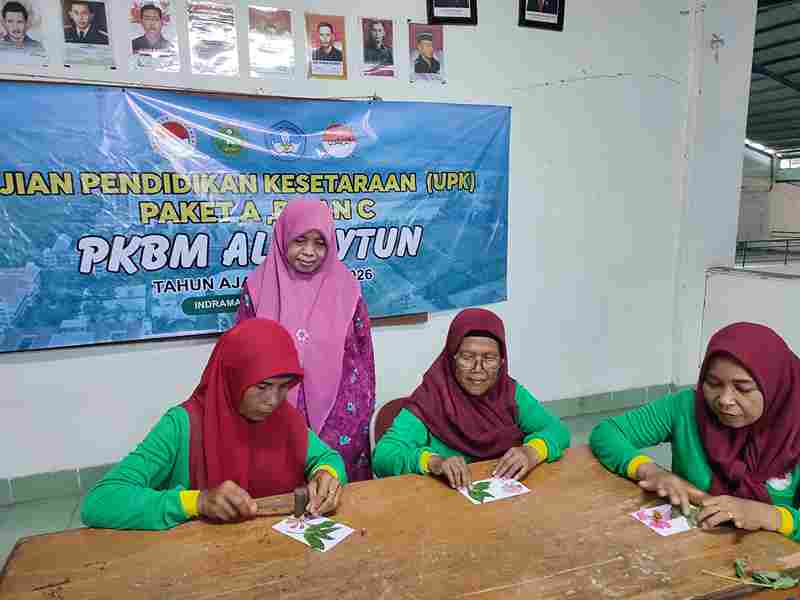
In the visual arts dimension, the students’ creativity truly exceeded my expectations as a tutor, as they were able to apply the principles of upcycling, or aesthetically enhancing the quality of used materials. Ms. Sunarti, for example, successfully transformed waste Hamayim mineral water bottles into beautiful flower petal arrangements after being shaped and painted bright red. Equally captivating, the classroom tables were also decorated with floral creations made from straws and tissue paper, as well as envelopes with natural leaf motifs using the elegant and artistic ecoprint batik technique.
The sincerity, material preparedness, and emotional maturity demonstrated by all Class A2 students in completing this practical exam deserve the highest appreciation.
From that moment on, the academic evaluation process no longer felt rigid, but instead transformed into a warm, humane space where everyone supported each other, celebrated talents, and learned without age boundaries.
Alhamdulillah, a sweet and blessed testament to success from Ujung Gantar for PKBM Al-Zaytun.**
Reporter: Sri Wahyuni, S.Pd (PKBM Al Zaytun Tutor)
——