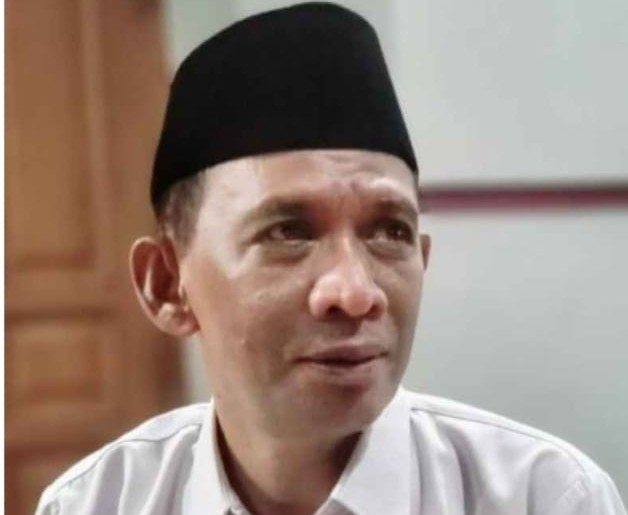
Political Analyst, General Secretary of the Indonesian Ulema Council (MUI) for Indramayu Regency
Political analysts who closely follow the dynamics of the Golkar Party which has now reached its 62nd year have almost certainly read, or at least heard of, the book Pembentukan dan Konsolidasi Orde Baru (1966–1974) (“The Formation and Consolidation of the New Order”) by Francis Raillon (LP3ES, 1985), as well as The Golkar Way by Akbar Tandjung, the former Chairman of the Golkar Party during the early Reform Era.
Based on these two works along with numerous other texts examining the Golkar Party from various angles and perspectives one could argue that Golkar pioneered the “modern party” model, at least according to two key indicators used to assess modern public institutions.
First, a hallmark of Golkar’s modernity is its orientation toward kekaryaan (a focus on “functional” or “developmental” work). This marked a departure from politik aliran, a political tendency rooted in shared religious or social group identities, famously categorized by Clifford Geertz into three social groups: Santri, Abangan, and Priayi.
Second, by synthesizing these three politik aliran categories into the framework of kekaryaan, the Golkar Party became a “melting pot” a convergence point for social diversity encompassing various religions, ethnicities, and professions. Its ranks have included everyone from generals to critical, activist intellectuals, and from technocrats to tenant farmers.
This constitutes the “modernity” of the Golkar Party. Because it is anchored in social diversity and oriented toward kekaryaan, the party has managed to navigate between the “tradition” of New Order-era functionalism and the demands of the Reform Era an adaptation that was both inevitable and, in political terms, an unavoidable reality.
In the specific context of Indramayu a region I have observed at very close range for decades the question arises: how will the Golkar Party adapt its electoral role and its influence over government technocracy as we look toward the 2029 general election?
Observations by H. Taufiq Hidayat, Acting Chairman According to the Indramayu branch of the Golkar Party (as cited in *Radar Indramayu*, October 21, 2026), the party’s projection for the 2029 general election aiming to add at least one seat per electoral district for a total of 20 seats in the Regional House of Representatives (DPRD) can be described as a target rooted in “pragmatic realism.”
This means the target is rational and measurable, given the party’s existing social base and its political approach characterized by “pragmatic realism”whereby Golkar demonstrates a knack for aligning public aspirations with technocratic efforts in the design and articulation of public policy.
In the author’s view, while this target is rational and measurable, it may be too “minimalist” for the Indramayu Golkar Party’s 2029 election projections. Furthermore, it is crucial for the party to prepare itself to seize opportunities for political power in the 2030 regional head elections (pilkada).
The Indramayu Golkar Party possesses the necessary prerequisites including key political variables and social capital to develop a roadmap for achieving both of these electoral objectives. Moreover, Golkar faces no “resistance” to forming coalitions or political partnerships with any other political party.
The remaining “homework” or, in other words, the challenges that the Indramayu Golkar Party must address articulately as it prepares for these two political contests (the 2029 legislative election and the 2030 regional head elections) includes the following:
First, to borrow a term from Jefry Wonters, the Golkar Party must sharpen its “political differentiation” establishing a distinct political identity that sets it apart from other parties, particularly Gerindra and Nasdem, both of which emerged from the Golkar fold and share overlapping electoral bases.
Second, the party must engage more seriously with the voting behavior of “Generation Z” (Gen Z) in Indonesia accounting for 25.98%. Of this group, 70% are first-time voters individuals who not only lack any personal experience of the “New Order” era’s heyday but were also born directly into the embrace of the digital world, inhabiting a social ecosystem entirely distinct from that of the preceding generations.
Third, the Indramayu branch of the Golkar Party must at the very least, quietly begin preparing a list of potential regent candidates as part of its political branding strategy. This is crucial because a candidate’s actual capability and integrity could easily be overshadowed if they lose the “virality” race to rivals who, in terms of substance and character, fall well below the necessary standards.
This is the responsibility of the Indramayu Golkar Party: it is not merely about attaining power, but about guiding the social transformation of the community within the ethical framework of the “collective psyche” unique to Indramayu, a spirit that cannot simply be “tricked” by manipulative, image-driven politics. The cost in terms of damage to the “inner life” of the Indramayu public would be far too high.
Happy 62nd Anniversary to the Golkar Party (in 2026). May you continue to reach for the skies while remaining firmly rooted in the earth.
Best regards.
Indramayu, Oktober 25, 2026
——-