*Budgets Rise, Quality Declines; Who Are We Fooling?*
By:
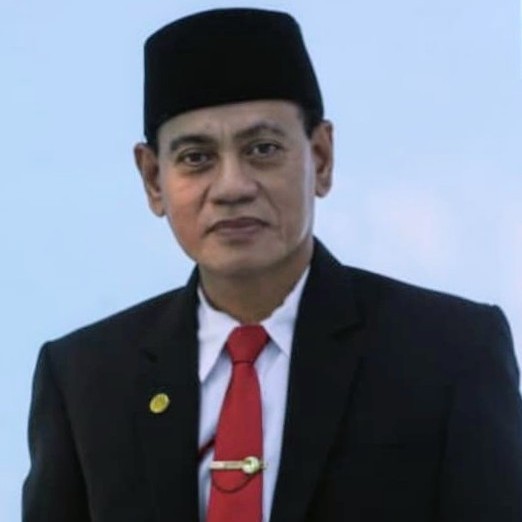
*Masduki Duryat)**
Let’s cut the fluff: we’re living in a grand illusion called “educational progress.”
Budgets rise, teachers increase, programs multiply—but quality? Stagnates. Worse yet, we know this is happening, but we choose to remain silent.
The question is simple and yet shocking: who are we really fooling—the public, the state, or ourselves?
*Data Never Lies, We Often Avoid It*
The education budget has soared from IDR 444 trillion (2018) to IDR 769.09 trillion (2026). The number of teachers has reached 3.47 million, with an ideal student-teacher ratio.
However, other facts speak more truthfully: First, only <30% of teachers pass the UKG standard; Second, the average score of long-serving teachers has stagnated below 70; Third, 70% of school principals are incompetent; Fourth, the Programme for International Student Assessment (PISA) results show stagnant literacy and numeracy; Fifth, the World Bank records that 55% of 15-year-olds experience learning poverty. Compare that to Vietnam: below 10%.
So where does the problem lie? The answer is uncomfortable: it lies with the people within the system—not just the system itself.
*It Was Wrong From the Start: Teaching Is No Longer an Elite Profession*
We must be bold in saying this: the teaching profession in Indonesia has failed to attract the best talent. Old data from the National Education Ministry’s Research and Development Agency (Kusnandar, 2007) shows that prospective teachers’ scores have been below standard from the start.
This creates a vicious cycle: First, weak input; Second, mediocre processes; Third, low output; Fourth, a return to weak input. And we call this the “national education system.”
*Certification: Legitimacy Without Quality*
The state pays a high price for teacher certification. But what happens: Allowances are paid, status increases, performance? No significant changes, not directly proportional to performance.
Certification has become a ritual to legitimize welfare, not a tool for improving quality.
In this context, Mulan Jameela’s statement, which went viral on social media, does seem harsh—teachers shouldn’t just demand high salaries without quality. But if we’re honest with the data, this criticism doesn’t arise from a vacuum.
*Classroom: Where Truth Can’t Be Hidden*
All rhetoric falls apart when we enter the classroom. That’s where reality speaks: Teachers are present, but not teaching. Students are present, but not learning. Time passes, but there is no process.
The classroom has become an administrative space, not an intellectual space. In its simplest terms, education happens—or fails—in the classroom. This means that if we want to assess the quality of education nationally, we must examine the learning process in the classroom. Is it of high quality or not? The classroom is the ‘showcase’ of national education.
*Principals: A Rarely Addressed Problem*
We too often blame teachers, but forget one thing: who supervises them?
When 70% of principals are incompetent: First, there is no meaningful supervision; Second, there is no pressure to change; and Third, there is no culture of quality.
Schools operate without leadership, and without leadership, the system becomes nothing more than an empty routine.
*Indramayu: When National Problems Become Real*
In areas like Indramayu, this problem is no longer abstract: The placement of teachers and principals is still fraught with vested interests. Student literacy is low, and learning is still rote. Teachers lack relevant training. Performance evaluations are weak.
Here, we see the true face of education: not in reports, but in daily practice.
*The Real Problem: We Are Too Tolerant of Unprofessionalism*
This is the core of the problem that is rarely acknowledged: We have tolerated unprofessionalism for too long. First, teachers who do not teach are considered ordinary; Second, weak principals are considered normal; Third, low results are considered a “process.”
No system can work if standards are left lax.
*Solution: Not Additional Programs, But the Courage to Act*
We don’t need new programs. We need courage; this can be done: First, Enforce standards without compromise. Incompetent teachers must be coached—or replaced; Second, Evaluations are based on real performance. Not certificates, but classroom practice;
Third, Reform principals. Choose leaders, not administrators; and Fourth, Restore the dignity of the teaching profession. With one condition: quality must be the foundation.
*Conclusion: Education Will Not Change Without Honesty*
We can continue to increase budgets. We can continue to create programs. But without honesty, all of that will just be meaningless numbers.
Mulan Jameela’s statement may be offensive. But perhaps, we need more voices that dare to offend—so we stop lying.
Because in the end, what’s at stake isn’t the image of the government or the teaching profession. What’s at stake is the future of the generation that sits idly by today in class—waiting for someone to actually teach them.
Indramayu, April 18, 2026
*_)The author is the Rector of the Al-Amin Institute of Islamic Studies in Indramayu and a Postgraduate Lecturer at UIN Siber Syekh Nurjati Cirebon, living in Kandanghaur, Indramayu_
——–