The Al Zaytun Community Learning Center (PKBM) Family and the Never-Ending Warmth of Eid
By: Sri Wahyuni, S.Pd. (Al Zaytun PKBM Tutor)
Eid may have passed in a matter of days, but the warmth it leaves behind never truly fades. In every corner of the village, in living rooms where cookie jars remain, and even in heartfelt handshakes, Eid al-Fitr lives on, especially within the Al Zaytun PKBM family.
That day, Saturday, March 21, 2026, coinciding with the 1st of Shawwal 1447 H, the sky was clear, as if welcoming the victory of the Muslim community after a full month of fasting during Ramadan. After the Eid al-Fitr prayer, the atmosphere transformed into one of joy. Typical dishes such as ketupat, opor (rice cakes), rendang (rice rendang), and various cakes were neatly served on the tables, ready to welcome anyone who came to visit.

The same was true for the students, alumni, and tutors of Al Zaytun PKBM. Although some did not return home, they still performed Eid prayers in their respective neighborhoods, some even choosing to worship at the Rahmatan Lil ‘Alamin Ma’had Al Zaytun Mosque. However, the essence of Eid does not stop at the prayer mat. It continues in the footsteps of visiting, greeting, and strengthening bonds of brotherhood.
Entering the sixth day after Eid, Thursday, March 26, 2026, the Eid al-Fitr atmosphere was still strong in the Gabel Block, Gantar, and surrounding areas. Village streets were still busy, new clothes were still worn, and homes remained open to guests. The cookie jars were indeed starting to thin out, but the spirit of friendship was even more palpable.
Amidst this atmosphere, meaningful phrases continued to be uttered: “Minal ‘aidin wal faizin, please forgive me, both physically and spiritually,” followed by “Taqabbalallahu minna wa minkum.” A simple tradition, yet rich in value. Forgive sincerely and open a new chapter with an open heart.
For those who have migrated to Indramayu, including the extended family of PKBM Al Zaytun, this moment brings a special warmth. Even though they are far from their hometowns, the sense of family remains strong. The solidarity between tutors, students, and alumni makes them not just a learning community, but a mutually strengthening family.
The halal bihalal tradition is the culmination of this togetherness. It is not just an annual routine, but a symbol of social reconciliation, a space for mutual forgiveness, strengthening relationships, and fostering a sense of brotherhood. This value aligns with the message of Surah Ali ‘Imran: 159, which teaches gentleness of heart, mutual forgiveness, and trust in Allah.
In practice, halal bihalal takes various forms: visits from young to old, from students to teachers, from students to tutors, and even between colleagues and the community. All are immersed in an atmosphere of respect and love.
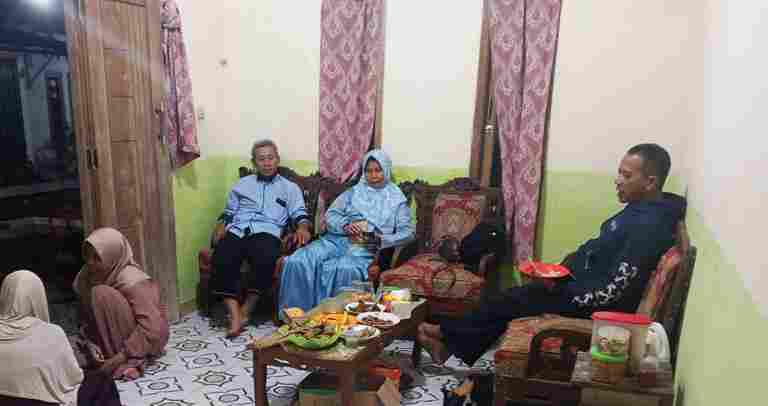
This was evident during the warm visit to tutor Sri Wahyuni’s home. Students such as Karsini, Imas Mastini, and Sukarti came to visit. Followed by alumni such as Maetun and family, Puji and family, Wiji Lestari and family, Indrawati and family, and Lia Samirah. Fellow tutors like Nur Rohmah and Siti Rohmah also attended with their families, strengthening the bonds of togetherness.
All these gatherings conveyed one thing: relationships at PKBM Al Zaytun are not just academic, but also heartfelt. Halal bihalal (gatherings) become a bridge connecting not only individuals, but also the values of togetherness, tolerance, and unity.
Eid al-Fitr thus found its true meaning: not just about personal purification, but also about improving social relationships. At PKBM Al Zaytun, Eid al-Fitr transformed into a new energy to move forward together, strengthening harmony between tutors, students, and alumni.
Because ultimately, what keeps Eid alive is not the date, but the feelings that are continually nurtured: a sense of belonging, a sense of forgiveness, and a sense of belonging to one big family.
Indramayu, March 26, 2026
—–