Building Civilization from the Roots of Awareness: Are We Still Measuring Progress Only by Economic Figures?
By: Dr. Ali Aminulloh, M.Pd.I., ME
Can a nation truly advance if its citizens are only educated to memorize, without ever understanding the purpose of their existence? Is it right to dream of skyrocketing economic growth while the education gap still gapes wide between the well-off and the neglected poor? A major question hangs over the horizon of our development: are we building magnificent concrete buildings, or are we building people with a soul and awareness of their future?
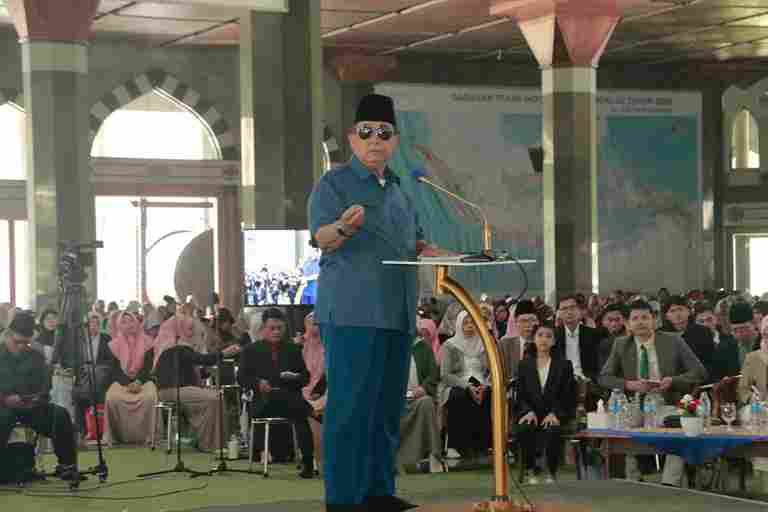
This paradox was explored in the 31st Student Training at Al-Zaytun on January 4, 2026. Amidst the clamor of global education discourse, Al-Zaytun consistently offered a “Revolutionary Transformation of Boarding School Education” as the answer to welcoming Indonesia’s 100th anniversary.
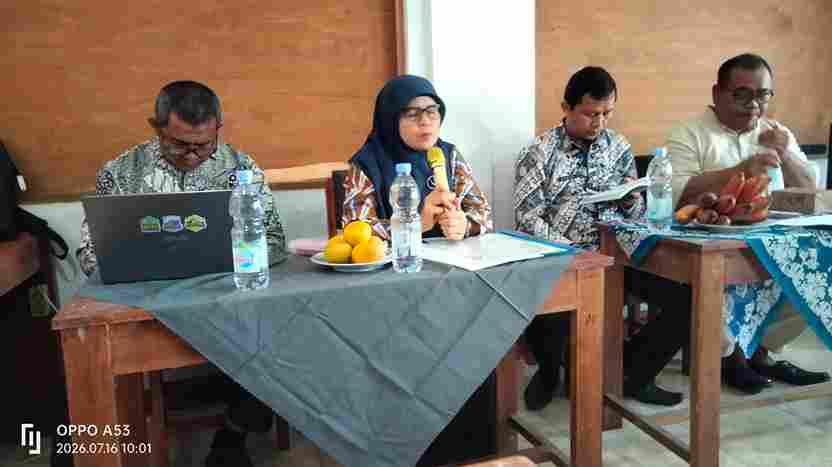
Presentation: Prof. Dr. A. Jajang W. Mahri, M.Si. from UPI Bandung emphasized that the economy cannot stand alone without a foundation of educational equality. However, it was Sheikh A.S. Panji Gumilang, S.Sos., M.P. who later formulated that the core of contemporary education is not simply the transfer of knowledge, but rather the instilling of three layers of awareness: philosophical, ecological, and social.
Three Pillars of Awareness: Beyond the Curriculum, Towards a Whole Humanity
In Sheikh Panji Gumilang’s view, true contemporary education begins when a student stops asking “what am I learning” and begins to understand “why I exist.” Philosophical awareness becomes the first foundation, where each individual is invited to discover the meaning of their existence within the universal framework of Pancasila. Ecological awareness continues, reminding us that humans are an inseparable part of the natural, economic, and environmental ecosystems, the sustainability of which must be maintained.
The culmination is social awareness, a commitment to coexist and contribute to the nation regardless of class background. This transformation aims to ensure that every child of the nation, whether from a highly educated family or those who “never attended school,” shares the same frequency of awareness for building Indonesia. Based on these three awarenesses, education is no longer a competition to be “the smartest,” but rather a crucible for producing individuals who are aware of their responsibilities to civilization.
Intellectual Justice: The Secret Behind Indonesia’s 9 Percent Economic Growth
The key to Indonesia’s envisioned economic boom lies not in the export of raw commodities, but in equal access to quality education in every corner of the country. The Shaykh emphasized that when education is evenly distributed through the development of educational centers in 500 districts, population equality and economic growth will occur naturally. There will no longer be marginalized regions because each district has an educational ecosystem capable of independently providing food, infrastructure, and technology.
This is what is said to be the key to economic growth of 8.5 to 9 percent: a condition in which people’s purchasing power increases because everyone is involved in the nation’s major development projects, rather than simply being spectators or laborers in a foreign country. By prioritizing 90 percent of vocational and polytechnic education, the state is actually preparing development soldiers ready to realize an Eternal Indonesia. Ultimately, educational equality is the most tangible investment that will eliminate national debt and make Indonesia a global food barn by 2045, proving that a nation that is philosophically conscious and intellectually equal is a nation that will never be defeated by time.
Indramayu, January 5, 2026
——