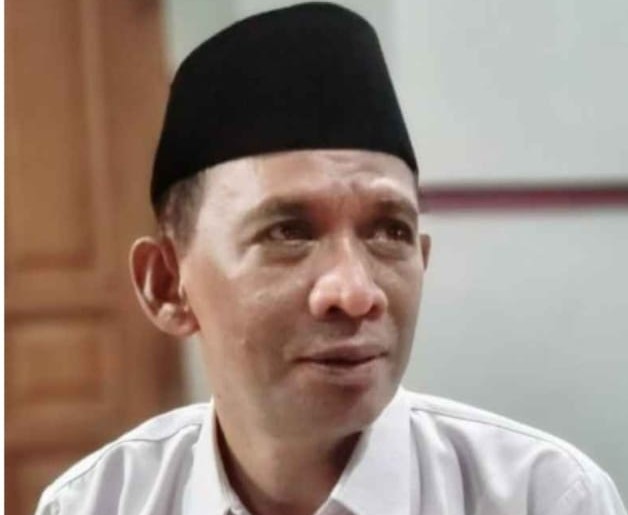
(Political Analyst, Secretary General of MUI Indramayu Regency)
Indramayu, October 13, 2026
The decision to centralize the 2026 National Santri Day (HSN) Ceremony for West Java Province at the Darul Ma’arif Kaplongan Islamic Boarding School in Indramayu is not merely a tactical and technical choice.
It represents a transformation showing that santri and pesantren, two cultural identities of NU, are moving between the pendulum of tradition and the inevitability of adaptation.
Darul Ma’arif Kaplongan in this context is a node of loyalty in preserving tradition and courage in adapting to inevitable social transformation.
The term “santri” is unique to Indonesia’s socio-political treasure, not found in other countries. Dr. Zamakhsyari Dhofir in his book “Tradisi Pesantren” (1982) defines santri as a social ecosystem within the NU pesantren network with the basic element of “kitab kuning” (classical Islamic books).
This construction explains that the recognition of Santri Day in Presidential Decree No. 22 of 2015 has a historical relation with the fatwa of the Jihad Resolution by Rais Akbar Nahdlatul Ulama (NU) Hadratussyaikh KH Hasyim Asy’ari on October 22, 1945.
Later, KH Mustofa Bisri (Gus Mus) expanded the definition of santri as “Indonesian Muslims who love their homeland and have noble character”. This definition merges the three social variant categorizations of Clifford Geertz’s political anthropology model: Santri, Abangan, Priyayi.
Therefore, interpreting Santri Day should not stop at merely a ceremony of victory for santri identity politics, even though santri have for years been marginalized in the grand narrative of state policy and forgotten in the writing of national movement history.
The reflection of Santri Day is important to place in the collective awareness that santri are an inclusive part of national integration that must be affirmative towards futuristic challenges, adaptive to the process of social transformation without losing their identity as a santri social group.
This is where the relevance of the symbolic spirit of the 2026 West Java Provincial Santri Day centralized at Darul Ma’arif Kaplongan lies.
Darul Ma’arif Kaplongan Islamic Boarding School is in principle firmly established on NU principles, strategically and tactically taking a courageous choice to adapt to the dynamics of social transformation to answer the needs of the new middle class from NU families.
In the social theory of Prof. Dr. Nurcholish Madjid (Cak Nur) in the context of modern Indonesia, NU residents are undergoing a social process that Cak Nur calls vertical mobility, NU climbing the social ladder.
According to him, this is a consequence after President Suharto’s policy in the 1970s regarding massive SD Inpres (Presidential Instruction Elementary School) entering villages, followed by the 1984 NU Congress decision to return to khittah (original line), not becoming tied to any political party power.
These two policy variables forced NU residents to enter modern schools until their generation experienced vertical mobility, rising socially to become the new middle class of NU.
They are no longer dominant in traditional work environments such as agriculture, farm laborers, Koran teachers, traders and others, but have experienced diversification, entering a “new” world such as becoming lecturers, researchers, social activists, politicians, bankers and various other modern jobs.
Their children are the second generation of modern middle-class NU citizens who no longer inwardly recognize the santri social ecosystem as their parents did. The challenges of social modernity distance them from the santri tradition ecosystem except for its outward traditions such as tahlilan, grave pilgrimage, and so on.
In West Java, this social transformation can be read from the results of LIPI’s 2018 research (before merging into BRIN) that although the majority of Muslims in West Java are NU residents (79%) in terms of religious traditions such as tahlilan, grave pilgrimage, etc., only 7% bind themselves in the NU jam’iyah, the social epicenter of santri.
That is why in West Java NU is very loose, modern middle-class NU citizens are easily attracted to modern Islamic boarding schools called Islamic boarding schools, generally non-NU with modern facilities, systems and methodologies.
This means that the educational tastes of NU family children today are far different from what their parents experienced. An inevitable consequence of social environmental transformation.
From this perspective, the author reads the presence of Darul Ma’arif Kaplongan Islamic Boarding School in the context of answering the educational needs of the modern middle class from NU families. It does not need to be contrasted with other traditional NU Islamic boarding schools.
Both are equally devoted to maintaining the santri social ecosystem in the face of unavoidable social transformation challenges, both standing on NU principles and rules with mutually reinforcing strategic choices.
Here too is the importance of the 2026 West Java Provincial Santri Day reflection centered at Darul Ma’arif Kaplongan Islamic Boarding School, placing santri as agents for social transformation.
YgHappy National Santri Day 2026
—–