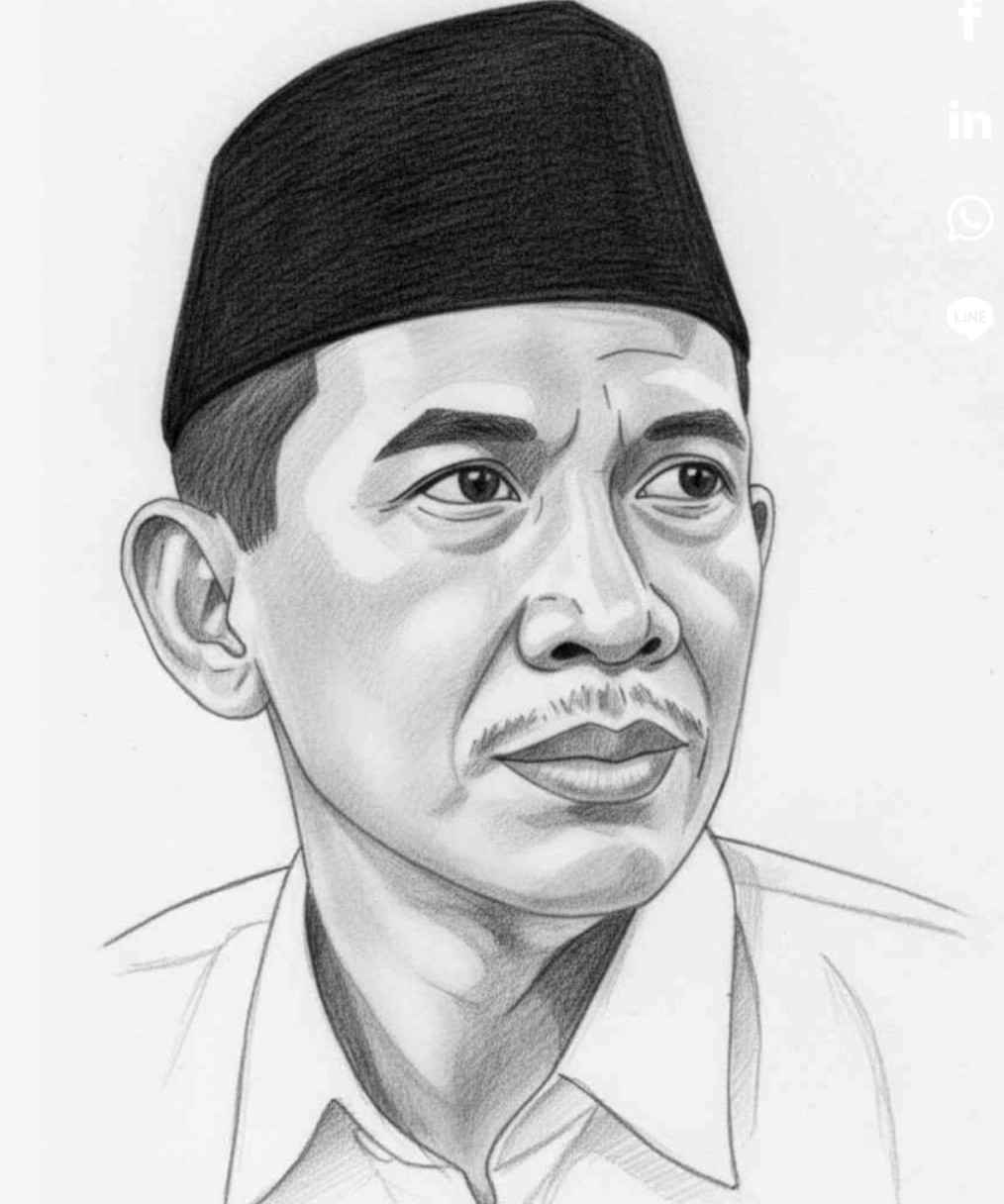
By: Adlan Daie,
General Secretary of the Indramayu Regency Indonesian Ulema Council (MUI); Former Chairman of the Indramayu Literary Forum (FSI – 1993).
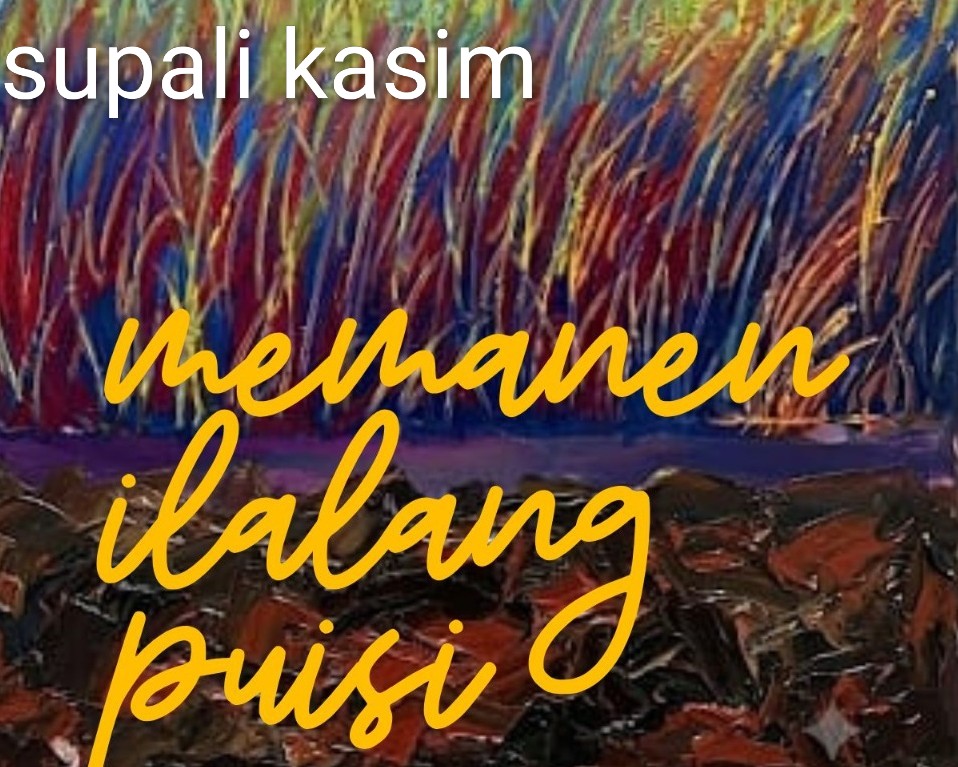
When Supali Kasim—my friend, a poet, and a cultural figure steadfastly walking the “quiet” path of culture—asked me to write an introduction for his poetry collection titled *Memanen Ilalang Puisi* (Harvesting the Reeds of Poetry), a volume containing 100 poems, I was reminded of Goenawan Mohamad’s “Catatan Pinggir” (Marginalia) column in *Tempo* magazine.
He wrote about Joseph Brodsky—the Russian poet and 1987 Nobel Laureate in Literature—a figure I had long ago quoted in the introduction to the poetry collection *Kiser Pesisiran* (1993). For Brodsky, poetry represents something that goes “beyond”—a force that transcends numbers, ethnography, and statistics, including the numerical data derived from surveys. Numbers cannot always explain the feeling of loss, the weariness that weighs upon the soul, or how social wounds are captured through a myriad of emotions.
This is where poetry steps in to claim its space. It enters the innermost recesses that cannot be explained by rows of statistical tables. Poetry is the poet’s personal experience that gains the potential to become a shared memory.
That is the essence of “beyond”—at least in my emotional interpretation—something that resonates deeply beneath the power of poetry. Joseph S. Nye calls this “Soft Power”—a force that is subtle and understated, rather than explosive.
Therefore, viewed through the perspective of the “ideology of poetry,” I regard this collection not merely as an anthology or a literary archive. Rather, it is an archive of emotional fragments—a documentation of personal experience.
Let me now quote a few stanzas from Supali Kasim’s poems featured in this book. A poem titled:
*”The Path to Poetry”*
poetry then finds its own way
words often run wild, beyond control
and I return to farming
voices demand more potent diction
but my pen has become a hoe
swinging to turn the soil
leaving behind the days
of hunting for figures of speech, rhyme, or rhythm
computer keys spread out the screen
displaying the *pranatamangsa*—the ancient agricultural calendar
since those rice seedlings were planted
I have forgotten—was it feeling? was it tone?
like the typography that sprouted later:
rows of green plants
-000-
What can we grasp regarding the “beyond”—the “soft power”—inherent in the poetic verses by Supali Kasim quoted above?
To my aesthetic sensibility, these verses are quite “flat”; they lack “sophistication” in their choice of words or elaborate phrasing. They tend to be lyrical, narrative, and very simple, yet they carry undertones of nostalgia, critical insight, and satire.
The strength of these verses does not lie in the “artifice” of crafting a collection of beautiful sentences. Complex socio-political issues are not elevated into “pamphlet poetry” delivered from a podium amidst “political megalomania.”
Instead, the work derives its strength—its “soft power”—from being expressed softly and simply. It is not raised to the level of a political speech but rather allowed to settle into the experiences of the home yard, the rice field, village corners, the kitchen, the earth, and the anxieties of ordinary people.
It takes the form of a narrative metaphor with a very simple mode of expression, yet it maintains a steady rhythm and lyrical quality. It possesses “soft power” precisely because the barrage of “beautiful sentences” frequently forced upon social media has begun to lose its impact—shedding the weight of its deepest meaning.
That is my—admittedly simplistic yet literary—interpretation of the “beyond” and the “soft power” found within the quoted verses. Regarding the poetic stanzas above—my reading of them certainly does not stem from the theoretical frameworks found in “textbook” approaches to the “academic” study of poetry.
That is my own modest interpretation of the poem: that poetry, in its intrinsic essence, acts as a form of cultural diplomacy—working silently and gradually, yet leaving behind an enduring civilizational footprint without the need for “endorsements” or artificial promotion.
Of course, the single excerpt above cannot fully represent the forms, styles, and diverse genres of the poems collected in the book *Memanen Ilalang Puisi* (Harvesting the Wild Grass of Poetry), which comprises 100 poems.
To my mind, the title *Ilalang Puisi*—evoking “wild grass” with sharp blades—serves as a metaphor. It seems to convey that this collection is “wild” in its diversity, refusing to be confined to a single box of form, style, rhythm, or theme.
-000-
The poetry collection *Memanen Ilalang Puisi* offers more than just variety in form, style, and modes of expression; it also spans a wide thematic range, exploring the restless “tug-of-war” between the courage to reconcile tradition with change.
It embraces the romanticism of the past yet does not demand that the rushing tide of the future cease its arrival—as seen, for instance, in poems such as “Kebiasaan Masa Kecil” (Childhood Habits), “Dari Ayah, Kepada Anak-Anaknya” (From Father to His Children), “Dari Desa, Asing Sendiri” (From the Village, A Stranger to Oneself), and “Saweran di Atas Panggung” (Money-Throwing on Stage) to name but a few.
What is intriguing about the poem titled “Saweran di Atas Panggung” (Money-Scattering on Stage) is how it places the term “Saweran”—a traditional cultural ritual rooted in rural life—within the intellectual framework of “modernism” as championed by René Descartes, the French philosopher known as the “Father of Modern Philosophy” (1597–1650).
Just as René Descartes affirmed the famous philosophical postulate “I think, therefore I am,” Supali Kasim performs a kind of “repetition” in his poem “Saweran,” writing: “I scatter money, therefore I am.” This is not merely a play on words, but a challenge to “populist modernism.”
The construction of the poem “Saweran” conveys the spirit that “tradition” can meet and engage in dialogue with “modernism.” It suggests that while a poem can be dissected for “academic” purposes—analyzing the structure of words, sentences, and other poetic “credos”—it is not simply a string of words to be forced into rigid, “marching” sentences like soldiers.
It must be allowed to flow freely, unconstrained by strict “definitions,” so as not to lose the meaning that lies “beyond” the literal or the “soft power” embedded in the history of its creation. It remains open to “unlimited” interpretation and has the power to transform the human heart when it resonates with the reader’s own mood.
A shift in mood serves as the starting point for a change in perspective. Perspective opens up a space for dynamic social relations, which in turn gives rise to historical change. This is how poetry functions within the trajectory of civilization—even though it is often undervalued in a social structure dominated by the politics of the “military” and the “civil” (yet not truly “civilian”).
-000-
Having known Supali Kasim—the poet who crafted these verses—for nearly forty years, ever since we were active together in the Indramayu Literary Forum (FSI, established in 1993 and now transformed into the Indramayu Arts Council/DKI), I can attest that he has remained steadfast—and indeed “stubborn”—in his commitment to the path of culture.
The arrival of this poetry collection is a sign… …that the cultural path endures. While politics may permit only praise and applause, poetry—as a cultural path—allows criticism to yield something far more valuable: the opportunity for self-improvement.
Consider the lines of quiet criticism below, excerpted from Supali Kasim’s poem titled:
*”Food Webs”*
silently, at school, my child is joined
as a link in the food chain
and that lunch tin becomes a marker
of how he is a cycle connecting the food chain
upon the faces of adolescents, unknowing and innocent
he is a process of eating and being eaten
Supali Kasim’s critique of the bombastic “Free Nutritious Meal” program—specifically targeting the “manipulative” nature of the label “free”—is a harsh and piercing indictment. It portrays the people as mere “serfs” to political elites, valued only for waiting to be granted charity.
Sadly, in today’s social media era, such quiet poems—which once gave lyrical power to the works of Sapardi Djoko Damono—are almost certain to be “slaughtered” by “artificial” narratives—or, more bluntly, by the heaps of “verbal trash” scattered across various social media apps.
This is our current era: technology and its myriad social media apps keep us increasingly connected, yet our identities and sense of self grow ever more fragile.
Thus, poetry—and literature—must stand as a reminder. Even if it represents a mere “minority” within a political landscape that increasingly leans toward the militaristic—despite, once again, wearing a “civilian” mask.
If literature and poetry surrender and “die” as the torchbearers of the nation’s cultural path, leaving politics to reign supreme as the sole “commander,” then our social ecosystem will inevitably become nothing more than “a lie forced upon the people to be loved”—to quote George Orwell.
Above all, I am fully aware that this brief introduction lacks the rich theoretical and literary references required to qualify me as a “literary critic.”
I am merely a lover of literature—to quote Gus Dur… …as a form of “escapism”—a way to flee life’s bitterness in a “quality” manner. So, accept it with all its “shortcomings.”**
Indramayu, September 17, 2026
Regards.
——