By:
Masduki Duryat
(Expert Council Member, Pergunu Indramayu)
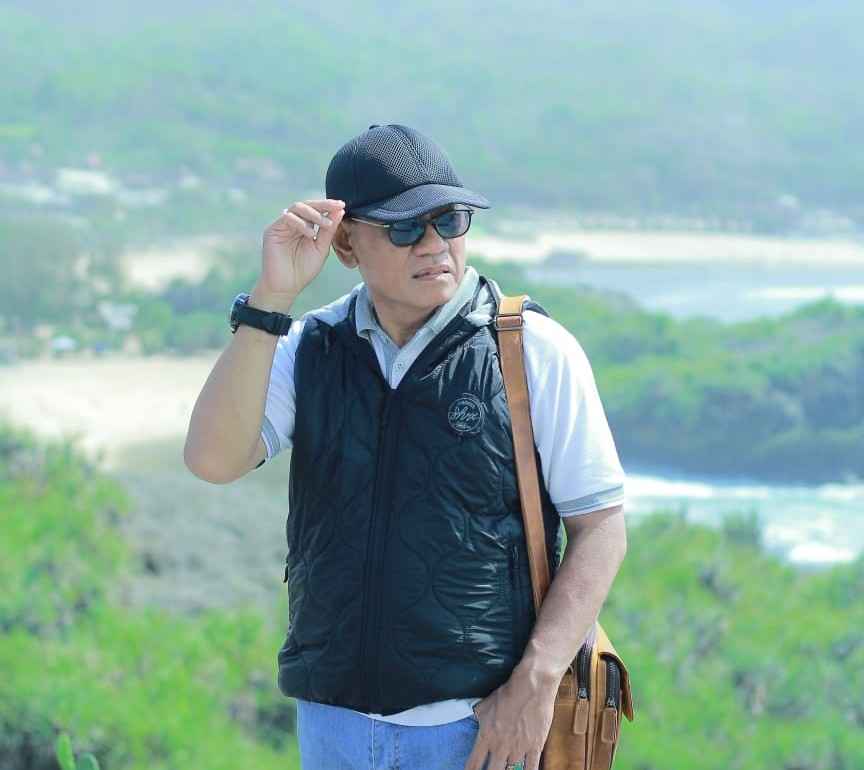
Amidst a sea of university jackets during the demonstration on October 28, 2026, one figure elevated the protest to a higher level. It was not a student orator, but a professor—Prof. Dr. Zainal Arifin Mochtar, S.H., LL.M., affectionately known as “Prof. Uceng,” a Professor of Institutional Law at the Faculty of Law, Universitas Gadjah Mada (UGM).
Born in Makassar, South Sulawesi, on December 8, 1978, the spirit of a legal crusader runs deep within him. He is the son of a prominent Mandar Islamic scholar, KH. Mochtar Husein, and culturally, he inherits the courage of another legal legend from South Sulawesi: Baharuddin Lopa. Just as Lopa—the former Attorney General—was known for fearlessly challenging the oligarchy, even dying in the line of duty while defending justice, Prof. Uceng stands today as a modern, academic incarnation of Lopa.
*An Honest Voice Unmasking the Oligarchic State*
What makes Prof. Uceng’s oratory so striking is its raw, unvarnished honesty. While many other academics choose to remain in a “quarantined” existence—nestled safely within the comfort zones of research projects and corporate board positions—Uceng has chosen a far more arduous path.
Drawing on his expertise in constitutional law and his experience as an anti-corruption activist with PUKAT UGM, he boldly declares that the current government is far closer to the oligarchy than it is to the people.
This is not merely political criticism; it is a constitutional indictment. He witnessed firsthand how Article 33, paragraph (3) of the 1945 Constitution—which mandates that natural resources be used for the prosperity of the people—has been subverted to serve the interests of a handful of corporations. The National Strategic Projects (PSN) policy, the ease of obtaining land-use rights (HGU), and legislative revisions that favor capital are clear evidence of this.
The arguments presented by Prof. Uceng align with Jeffrey Winters’ theory of oligarchy, in which political power is deliberately employed to preserve and expand wealth [Winters, *Oligarchy*]. The state no longer acts as an impartial arbiter; instead, it has become a player on the side of the oligarchy.
*The Dynamics of Protest: When the University Is No Longer Neutral*
The protests of October 28, 2026, are particularly compelling because they represent the convergence of two forces: the organic outrage of students and the clear-eyed reasoning of professors.
Students speak out about the harsh reality: soaring costs, a difficult job market, and an impotent House of Representatives (DPR). The DPR—which, under Article 20A of the 1945 Constitution, is tasked with oversight—has lost its bite, rendered toothless by domestication and an oversized governing coalition devoid of any meaningful opposition. In a study by the UGM Faculty of Law, this phenomenon is described as the erosion of oversight functions resulting from the disappearance of conflict [UGM].
Prof. Uceng provides a legal framework to contextualize these grievances. He explains that the silence of prominent figures—effectively “quarantined” within official positions—serves to undermine the independence of state institutions. In his inaugural professorial lecture on January 15, 2026, at the UGM Senate Hall, he warned of the dangers posed by rising authoritarianism, which weakens independent institutions.
*The Resurgence of the Legacy of Baharuddin Lopa*
Why is it relevant to compare Prof. Uceng to Baharuddin Lopa? Both are among the finest sons of South Sulawesi, men who held fast to legal integrity above all else.
Baharuddin Lopa once dared to investigate powerful conglomerates during the New Order era. Prof. Uceng dares to scrutinize the power of the oligarchy in an era of “hijacked” reform. Just as Lopa did not fear death in the pursuit of justice, Uceng does not fear being terrorized, ostracized, or stripped of his position for the sake of honesty.
In 2026—a time when many legal scholars prefer to act as shields for those in power—the presence of Professor Zainal Arifin Mochtar from UGM among the students serves as an oasis. He demonstrates that the study of constitutional law is not merely something to be memorized in a classroom, but something to be brought to life on the streets whenever the state is not as it should be.
If Lopa was a lion within the Attorney General’s Office, then Uceng is a lion at Bulaksumur.
Indramayu, November 3, 2026
—-