*80TH BIRTHDAY OF SYECH MA’HAD AL ZAYTUN, THE MELTING POT OF ISLAMIC AND INDONESIAN INTEGRATION*
By: Adlan Daie
(Political and Socio-Religious Analyst)
Indramayu, August 3, 2026
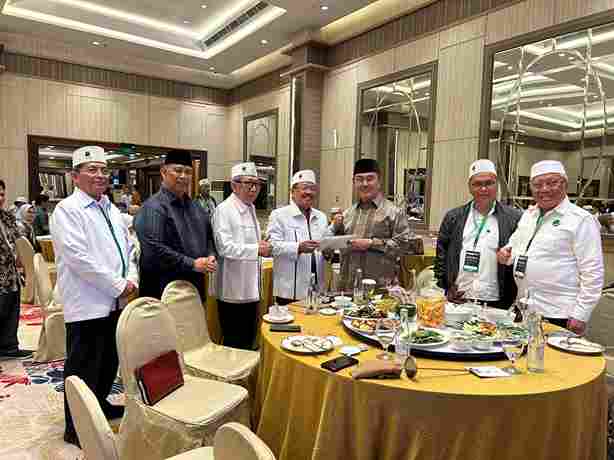
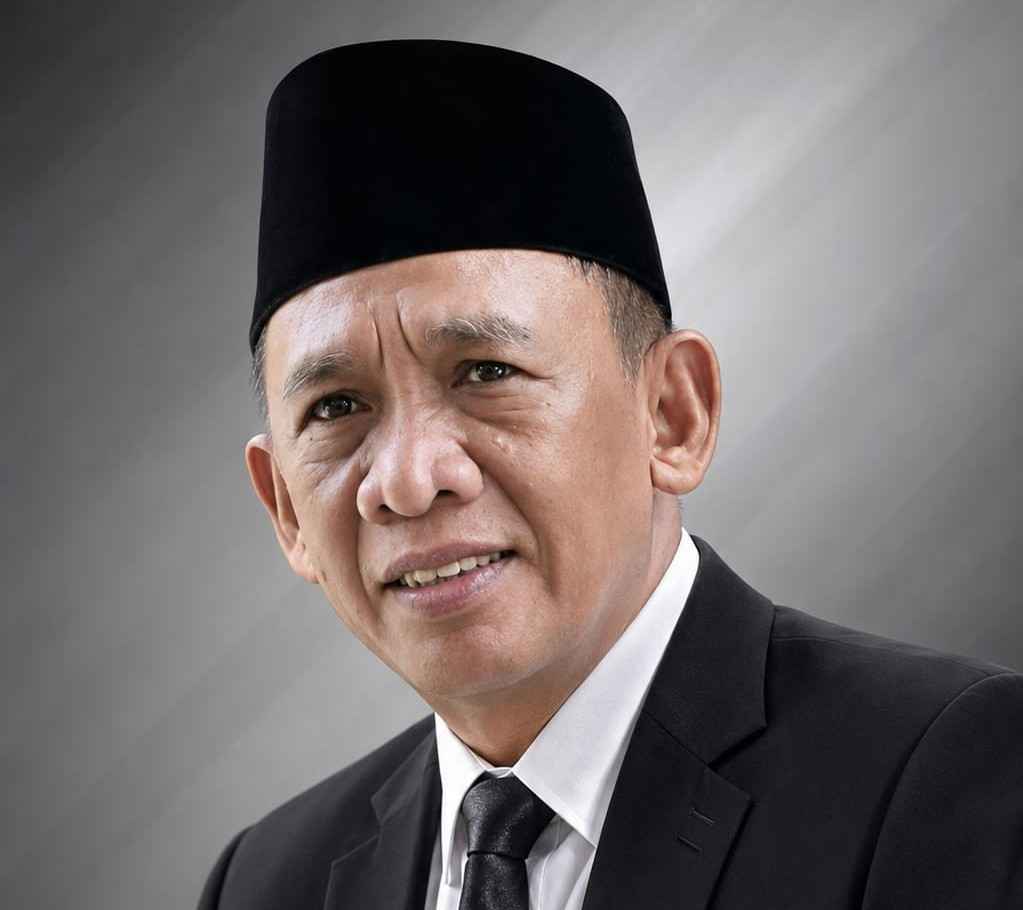
The 80th birthday celebration of Syech Panji Gumilang, the “muassis” or founder of Ma’had Al Zaytun Indramayu, on Thursday, July 30, 2026, was held with great enthusiasm and enthusiasm in the hall of the Rahmatan Lil Alamin Mosque, an iconic mosque in the Ma’had Al Zaytun complex.
It was attended by national figures such as Prof. Connie Rahakundini, Prof. Ermaya Suradinata, Gita Wiryawan, the former Minister of Trade, and several other national figures.
The event was certainly captivating because the presence of these national figures crossed professions, religions, ethnicities, generations, and disciplines.
Therefore, symbolically, Syech Panji Gumilang and the Ma’had Al Zaytun he founded are a kind of “melting pot,” a “gathering point” for Indonesian diversity, integrating Islam and nationalism for a tolerant and peaceful future for Indonesia.
This article provides a brief perspective on Syech Panji Gumilang, complementing the compelling testimonies of Prof. Connie, Prof. Ermaya, and Gita Wiryawan about Syech Panji Gumilang and Ma’had Al Zaytun on the occasion of his 80th birthday.
Their testimonies were well-received by Dr. Ali Aminullah (a Lecturer at Ma’had Al Zaytun) in the media outlet “Jayanews” on August 1, 2026—and can also be accessed through the YouTube channel “Lognews TV.” These testimonies are inspiring and meaningful—full of messages and meaning.
The author’s perspective on Syech Panji Gumilang and Ma’had Al Zaytun this time is a kind of imagination that reminds me of Nurcholish Madjid’s “Cultural Speech,” entitled “Refreshing Religious Understanding Among Muslims in Indonesia,” delivered at Taman Ismail Marzuki on October 30, 1972—54 years ago.
The speech was based on two choices, as Nurcholish Madjid’s subsequent writing, “The Necessity of Islamic Renewal and the Integration of the Ummah” (1973), two choices that risked the challenge of “integrating the Ummah,” or allowing Islamic understanding to remain “stale” in the name of “integration”—nothing other than “frozen” and “stagnant.”
Cak Nur, Nurcholish Madjid’s nickname, chose the path of “Refreshing the Renewal of Islamic Thought,” despite all the risks—in the contemporary parlance of the social media era, “bullying,” and being judged from the pulpit during Friday sermons at that time. But he remained undeterred. For him, only through such renewal would Islam be able to become the path of future civilization.
In a different context, Syech Panji Gumilang, from the author’s perspective, took the same risky path as Cak Nur, both vulnerable to being “misunderstood,” then “bullied,” reviled, slandered, even misled and “declared an infidel.”
The difference is that Cak Nur’s work focused on the renewal of Islamic thought. While Syech Panji Gumilang focuses on the reform of Islamic education, his entry point is the same: grounding Islam as “Rahmatan Lil Alamin,” a blessing for humanity.
In a democratic era, a system that demands its citizens be able to read, ask questions, and compare what is factual and what is “hoax” is problematic, even dangerous, when its citizens lack literacy.
As a result, ideas about renewal for the path of civilization are easily “fallen” by “hoax” narratives uploaded “in a single second” on the social media platform TikTok.
When the interests of political pragmatism are cloaked in the “cloak” of religious sects, as Gus Baha feared, they are vulnerable to becoming a political “identity,” a “punch” for different religious groups.
It is within this social context that the author interprets Syech Panji Gumilang’s steadfastness in spreading his “revolutionary” wings in the field of education. This is not easy, and he has the potential to be “misunderstood” by political interests cloaked in differences in religious “sects.”
This is the risk of struggle; there is always a time and place where truth will find its own way. That was the most precious price Syech Panji Gumilang paid for driving Ma’had Al Zaytun: inner steadfastness.
The author places Syech Panji Gumilang and the presence of Ma’had Al Zaytun in Indramayu in the above perspective. His system and methods may have differed from other Islamic educational systems, but he remained steadfast in the principles of the “pillars of faith,” the “pillars of Islam,” and the principles of the Pancasila state.
Because of this steadfastness, there is an Arabic motto worthy of being attributed to Syech Panji Gumilang: “Al Fadlu lil mubtadi wa in ahsanal muqtadi.” Excellence belongs only to the pioneer, even if his successors create even better results.
Happy 80th birthday, Syech Panji Gumilang. Age can be changed by time, but the “legacy” of benefits transcends the ages—a saying of Ibn Khaldun.**
Regards.
——-