MA’HAD AL ZAYTUN INDRAMAYU AND THE INDONESIAN EDUCATION SYMPOSIUM, THE SPIRIT OF PANCASILA BIRTH DAY, JUNE 1, 2026
By: H. Adlan Daie
Political and socio-religious analyst, based in Indramayu.
Ma’had Al Zaytun, a modern boarding school, known in Indonesian subculture as a pesantren, has once again lit a beacon for the nation’s future civilization.
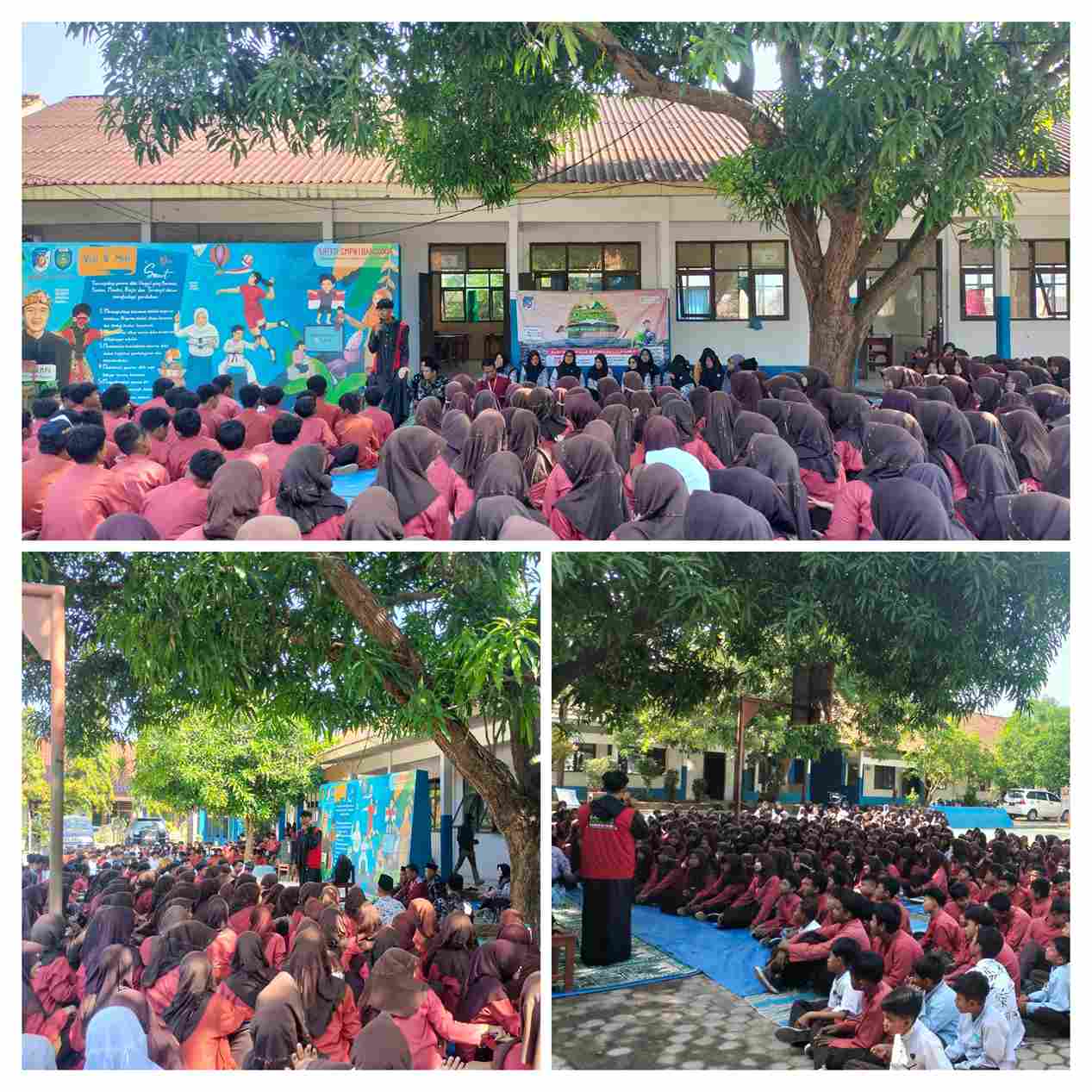
A majestic Islamic boarding school, nestled amidst a grove of neatly arranged trees in a village in the southern part of West Indramayu, in the Gantar sub-district of Indramayu, West Java, held the Indonesian Education Symposium, coinciding with the Pancasila Birthday on June 1, 2026.
This momentum, to invigorate the spirit of Pancasila’s “Birthday,” on June 1, 2026, Al Zaytun placed within the spirit of awareness of the urgency of educational institutions for the advancement of a nation, with the theme: “Towards a Revolutionary Transformation of Boarding School Education for the Realization of Modern Indonesia,” involved no fewer than dozens of multidisciplinary professors.
The author is certainly not an academic. Not a professor. Not an education practitioner. Not a professional researcher, but the author is a citizen who believes that a nation will progress not by luck but by the inner power of the mind. A nation will progress because it is nurtured by the mind.
In the author’s imagination, citing Bend Anderson’s theory of “Imagined Communities,” the aforementioned Educational Symposium conveys a message that Al Zaytun invites us to think together in a collaborative orchestration to build the nation’s character amidst fragmented political challenges and social segregation.
Indonesia cannot be built by just one or two individuals, or by just one or two specific groups. Indonesia requires a system that enables many people to engage in meaningful participation, actively participating meaningfully in shaping a resilient and enlightened social ecosystem.
Pancasila, which Bung Karno called the “Philosophical Grandslag,” the guiding principle of national and state life in his speech on June 1, 1945, at the BPUPKI (Investigating Committee for Preparatory Work for Indonesian Independence) session, is the most valuable legacy and trace of the nation’s founding fathers for the future of modern Indonesia.
In this context, we delve deeper into Pancasila, commemorating Pancasila Day on June 1, 2026. “Nationalism” or “Indonesian Unity” is not a “chauvanism,” a blind, valueless love for the nation.
Our nationhood, built on the guiding principles of Pancasila, is a nationalism founded on the principles of divinity, humanity, equality, and justice, instilling the growth of our national morality and ethics.
Within the spectrum of Pancasila’s noble values, the author positions the Indonesian Education Symposium at Ma’had Al Zaytun as an endeavor to contribute ideas and values, emphasizing that a developed nation must be built upon an educational system.
This educational system is aimed at fostering systematic and critical thinking, and fostering the courage to think progressively, breaking through the barriers of feudal culture that hinder progress.
Our nation’s history teaches us that Indonesia’s independence was not solely due to the courage of its weapons, but also to the courage to free itself from the “inlander” mentality, a lack of self-confidence, and the domination of colonial culture.
Soekarno, Hatta, Syahrir, KH. Hasyim Asy’ari, KH Ahmad Dahlan, to name just a few of the nation’s founders, were educated men who “enlightened” and simultaneously moved their nation’s history with the power of their minds.
In other words, an education that solely pursues technical skills, without “character building,” without building collective awareness of the importance of an educational ecosystem based on systematic and progressive thought, is a nation that only prepares itself to become “laborers,” with an “inlander” mentality. This is the cultural disease that hinders national progress.
Muchtar Lubis, a cultural figure, in a cultural speech at TIM, Jakarta in 1977—49 years ago—mentioned six cultural obstacles hindering the Indonesian nation’s progress, particularly the elite mentality of its leaders.
These include: first, a hypocritical mentality, also known as hypocrisy, which in the context of the social media era could be called “image-building.” Second, a neglect of responsibility; third, feudal behavior, whose leaders demand to be served; fourth, superstitious; fifth, artistic, artistically talented, and politically skilled at “tricking,” and finally, weak character—easily bribed.
This is where the relevance of the Indonesian Education Symposium at Ma’had Al Zaytun lies, especially as it is held during the momentum of exploring the spirit of Pancasila values. Education must be directed beyond “ordinary” institutions.
Education must foster systematic, critical, and progressive thinking. Without a strong foundation, there is the potential for rap, when faced with problems for which textbooks have no answers.
In the context of boarding-based Islamic education such as Ma’had Al Zaytun, as well as Islamic boarding schools (pesantren) and other Islamic boarding schools, it is certainly no longer sufficient to simply understand them as nurseries for the growth of exclusive religious sects and schools of thought and excessive fanaticism within one’s own group.
A segmentary perspective exclusively based on religious sects to emphasize distinctions only leads Islamic educational institutions to easily fall into the trap of what the Quran suggests: “They divide the religion into factions, each faction boasting only of its own faction” (Al-Rum 32).
Therefore, boarding-based Islamic educational institutions of any religious sect, as long as they do not “deny” the principles of the “pillars of faith” and “pillars of Islam” and are founded on the guiding values of Pancasila, must project themselves forward by integrating “Islam, Indonesianness, and modernity” as a nation with a Muslim majority.
This is the power of social and cultural capital amidst the “de facto” social reality of ethnic and religious diversity, even diverse religious schools of thought. To present Islamic boarding school education as a solution for the nation’s new civilization path. A tolerant, modern, and productive nation based on a balance of local wisdom and the demands of modernity across the global spectrum.
Congratulations to Al Zaytun for taking the initiative to hold the Indonesian Education Symposium to commemorate Pancasila Day on June 1, 2026. “Promoting welfare and establishing benefits.”
Regards
Indramayu, May 30, 2026
——–