THE BANJAR LANGUAGE GAVE GIVEN TO MINANGKABAU, MALAY, AND INDONESIAN
By: Hamly Hadi
(History Observer)
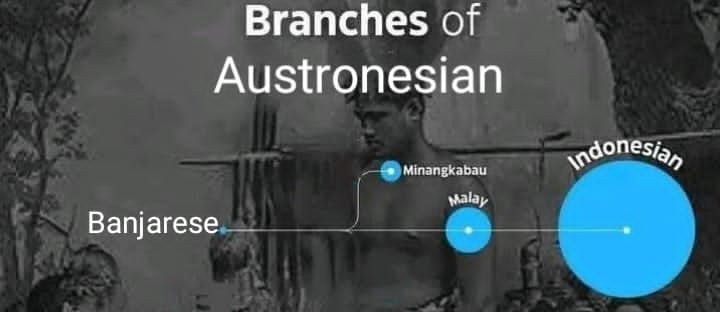
The Banjar language was brought by Dapunta Hiyang Srijayanasa and 20,000 Banjar people who departed from Muara Tamban, South Kalimantan, for Mukha Upang in South Sumatra to establish the Banua Srivijaya in 683 AD (Kedukan Bukit Inscription).
In the 12th century, a descendant of Dapunta Hiyang Srijayanasa, Srimat Trilokyarala Maulibhusana Warmadewa, along with Banjar descendants from Srivijaya, founded the Dharmasraya Kingdom. The Banjar language was detected in the Dharmasraya Kingdom in the Tanjung Tanah Manuscript and the Tembo Kerinci manuscripts found in Kerinci.
Then, in the 14th century, specifically in 1347, Adityawarman moved the center of government in Dharmasraya to Pagaruyung, which later became known as the Pagaruyung Kingdom. This is likely how the Banjar language, brought from Dharmasraya, began to evolve into Minangkabau, as it assimilated with the local Pagaruyung language.
In the 15th century, specifically in 1402, a descendant of the Srivijaya king, Prameswara, founded the Malacca Kingdom on the peninsula. There, the Banjar language assimilated with hundreds of other Malacca languages, resulting in the emergence of a new language called Malay between 1440 and 1602. Due to the Malacca Kingdom’s immense influence in Southeast Asia, Malay spread throughout the archipelago as a trading language.
In 1928, during the Youth Pledge, Malay was established as the basis of Indonesian, supplemented by borrowings from various regional languages throughout the archipelago, as well as foreign languages such as Arabic, Dutch, Chinese, English, and others, thus officially becoming Indonesian.**
Banjarmasin, South Kalimantan, December 27, 2027
——–+