The Profound Impact of the Jihad Fatwa on Santri, Husein bin H. Irsyad Falls at a Young Age in Kalisapu
INDRAMAYU-JAYANEWS.COM – The immense influence of the Jihad Fatwa, issued on October 22, 1945, on santri (Islamic boarding school students) is vividly illustrated by the heroic story of the late Husein, son of Abah KH Irsyad Badjuri.
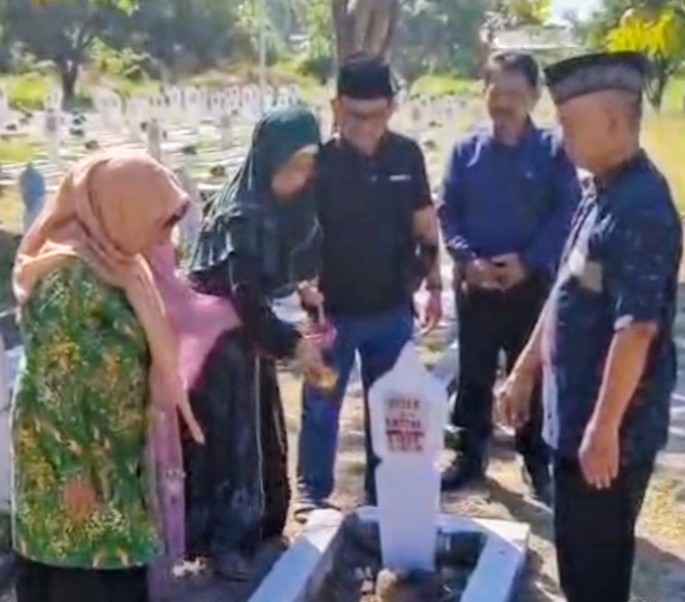
According to the extended family of Abah KH Irsyad Badjuri, Husein fell in battle alongside five other santri while fighting against Dutch forces in the village of Kalisapu, Cirebon Regency, on July 16, 1949. This event left a profound legacy, as recounted by Dudung Badrunthe late Husein’s nephew (son of his older brother, the late KH Tohir Irsyad) to a journalist from Jayanews.com on Friday, October 23, 2026.
Dudung Badrun highlighted four poignant aspects of this story:
First, when the Jihad Fatwa reached Husein and his five companions, they were only 12 years old, a very young age, roughly equivalent to students in the sixth grade of elementary school (SD/MI) today.
Second, when they asked Abah KH Irsyad for permission to join the resistance militia, he refused not because he opposed the jihad itself, but because they were simply too young for the battlefield.
Third, and most movingly, Husein persisted in seeking his family’s blessing to head to the front lines. He did not pray for his own safety, but rather for *syahid* (martyrdom). In his own distinct way, he said, “Doakaken payu,” which translates to: Pray that I may be ‘accepted’.
Fourth, before departing for the battlefield, Husein planted a teak tree and a sapodilla tree. The teak tree has since been felled, and its timber was used in the construction of the Al-Fataa Mosque in Segeran Kidul Village. Meanwhile, the sapodilla tree still stands firm today, continuing to bear fruit; it is located within the grounds of the PUI educational complex/Al-Fataa Mosque in Segeran Kidul Village, Juntinyuat, Indramayu.
The story of Husen bin H. Irsyad serves as clear evidence that the spirit of the Resolusi Jihad (Jihad Resolution) of October 22, 1945, was powerful enough to ignite the souls of even the very young, inspiring them to risk their lives to defend the independence of the Republic of Indonesia.
“The spirit of “doakaken payu” (a plea for one’s sacrifice to be accepted) demonstrated by this young santri (Islamic boarding school student) from Segeran remains an enduring example of sincerity and profound love for both nation and religion,” said Dudung.
Author: DB
Editor: Nuryaji
—–