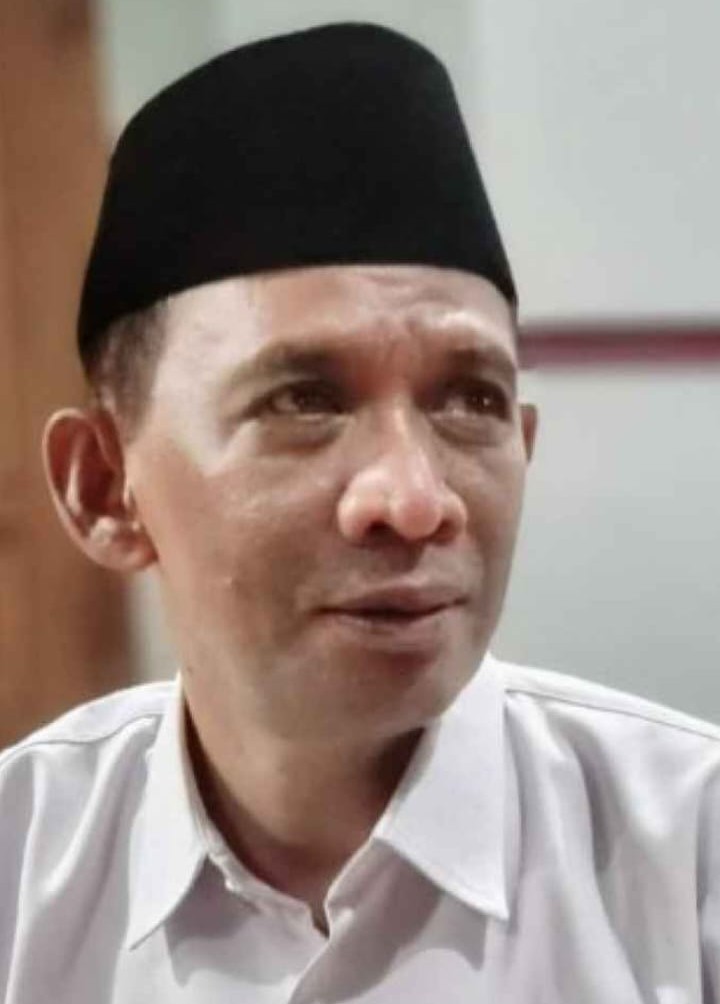
By: Adlan Daie
Political Analyst, General Secretary of the Indramayu Regency Indonesian Ulema Council (MUI)
This is the “mystery” question still hanging over the 35th NU Congress at the Tambak Beras Islamic Boarding School in Jombang, East Java, as the election approaches on the night of Saturday, August 29, 2026.
The situation is complex to decipher—not only for observers outside NU but even for those within the organization itself. NU is an “exception”; the construction of its electoral system is not easily read. It is intricate and political, yet the process is fascinating and compelling to observe.
“It wouldn’t be the NU Congress we know if it didn’t feature ‘elements of surprise’—complex and unexpected twists,” wrote Prof. Burhanudin Muhtadi, a national political analyst (*Tempo*, 2015).
The observation above illustrates that the contest for PBNU leadership succession cannot be captured by public opinion survey methodologies—even if those surveys are methodologically sound, utilizing “multi-stage random sampling.”
This is because the holders of valid votes at the Congress are a limited group of “selected voters”—specifically the chairpersons of the NU Regional Boards (PWNU) and Branch Boards (PCNU) across Indonesia, plus the chairpersons of Special Branch Boards (PCNU Istimewa) representing NU in various countries. They cannot be accurately gauged by mass-oriented public opinion surveys.
That is the difference between mass-oriented public opinion surveys—such as those used in general elections or regional head elections—and the electoral system of the NU Congress, which relies on “selected voters” limited to PWNU, PCNU, and PCNU Istimewa chairpersons (totaling 587 votes).
The situation is both complex and intriguing; it is not merely about the election of the Congress’s “two mandate-holders”—the *Rais Aam* (Supreme Leader) and the General Chairman of PBNU—but also about the intricacies of the electoral system and mechanisms themselves. First, although the *Rois Am* (Supreme Leader) and the General Chairman of PBNU are elected during the same *Muktamar* (National Congress) forum, the election systems are not a “package deal”; they are separate and distinct.
The *Rois Am* is selected via the *Ahwa* (*Ahlul Halli wal-Aqdi*) system—a representative body of nine members—whereas the General Chairman is elected through a direct “one-man, one-vote” system by the heads of the Regional Boards (PWNU), Branch Boards (PCNU), and Special Branch Boards (PCNU Istimewa).
The issue arises because the individual receiving the most votes for *Ahwa* membership is not automatically selected by the *Ahwa* body as the *Rois Am*; considerations of prudence, wisdom, or “compromise” may come into play. This represents the first layer of complexity in the NU organization’s election system.
Second, the election of the PBNU General Chairman follows a direct “one-man, one-vote” system, decided by the voting delegates—specifically the PWNU, PCNU, and PCNU Istimewa (representing NU chapters in various countries). There are a total of 587 votes at the *Muktamar*.
The candidate with the most votes is not automatically declared the winner unless they receive the “blessing” of the elected *Rois Am*. The “blessing” clause in the organization’s statutes and bylaws is essentially an “ethical” provision intended to affirm the “supremacy” of the *Rois Am* within the NU structure.
However, this mechanism could potentially be used to “block” a candidate—specifically, the one who secured the most votes—if they are not favored by the *Rois Am*. This scenario nearly played out at the 34th *Muktamar* in Lampung in 2021, where it was almost used to “block” KH Said Aqil Siradj.
In conclusion, determining which candidates for *Rois Am* and PBNU General Chairman have the best chance of winning the 35th NU *Muktamar* in Jombang is complex; however, the situation can be minimally assessed through two indicative variables:
First, it can be gauged from the ratification of the election “rules of procedure” (*tatib*). Whichever faction succeeds in shaping these rules determines whether the nomination process proceeds smoothly or faces “roadblocks,” depending on how the specific articles within the rules are constructed. The ratification of the election rules—occurring just one day before the scheduled election of the *Rois Aam* and the General Chairman of PBNU—signals which individual or faction holds a strategic advantage, or at least offers an indication of the likely outcome.
Secondly, this can be gauged by tracking the movements of key figures at the very heart of the NU Congress dynamics—such as the direction of Gus Muhaimin’s tactical alliances and the shifting compromise alliances involving Gus Ipul, along with their associated variables.
The maneuvers of these two figures—both influential politicians within the NU political ecosystem and great-grandsons of K.H. Bisri Syansuri (a co-founder of NU)—will inevitably serve as crucial indicators regarding who might be elected as *Rois Aam* or General Chairman of PBNU, whether one likes it or not.
Above all, and notwithstanding the complex election system mentioned earlier, it appears that the PWNU and PCNU—acting as the “selected voters” or legitimate ballot-casters at the Congress—are thoroughly enjoying the intricacies of the NU Congress election process.
Let us wait and savor the potential surprises that may unfold. Best regards.
Indramayu, August 28, 2026
——