Book Discussion “The Day 9+9 in Al Zaytun”: Igniting a Culture of Literacy from the Laboratory of Life
Author: Ali Aminulloh
INDRAMAYU-JAYANEWS.COM – That evening, the 12th-grade students were not only invited to read a book. They were invited to re-examine the environment that has been a place for learning, growing, being disciplined, and building dreams. Through the book “The Day 9+9 in Al-Zaytun,” something seemingly ordinary every day is slowly revealed as part of a grand journey of building education and civilization.
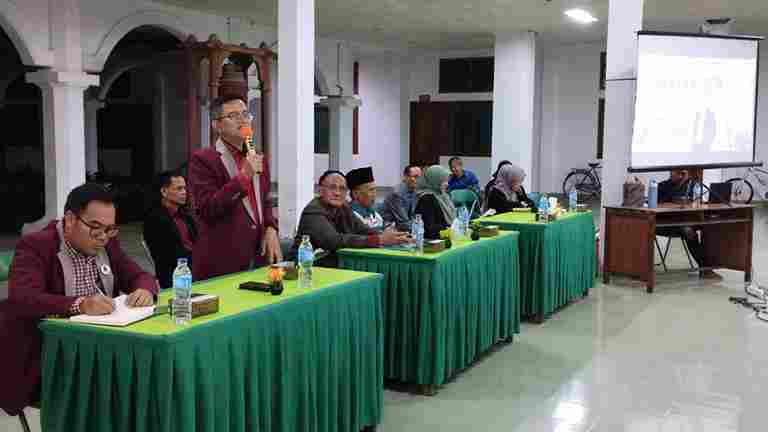
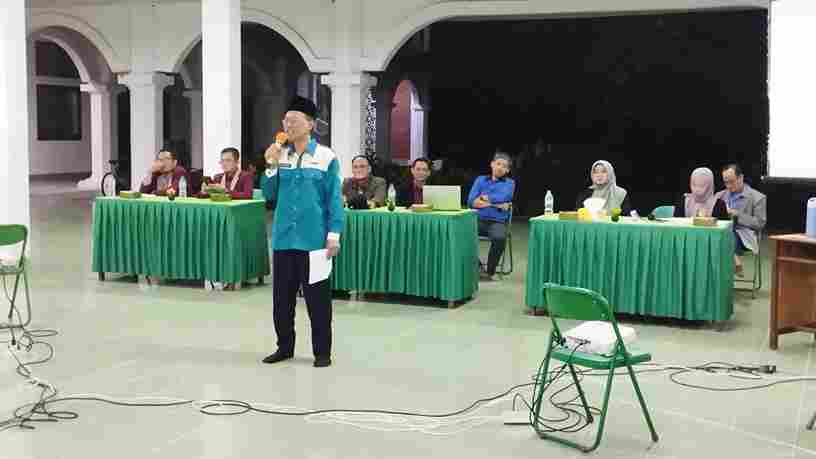
A lively atmosphere was felt on the first floor of the Al-Fajar Building on Sunday evening, July 19, 2026. From 7:30 PM to 9:00 PM, the 12th-grade students participated in a book discussion with Moch. Masuk Arifin, M.Pd. The event was moderated by Aulia Putri Abdillah. To lighten the mood and build rapport with the participants, the activity began with a cheerful icebreaker.
The students’ laughter at the beginning of the activity opened the way to a lively academic conversation. The book discussed is not simply born from imagination, but rather the result of observations and research into real life in the Al-Zaytun community.
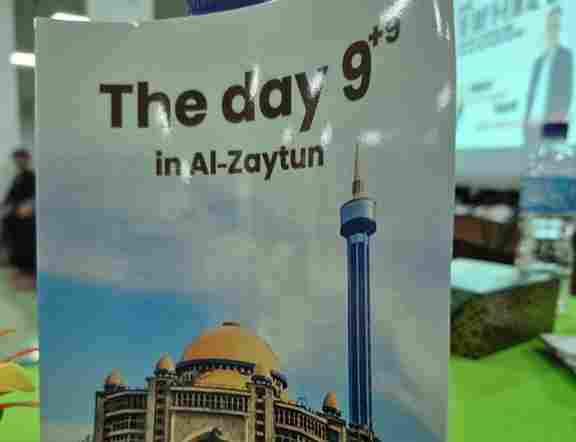
“The Day 9+9 in Al-Zaytun” is a collaborative work by nine students from the Al-Zaytun Islamic Institute of Indonesia (IAI Al-AZIS). The book emerged from a Community Service Program (KKN) activity in 2021, when the Covid-19 pandemic still restricted community movement and interaction.
At that time, community service (KKN) activities could not be carried out freely in the community as usual. Students had to conduct research activities within the campus environment. However, these limitations did not stifle creativity. In fact, from these limitations emerged the realization that Al-Zaytun itself is a rich social, educational, economic, cultural, technological, and environmental space for research.
The pandemic limited their activities, but not their thinking. The campus they saw every day transformed into a research space. The buildings, education system, dormitory life, agriculture, animal husbandry, technology, culture of tolerance, discipline, and leadership became the subjects of study, which were then compiled into a book.
The event opened with remarks from the Head of the Library, Wahyudi, S.Pd., who was responsible for organizing the event. He expressed his gratitude to all parties who supported the successful book review. The presence of the 12th grade students demonstrated that the library is not just a place to store books, but also a space for the exchange of ideas, experiences, and future prospects.
The next remarks were delivered by the Head of MPAP, Dr. Ali Aminulloh, M.Pd.I., M.E. In his remarks, he emphasized that Al-Zaytun, as a boarding school, has a highly supportive environment for developing an academic culture.
Boarding life allows the educational process to take place beyond class hours. Learning occurs through discipline, togetherness, responsibility, division of labor, organizational activities, environmental cleanliness, social communication, and various daily life experiences.
Therefore, activities such as reading, discussion, research, and book review are highly relevant to develop. Furthermore, the book being discussed utilizes Al-Zaytun as the object of research. The students are not reading something remote from their lives, but rather about the environment they experience directly every day.
Reading this book means learning to see Al-Zaytun from a different perspective. Something previously considered ordinary actually holds great educational value. Buildings are more than just structures, agriculture is more than just planting, discipline is more than just rules, and dormitory life is more than just living together. All are part of an educational system that shapes knowledge, character, skills, and social awareness.
Entering the main discussion, Moch. Masuk Arifin, M.Pd., began his presentation by explaining the background to the book and its compilation process. He explained that the book is a collaborative work developed through research by students during their Community Service Program (KKN) during the Covid-19 pandemic in 2021.
Limited mobility did not halt academic activities. Instead, the students were encouraged to gain a deeper understanding of the environment in which they were studying. They observed various dimensions of Al-Zaytun’s life, discussed their findings, compiled their writing, and synthesized them into a collective work.
Through his presentation, Moch. Masuk invited participants to explore the various advantages of Al-Zaytun education. The book describes Al-Zaytun from various perspectives, starting from an integrated campus based on civilization, developing a culture of tolerance and peace, economic independence, character education through discipline and role models, to agriculture and animal husbandry as laboratory of life.
The book also discusses technological innovations to build independence, diversity within unity, nationalism, a beautiful environment, symbolic architecture, and the visionary leadership of Sheikh AS Panji Gumilang. The overall discussion demonstrates that Al-Zaytun was designed not only as a place for teaching and learning.
“Al-Zaytun is a laboratory of life. Therefore, what is being built is not just a school, but a civilization,” was one of the key ideas that emerged in the presentation.
This statement became a point of reflection for the students. A laboratory of life means that every experience can be a lesson. In it, theory is tested through practice, knowledge is brought into contact with reality, and education is connected to the needs of life.
Agriculture, for example, teaches not only how to plant, but also patience, perseverance, food security, and respect for nature. Boarding school life teaches not only independence but also tolerance, communication, responsibility, and the ability to live together in diversity.
After the presentation, the activity continued with a question-and-answer session. The students’ enthusiasm was evident in the large number of hands raised. The questions posed were not only related to the book’s content but also touched on the creative process behind its creation.
One student asked how to start writing and compiling a book. This question demonstrated that the book review activity had succeeded in going beyond the goal of understanding the content of the reading. Books were no longer viewed as products far from reach, but as works they might produce in the future.
In a discussion about the world of writing, Dr. Ali Aminulloh was asked to add an explanation of writing techniques in the era of artificial intelligence. He explained that AI technology can be used to help generate ideas, develop outlines, improve language structure, and develop perspectives.
However, AI should not replace the thinking power, honesty, experience, and responsibility of a writer. Technology is merely a tool. The main ideas, intellectual attitude, accurate data, and authentic experience must still come from humans.
Writers in the AI era are not enough to simply string words together. They must also be able to verify the accuracy of information, select reliable sources, maintain academic ethics, and add a human touch to every piece of writing. Amidst the convenience of technology, intellectual honesty is becoming increasingly important.
Another equally interesting question came from students who wanted to learn more about IAI Al-AZIS. This interest was met with a positive response. The students wanted to learn more about academic life at the university, while IAI Al-AZIS was also enthusiastic about introducing them to the campus, educational programs, and various opportunities for personal development.
These questions seemed to bridge the gap between secondary and higher education. The book review not only brought readers and authors together but also connected the students’ hopes and the possibilities of their future academic journeys.
The event concluded with prizes for the best questioners, certificates awarded to the speakers, and a group photo. However, the evening wasn’t over yet. The chant “Gentures,” the name of the 12th grade students’ class, echoed with pride.
Amidst this spirit of togetherness, hopes for the future of IAI Al-AZIS were also echoed:
“IAI Al-Zaytun, excel, excel, excel!”
This call wasn’t just a closing event. It was a hope that the culture of reading, research, writing, and discussion would continue to grow within the Al-Zaytun community.
That night, a book opened many doors. A door to a more critical understanding of the environment, a door to entering the world of writing, a door to understanding the wise use of AI, and a door to continuing one’s education to a higher level.
The Day 9+9 in Al-Zaytun ultimately goes beyond the research findings of nine students. The book conveys the message that great work can emerge from limited circumstances. When the pandemic closed access to the outside world, the students discovered the vastness of knowledge within their own environment.
Because, for those with academic awareness, campus is not just a place to come, study, and then go home. Campus is a space to observe, question, research, write, and generate ideas. It is there that schools slowly grow into centers of civilization, and their students are prepared not only to face the future but to help create it.**
Ed
——