When Theology Meets Algorithms: From Al-Zaytun, the Message of Peace Resounds to the World
By: Ali Aminulloh
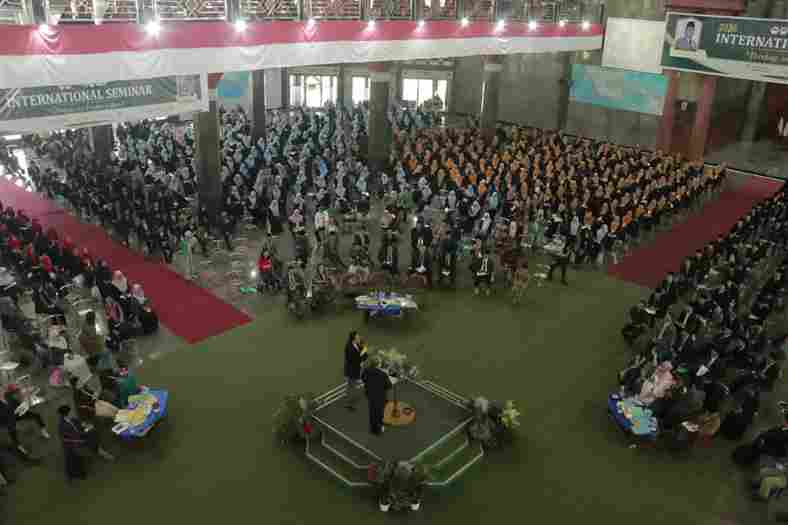
INDRAMAYU-JAYANEWS.COM — An unusual sight was witnessed at Mahad Al-Zaytun on Wednesday (June 10, 2026). Amidst the expansive educational area known as one of the largest Islamic boarding schools (pesantren) in Indonesia, professors, academics, religious figures, students, Islamic students (santri), researchers, and education observers gathered in an international forum to discuss a theme closely related to modern life: Theology and Popular Culture.
In an era where holy books, social media, artificial intelligence, and various streams of information live within the palm of a smartphone, the big question that arises is no longer whether technology will influence humanity, but rather whether human and divine values are still able to guide civilization amidst the rapid changes of the times.
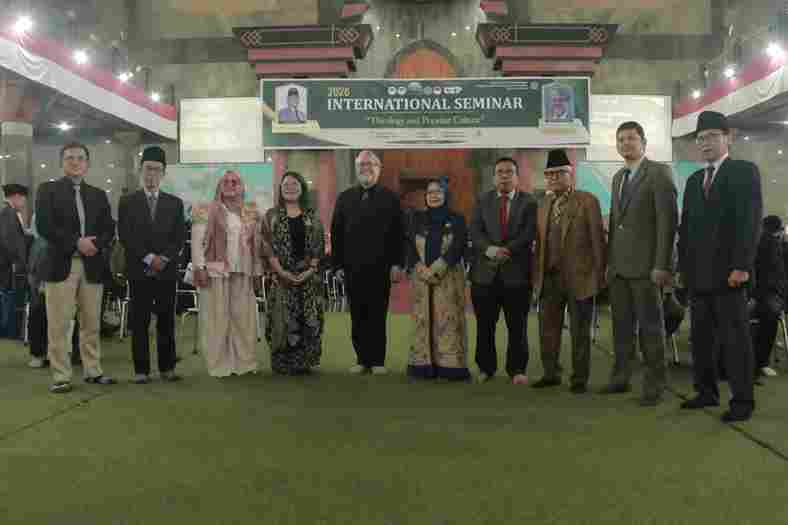
The international seminar, organized by the Al-Zaytun Islamic Institute of Indonesia (IAI AL-AZIS), featured four speakers with complementary perspectives. They were Dr. Irvan Iswandi, S.E., M.T., Prof. Dr. Idzam Fautanu, M.A., Prof. Dr. Hj. Aan Hasanah, M.Ed., and keynote speaker Rev. Prof. Dr. Joshua David Hollmann, Ph.D. from Concordia University, St. Paul, United States.
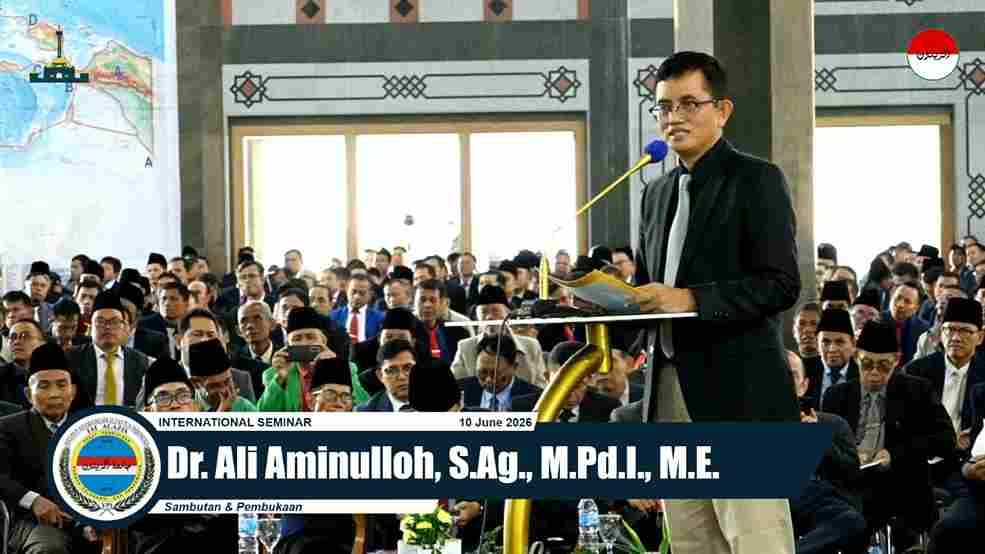
The seminar was opened by Dr. Ali Aminulloh, M.Pd.I., M.E., from the organizing committee, who also delivered remarks on behalf of the Rector of IAI AL-AZIS. He conveyed greetings and messages from the Grand Chancellor of IAI AL-AZIS, Shaykh Abdussalam Rasyidi Panji Gumilang, S.Sos., M.P., and the Rector of IAI AL-AZIS, Datuk Sir Imam Prawoto, KRSS., MBA., CRBC., who was unable to attend. Sheikh Al-Zaytun was unable to attend the event due to a previously scheduled medical examination, while IAI Rector AL-AZIS was unable to attend due to a health condition requiring rest and recovery.
Representing the institution’s leadership, Ali Aminulloh delivered a message from the IAI Rector, inviting all participants to use the seminar as a space for civilizational dialogue. He stated that the world currently faces serious challenges in the form of prejudice, discrimination, social polarization, and the misuse of technology that can erode human values. Therefore, education and theology must be present as moral forces capable of directing the development of popular culture toward a more peaceful, just, and humane life.
“The progress of a nation is not only determined by its technological sophistication, but by its ability to honor humanity,” was one of the messages that became the spirit of the seminar.
Tolerance That Doesn’t Stop at Discourse
The nuances of interfaith dialogue were already apparent from the opening remarks delivered by Imelda V.M. Aritonang, MA, MM, from the Lutheran Heritage Foundation Indonesia.
She fondly recalled her family’s long relationship with Al-Zaytun, which began with the late Reverend Dr. S.M. Siahaan, who taught Hebrew at Al-Zaytun. At that time, stigma and prejudice were still prevalent. However, the experience she felt was the opposite: openness, respect, and brotherhood. This relationship has even continued for decades.
For Imelda, this seminar was proof that tolerance is not just a slogan. It is a real experience that grows through education, dialogue, and human encounters.
When AI Enters the Lecture Room
The seminar’s theme became even more relevant when Dr. Irvan Iswandi, SE. MT., presented his research on theology-based digital ethics in managing information systems in Islamic universities.
According to him, artificial intelligence (AI) has now become part of students’ daily lives. AI is used for learning, conducting research, assisting with assignments, and completing various academic tasks. However, behind these significant benefits, new challenges arise, such as privacy violations, data misuse, algorithmic bias, AI-based plagiarism, and cybersecurity threats.
Therefore, digital transformation cannot rely solely on technical aspects. Higher education institutions require a strong moral and spiritual foundation. Irvan offered a digital ethics framework built on the values of Tawhid, Amanah, Adil, Ihsan, and Maslahah as a guideline for technology and artificial intelligence governance.
For him, technology must remain a tool that serves humanity, not controls it.
Theology at Peace with the Times
The seminar atmosphere became even more lively when Prof. Dr. Idzam Fautanu, MA., appeared with his characteristically communicative and humorous style.
Instead of jumping straight into theory, he first shared his experience touring Al-Zaytun for hours. He observed the educational facilities, student development patterns, nutritional needs, and the integration between educators. He believes that education at Al-Zaytun does not stop at the transfer of knowledge, but rather strives to build a comprehensive civilization.
Addressing the theme, Idzam emphasized that religious communities should not be hostile to the development of science, technology, or popular culture. The modern world is not an enemy to be shunned, but rather a reality that must be faced creatively and productively.
He believes that theology must be able to engage in dialogue with the times. Religion must provide moral direction, not become an obstacle to scientific progress.
Information Is No Longer Sought After
Another perspective was expressed by Prof. Dr. Hj. Aan Hasanah, M.Ed., who addressed the theme of the transformation of Islamic education in the era of the information revolution.
According to him, humans currently live in a unique era. While previously people sought information through search engines, now information seeks people. Digital algorithms continuously deliver information without interruption, shaping the way people think, view the world, and even make decisions.
In such a situation, Islamic educational institutions are required to undergo major transformations. Education is not enough to simply produce academically intelligent graduates. Education must produce individuals with strong character, good literacy skills, and competencies capable of responding to global challenges.
He reminded us that the downfall of a nation often begins not with war, but with the deterioration of the quality of education and the loss of integrity in the learning process.
“Wow”: Impressions from America
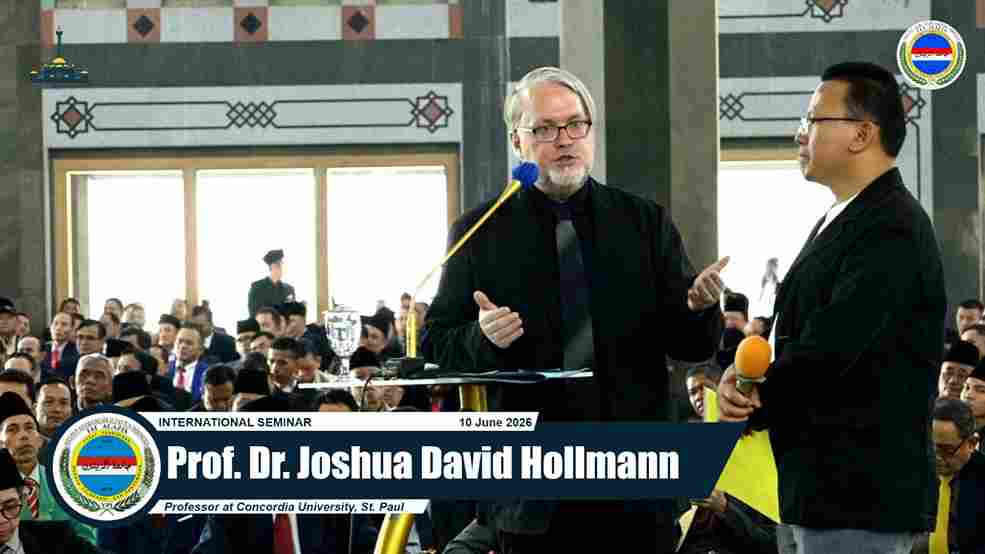
The seminar culminated with the keynote speech by Rev. Prof. Dr. Joshua David Hollmann, Ph.D.
The American academic admitted to having studied Al-Zaytun before coming to Indonesia. However, after witnessing life there firsthand, he summed up his experience in just one word:
“Wow.”
He admitted to having never seen an educational institution that integrated education, tolerance, peace, community development, and social harmony so thoroughly. He said he would take this experience back to the United States to share with students, colleagues, and the international community.
He particularly highlighted the importance of tolerance and peaceful coexistence. In his view, the modern world needs more space for dialogue and cooperation between religious communities. He sees Al-Zaytun as providing a concrete example of how these values are practiced in everyday life.
Nurturing Civilization Amidst Change
Ultimately, this seminar was not just about theology, technology, or popular culture. It was more than that; it was about the future of humanity.
About how education must produce a generation capable of living in diversity.
About how technology must be used ethically.
About how religion must be present as a force that ennobles humanity.
And about how dialogue must be prioritized to replace prejudice.
In a world increasingly polarized by algorithms, identities, and interests, the message emerging from the IAI AL-AZIS International Seminar felt particularly relevant:
Civilization is not built by technology alone. Civilization is built by humans who are able to combine science, faith, tolerance, and humanity in one breath.
And that day, at the Al-Zaytun Civilization Campus, this message was not just discussed. It is being put into practice.**
Ed/AA
——