Sughro’s Apocalypse for Schools :
*When Civil Servant Regulations, BOS, and Supervision Become a Trap*
By:
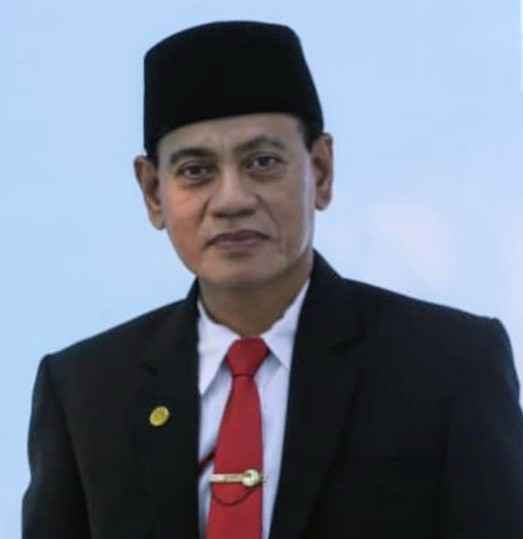
*Masduki Duryat*
_(Rector of the Al-Amin Islamic Studies Institute in Indramayu and Lecturer at UIN SSC)_
There is a great irony in our education governance today: the state has failed to meet the need for teachers, but schools are blamed when seeking solutions.
Through Law No. 20 of 2023 concerning Civil Servants (ASN), the government aims to organize the bureaucracy professionally, including eliminating honorary workers by 2026. However, in practice, school principals are forced to choose between violating regulations or halting the learning process.
When they choose to save students, the state comes through the inspectorate—not with solutions, but with bills for budget reimbursement. The ‘Sughro’s Apocalypse’ in the world of education is truly upon us.
*ASN Reformed, Reality Ignored*
Conceptually, the ASN Law embodies the spirit of meritocracy, digitalization, and equality between Civil Servants and PPPK.
But this reform lacks empirical grounding. It fails to account for the fact that many schools still lack teachers due to retirement and unequal distribution (Kemendikbudristek, 2023).
The state seems to be designing an ideal system on paper, while turning a blind eye to the emptiness in the classroom.
*Honorary Teachers: Problem or System Savior?*
The official narrative often positions honorary workers as a “problem” that must be solved.
In practice, however, they are the ones saving the education system from collapse. Without honorary teachers, many learning groups would be without teachers.
This demonstrates the state’s failure in educational human resource planning. Eliminating honorary teachers without a realistic transitional solution is tantamount to creating a new crisis.
*BOS Funds, Once a Solution, Now a Violation*
BOS funds have been an adaptive instrument for schools to address real needs, including paying honoraria for non-ASN teachers (Minister of Education and Culture Regulation on BOS). However, now, their use is being questioned.
School principals who use BOS to cover teacher shortages are considered to be violating. This is a form of policy inconsistency: the state allows problems to persist, but punishes initiatives to resolve them.
*Circular Letter Without Coercive Power*
Ministry of Elementary and Secondary Education Circular Letter No. 7 of 2026 actually opens up space for local governments to finance honorarium teachers.
However, without legal guarantees and fiscal support, this policy has not been implemented. Many local governments choose to remain silent for fear of legal trouble.
As a result, a vacuum of responsibility exists: the central government passes the buck to the regions, while the regions await confirmation from the central government.
*Inspectorate: Supervisor or Administrative Executioner?*
This is where the problem becomes even more serious. The Inspectorate should be present as a governance facilitator, not merely an enforcer of sanctions. However, what is happening in the field is that supervision is more oriented towards punishment than guidance. Findings of the misuse of BOS funds for honorariums for honorariums immediately result in the obligation to return the funds, without considering the context of the school’s real needs.
In fact, in the paradigm of good governance, the function of supervision is not only repressive, but also educative and corrective. The Inspectorate should be a strategic partner for school principals in ensuring accountable and adaptive governance.
When supervision loses its coaching dimension, it becomes a tool of fear, not an instrument of improvement.
*Principals: Education Managers or Potential Suspects?*
This situation places school principals in a highly vulnerable position. They are no longer simply educational leaders, but also “potential suspects” within the bureaucratic system.
Every policy adopted to safeguard learning has the potential to become an audit finding. This phenomenon reflects what Lipsky (1980) called the street-level bureaucracy dilemma: policy implementers are forced to make decisions in a gray area fraught with risk.
*Systemic Asynchrony: The Root of All Problems*
The main problem is not a single policy, but rather the failure of orchestration between policies.
The Civil Servant Law, the School Operational Assistance (BOS) regulations, regional policies, and oversight mechanisms operate independently without integration.
This creates a policy trap, where each actor operates according to its own rules, but collectively produces systemic chaos.
*Students Become the Unheard Victims*
Amidst this regulatory tug-of-war, the one party most disadvantaged is the students. A shortage of teachers means declining learning quality, increasing teaching loads, and a suboptimal educational process.
In the long term, this will impact the quality of national education (UNESCO, 2022).
Ironically, this issue is drowned in administrative debates far removed from the substance of education.
*From Punishment to Guidance: A Neglected Solution*
The solution to this problem requires a change in approach. First, the central government must provide clear and operational transitional regulations until 2026.
Second, harmonization of ASN policies, the School Operational Assistance (BOS), and regional authorities is necessary. Third, and most crucially, the inspectorate must be repositioned as a mentor, not merely a punisher.
Healthy supervision is one that understands the context, provides room for correction, and builds capacity. Without it, principals will continue to operate in the shadow of fear, not in the spirit of innovation and service.
*Returning the State to the Classroom*
Ultimately, this issue reflects the state’s absence in the classroom. The state is present in the form of regulations and audits, but not in the form of real solutions. If this situation continues, ASN reform will become merely an administrative project that sacrifices education.
The question is simple yet fundamental: does the state want to be respected as a regulator, or is it needed as a problem solver? If the answer is the latter, then it is time for policies to not only demand compliance but also deliver justice and support the realities of education.**
Indramayu, May 15, 2026
——