Family: A Priceless Pearl Amidst the Crisis of Our Times
(Reflection on International Family Day, May 15)
By Ali Aminulloh
Amidst the hustle and bustle of the modern world, people often pursue many things: position, wealth, popularity, even social recognition. But when night falls, when the body is tired and the heart grows quiet, people always long to return home. And that place is called family.
It’s no wonder that Bunga Citra Lestari’s song has left such a lasting impression on the hearts of Indonesians:
The most precious treasure is family…
The most beautiful palace is family…
The most meaningful poem is family…
The priceless pearl is family…
This song is more than just lyrics. It reflects the longing of modern humans for an increasingly scarce space of love. Because today, the world is experiencing a family crisis.
Divorce rates are on the rise. Children are deprived of attention. Parents are busy working. Technology brings those far away closer, but distances those close. Many houses stand majestically, but lack warmth. Many families live in the same house, but no longer live as one.
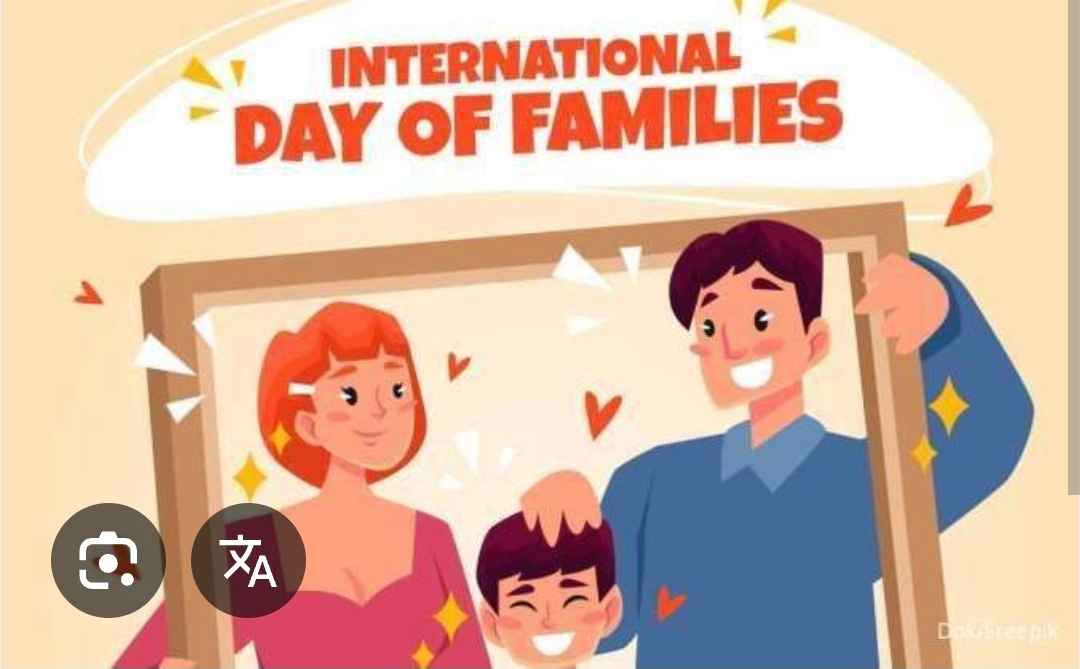
That’s why the United Nations designated May 15th as International Day of Families through UN General Assembly Resolution A/RES/47/237 in 1993. The UN views the family as the fundamental unit of society. If the family is fragile, the nation can easily falter.
The theme for International Day of Families in 2026 is:
“Families, Inequalities and Child Wellbeing.”
This theme feels highly relevant. Economic inequality deprives many children of access to education and healthcare. Digital inequality leaves rural children behind. Meanwhile, the inequality of affection has given rise to a generation that feels alienated in its own home.
Yet, since ancient times, almost all religions have held the family as a sacred institution.
In Islam, the family is the birthplace of sakinah, mawaddah, wa rahmah: tranquility, love, and compassion. The Quran describes spouses as each other’s garments, protecting each other and covering for each other’s shortcomings. The Prophet Muhammad (peace be upon him) even emphasized that the best people are those who are kindest to their families.
In Christianity, the family is seen as a small church. The home is the first place where humans learn love, forgiveness, and sacrifice. The relationship between father, mother, and child is considered a reflection of God’s love for humanity.
In Hinduism, the family is a space for practicing dharma. Domestic harmony is believed to be the foundation of universal balance. Parents are seen as life’s first teachers.
In Buddhism, the family is a place to practice compassion, patience, and self-control. Domestic happiness is not built on material things, but on a loving heart.
Meanwhile, in Confucianism, filial piety, or xiao, is the core of human morality. From a harmonious family, an orderly society and a peaceful nation will emerge.
The teachings of these religions point to one major conclusion: family is more than just blood relations. Family is the first school of civilization.
However, today, that first school is facing a severe test.
Urbanization has forced many parents to leave early and return late. Social media has replaced dinner table conversations with screens. Children grow up with the internet but lack hugs. Many parents are financially successful but fail to be emotionally present.
This family crisis is what actually gives rise to many social problems: juvenile delinquency, violence, depression, drug abuse, and the loss of direction in the lives of the younger generation.
Therefore, commemorating International Family Day is not enough with mere seminars and ceremonies. The world needs a new awareness of the meaning of family.
In this context, the concept of the trilogy of awareness introduced by Sheikh Abdullah Sheikh Panji Gumilang is highly relevant.
First, philosophical awareness. Humans must realize that family is not just a place to live together, but a space for the formation of life’s meaning. A home is not just a physical building, but a place where humans find identity, love, and human values.
Second, ecological awareness. Families must realize that they live in a social ecosystem that influences each other. The moral decay of society often begins with the breakdown of family relationships. When homes are filled with violence, hatred, and selfishness, the social environment is also damaged.
Third, social awareness, especially the presence of children in the family. Children are not an addition to the household. Children are a legacy of civilization. They need attention, role models, and affection. Children who grow up without love often seek substitute families on the streets, social media, or in the wrong environments.
This awareness must be rebuilt in modern society.
Because, in truth, family is not just a private matter. It is the foundation of the nation. Strong nations are born from strong homes. Great civilizations are born from strong families.
From a dinner table filled with warm conversation, from a mother’s prayer at midnight, from a father present to listen to his child, from a simple home filled with love.
International Family Day reminds the world that development is not just about building toll roads, tall buildings, and advanced technology. What’s more important is building people. And people are first built within families.
So perhaps, in this increasingly busy and noisy world, we need to pause. Call our mother. Hug our father. Listen to our children. Sit together with our partner without the distraction of gadgets.
Because in the end, when all the glitter of the world fades, we will realize:
The most beautiful palace is not a grand building.
But a home where love still resides.
Indonesia, May 15, 2026
——-