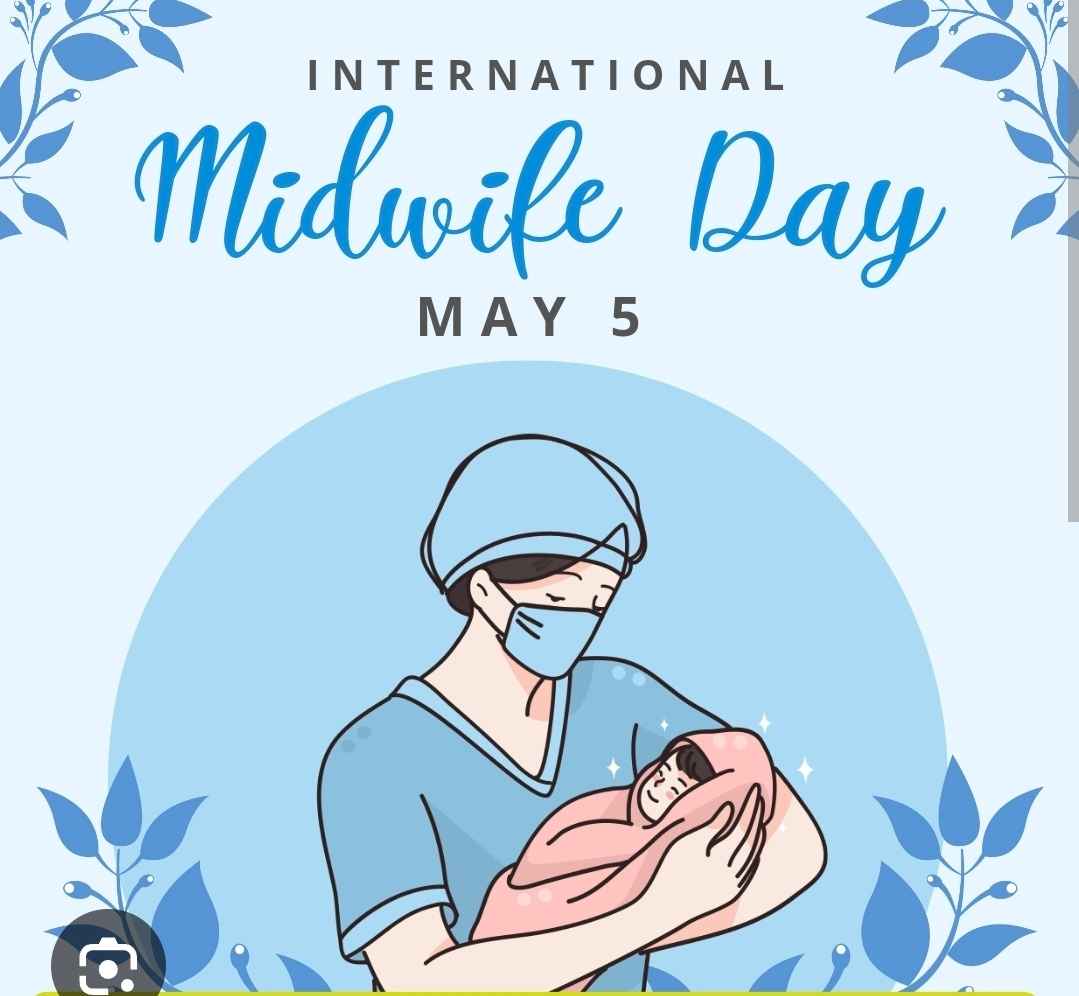
Midwifes: The First to Welcome Life
(Reflection on International Day of the Midwife, May 5)
By Ali Aminulloh
A baby’s first cry is often a resounding one, shattering the silence, bringing emotion, and then greeted by the smiles of a relieved family. But before that cry becomes a sign of life, there is one figure often overlooked: the woman who stands by the mother’s side, soothing, guiding, guarding, and ensuring that the thin line between life and death is safely crossed.
She is the midwife.
She is not a figure included in family memoirs. Her name is often not recorded in a child’s long story. Yet, it is her hands that first touch a human body upon entering the world. Before a person knows anyone, be it a teacher, a leader, or even their own country, they are first welcomed by a midwife.
So, International Day of the Midwife, celebrated every May 5, is not simply a medical professional ceremony. It is a reminder that human civilization begins in the delivery room, a silent struggle often filled only by the groans of a mother, the prayers of a family, and the determination of a midwife. The international midwifery organization, the International Confederation of Midwives, even adopted the theme “One Million More Midwives” for 2026, a stark warning that the world still lacks nearly one million midwives to ensure the safety of mothers and babies.
Ironically, in a country that speaks loudly every year about the golden generation, the profession that guards the entrance to that generation has not yet been fully accorded its proper dignity.
In the Trilogy of Awareness, initiated by Shaykh Al Zaytun, humans are required to possess philosophical, ecological, and social awareness. These three awarenesses are highly relevant when considering the fate of midwives in Indonesia, because this profession is not merely a medical matter, but also concerns the nation’s perspective on life itself.
Philosophical awareness teaches that every human action must stem from a deep understanding of the meaning of existence. In the context of midwifery, this meaning is crystal clear: midwives guard the starting point of life. They not only assist in childbirth, but also ensure that a mother survives to hold her baby, and that a baby receives its first breath.
In this space, the future of the nation is truly at stake.
Yet, how often this nation forgets this fundamental principle. Midwives are required to be on call 24/7, to be alert to complications, to remain calm when facing family panic, and to make careful decisions. However, the rewards often do not commensurate with the psychological burden or risks of their profession. They are a profession needed in times of crisis, but often overlooked when the system focuses on welfare.
Ecological awareness demands that people understand and overcome environmental challenges. This is where the struggle of Indonesian midwives truly lies.
In large cities, births may take place in sterile rooms with bright lights and complete equipment. However, in many remote areas of the country, births often take place in cramped wooden houses, on remote islands reachable only by boat, in mountains that require hours of travel, and even in flooded areas that cut off ambulance access.
When it rains, the roads turn to mud, the electricity goes out, and the signal is lost, the midwife must still come.
They carry their delivery bags through the darkness, cross rivers, or ride on the back of makeshift motorcycles, all for one purpose: to prevent the mother from giving birth alone.
Many village midwives are the only hope for the community. When doctors are unavailable, hospitals are too far away, and transportation is difficult to find, midwives are the first to arrive. They face not only blood and tears, but also an inhospitable environment.
Unfortunately, the state often relies solely on their heroism without providing genuine support. Facilities are minimal, medical equipment is limited, incentives in remote areas are stalled, and even job protection is often unclear. It seems as if devotion is reason enough to cover all the system’s shortcomings.
However, devotion should not be used as an excuse to tolerate injustice.
Social awareness, the third pillar in the trilogy, reminds us that humans live in a network of mutual aid. Midwives in Indonesia fulfill social functions that go far beyond the medical profession.
They are a go-to for young mothers struggling with breastfeeding. They serve as nutrition counselors at integrated health posts (Posyandu). They assist poor families anxious about the cost of childbirth. They witness cases of early marriage, maternal anemia, stunting, and even postpartum depression. In villages, midwives are often the first people called when families panic, long before they even think about going to the hospital.
In other words, midwives are the face of the state closest to the wombs of its people.
From the hands of midwives, we can discern whether the state is truly present or simply good at creating health slogans.
Unfortunately, many midwives still struggle with uncertain contractual status, unlimited working hours, overwhelming administrative tasks, and rarely discussed psychological pressures. They shoulder enormous responsibilities, but don’t always receive adequate legal and social protection when complications arise.
This is a profound irony.
This nation wants to reduce maternal mortality. This nation wants to prevent stunting. This nation wants to produce a superior generation. But this nation has yet to fully improve the welfare of the women who work at the forefront of all these agendas.
We often wish Midwives Happy Day, post appreciation posters, or write words of thanks. But midwives don’t need mere ceremonial praise. They need a system that supports them: strong education, comprehensive equipment, fair incentives, adequate transportation, legal protection, and social respect.
Because in the delivery room, a midwife isn’t just helping a mother give birth.
She’s safeguarding the future of this nation.
Every baby’s first cry is a symbol of new hope. But behind those tears, there are the footsteps of midwives that often go unheard, the sweat that goes uncounted, the anxiety that is swallowed, and the devotion that has long been taken for granted.
They are the first to welcome life.
This country should stop treating them as mere additions to health statistics and start embracing them as true guardians of civilization.**
Indonesia, May 5, 2026
——-