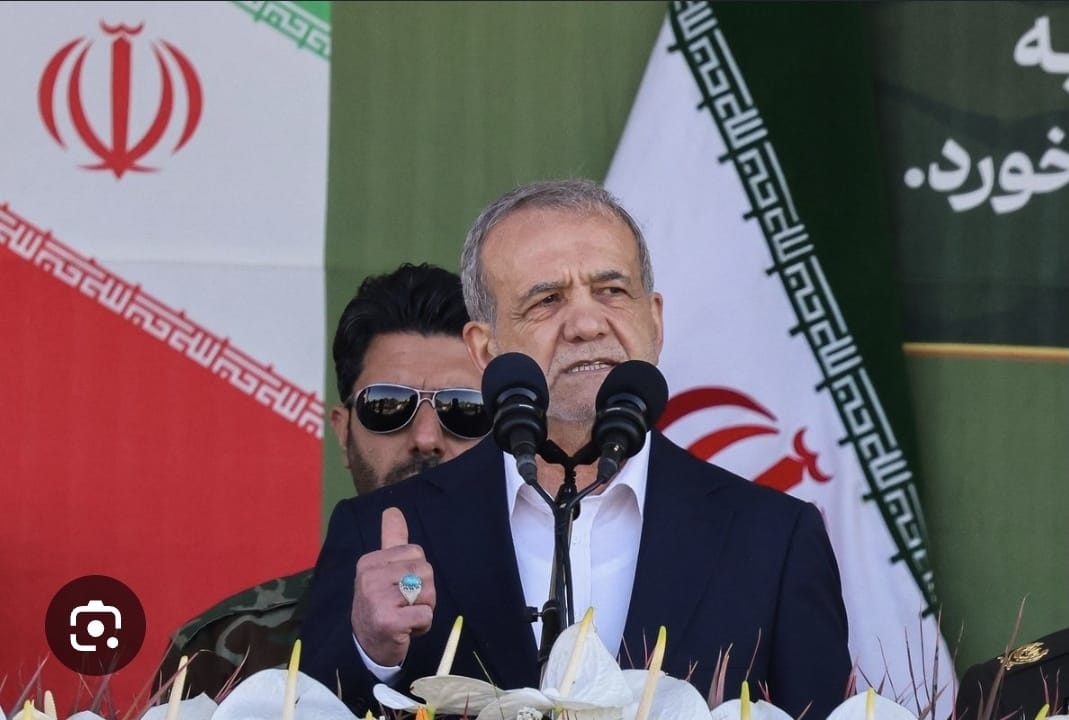
Learning from an Astute Iranian Leader
By: Dr. Ali Aminulloh, M.Pd.I., ME. (Lecturer at IAI Al-Azis)
In a world abuzz with conflict and recriminations between countries, there is one approach that is often overlooked: the power of words. Not bullets, not embargoes, but carefully crafted sentences. Sentences that can transcend national borders and touch people’s hearts. On Wednesday, April 1, 2026, Iranian President Masoud Pezeshkian chose that path: delivering an open letter to the American people through international media outlets such as Reuters, The Washington Post, and various official Iranian government channels. A move simple in form, yet profound in meaning and impact. This morning, it has garnered no less than 12 million readers on major channels, with countless shares and reposts.
The letter is more than just ordinary political communication. It is an example of how language can be the most subtle and yet the most incisive tool of diplomacy. In its contents, the Iranian President asserted that his country harbors no enmity toward the American people, writing: “We have no enmity toward the American people.” A simple opening line, yet one filled with a peaceful message.
He also emphasized Iran’s position in global conflicts by stating: “Iran has never initiated a war, and our actions have always been defensive.” This statement reinforces the narrative that Iran wants to be perceived as a defender, not an attacker.
Furthermore, the letter contains a sharp critique of United States foreign policy in the Middle East. In one of the most moving passages, he poses a reflective question: “Whose interests does this war actually serve?” This question is not merely rhetoric, but an invitation to rethink, especially for the American people themselves.
He also addresses America’s role in regional conflicts in a critical yet measured tone: “Is this policy truly in the interests of the American people, or in the interests of others?” This sentence demonstrates both courage and precision in delivering criticism without losing the ethics of communication.
At the letter’s conclusion, the Iranian President urges the American people to choose the path of peace: “The world today stands at a crossroads: between continuing the conflict or choosing dialogue.” A closing that not only invites but also reminds.
Upon closer examination, the purpose of this letter is not only informative but also strategic. First, he seeks to build sympathy for the American public by separating the people from their government’s policies. Second, he seeks to influence global public opinion, especially amidst growing criticism of the war and conflict in the Middle East. Third, this letter is part of Iran’s soft diplomacy, using words to pressure without direct confrontation.
This is where his intelligence lies. He chose a persuasive approach, not an aggressive one. He spoke not to the elite, but directly to the people. And he did not force answers, but instead invited thought.
On reflection, this approach aligns perfectly with the value of communication in the Quran. Allah teaches the concept of qaulan layyina: gentle words. The tone of the letter does not provoke emotions, but rather eases tension. This demonstrates that gentleness is a force capable of opening hearts.
However, this gentleness is accompanied by qaulan baligha: words that are targeted and leave a lasting impression. The questions he asks are not mere rhetoric, but rather raise awareness and invite reflection. He speaks not at length, but deeply.
On the other hand, there is also the qaulan syadida: firm and straightforward speech. The criticism of American policy is delivered clearly, without detours. Firm, yet measured. This proves that the truth can be conveyed without compromising ethics.
And finally, we find the qaulan karima: noble and respectful speech. By addressing the American people in a humane manner, this letter builds bridges, not chasms. It does not demean, but elevates the dignity of communication itself.
From this, we learn an important lesson: leadership is not just about power, but about how we speak. Gentle, precise, firm, and noble words can be a powerful instrument of change.
This letter may have been born out of geopolitical interests, but its lesson goes beyond that. It demonstrates that even amidst global conflict, there is still room for civilized communication. And perhaps, that is where the world’s hope today rests: in leaders who are not only strong in action, but also wise in their words.**
Indonesia, March 3, 2026
——