By: Dr. Ali Aminulloh, M.Pd.I., ME.
Amidst a world roiled by crisis: a global economic slowdown, geopolitical conflicts, inflation eroding purchasing power, and widening inequality, Indonesia stands at a historical crossroads. The question confronts us as a nation: will national development continue to be driven solely by growth figures, or will we boldly be guided by values of justice and social inclusion? It is at this juncture that Islamic economics finds its relevance. Not as a religious symbol, but as the architecture of Indonesia’s future economy.
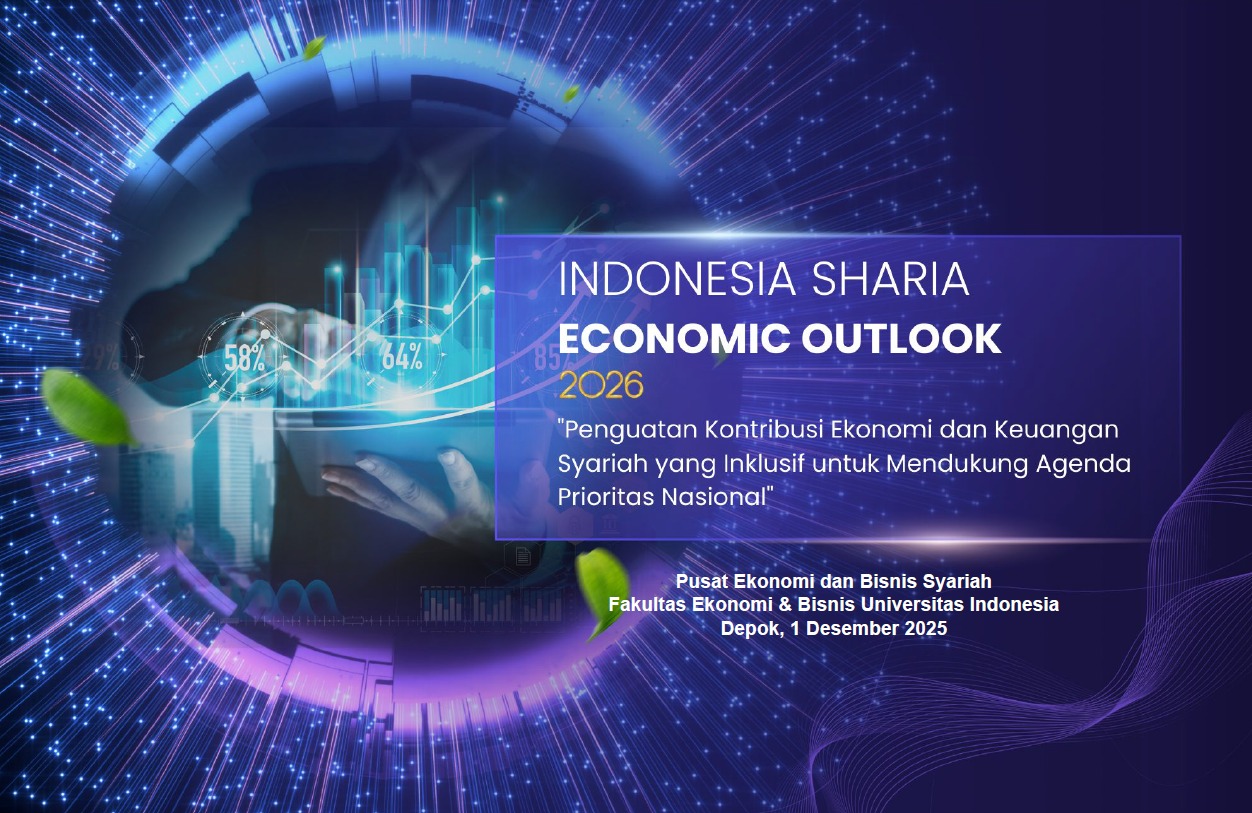
A study compiled by the Center for Islamic Economics and Business, Faculty of Economics and Business, University of Indonesia, on December 1, 2025, entitled “Indonesia Sharia Economic Outlook 2026 (ISEO 2026): Strengthening the Contribution of an Inclusive Islamic Economy to Support the National Priority Agenda,” emphasizes one important message: Indonesia’s Islamic economy has transcended the discourse phase. Now entering the proving phase, can it become a real solution to the nation’s fundamental problems?
A Forum Presenting the Nation’s Direction
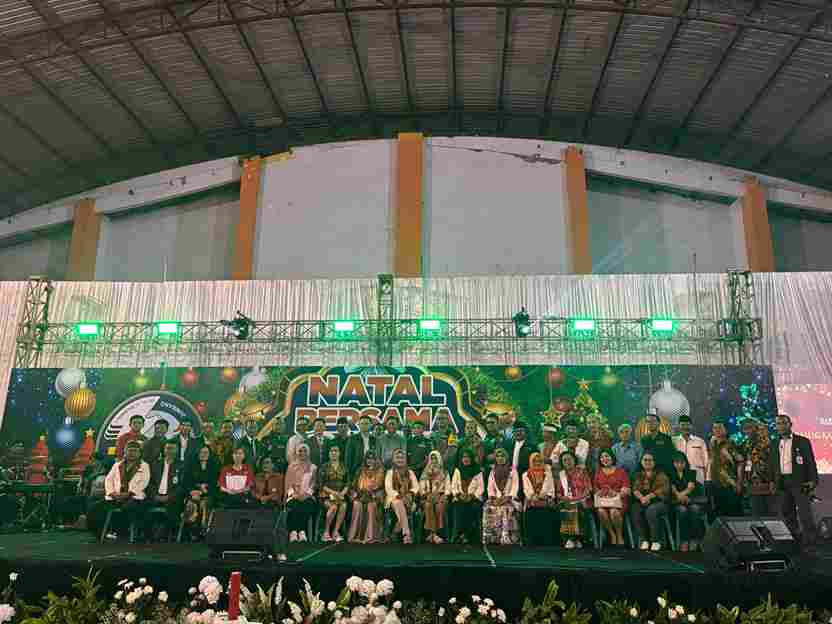
The ISEO 2026 dissemination forum was more than just an academic discussion. The event was opened by Yulianti Abbas, Ph.D., Dean of the Faculty of Economics and Business, University of Indonesia, who emphasized that universities must not stop being critical observers. They must act as architects of ideas, bridging research, public policy, and the real needs of society. It is in this context that ISEO 2026 is positioned: science that intervenes, not just leaves a page.
As Keynote Speaker, Prof. Dr. (HC) KH. Ma’ruf Amin delivered a fundamental message that became the common thread throughout the discussion. He emphasized that the development of the national sharia economy cannot continue to rely on partial and fragmented regulations. “The sharia economy will not take off if its legal framework is disintegrated,” was more or less the message he conveyed. According to him, the Sharia Economic Law is absolutely necessary as a national legal umbrella that unifies all regulations on the Sharia economy and finance to ensure certainty, direction, and a unified driving force. Without a solid legal foundation, the Sharia economy will be morally strong but structurally fragile.
The second keynote was delivered online by Dr. (HC) Airlangga Hartarto, MBA, MMT. He emphasized that the Sharia economy and finance hold a strategic position within the national development architecture. The government views this sector as a new driver of growth through strengthening the halal industry, accelerating halal certification, and expanding Sharia financing for MSMEs. Within the national policy framework, the Sharia economy is no longer positioned as an add-on, but rather as a core part of an inclusive and globally competitive growth strategy.
Opportunities Amidst Global Uncertainty
ISEO 2026 captures a global landscape fraught with uncertainty. Global economic growth is expected to slow to around 3.1% in 2026. However, Indonesia remains optimistic, targeting growth of around 5%. This optimism is not merely political courage, but rather rests on domestic potential, one of which is the Sharia economy.
Globally, there are nearly 2 billion Muslim consumers with total spending reaching US$2.43 trillion. Domestically, Indonesia’s Islamic financial assets exceeded IDR 3,000 trillion as of September 2025. Meanwhile, the collection of Islamic social funds (zakat, infaq, sedekah, and other religious social funds) has reached IDR 40.51 trillion. These figures are not empty statistics. They represent social and economic energy that, if managed productively and integratedly, can act as both a social cushion and an engine of growth.
When the Islamic Economy Integrates with the National Priority Agenda
The main attraction of ISEO 2026 lies in its ability to interpret policy realities. The Islamic economy is not relegated to the sidelines, but rather “married” to the national priority agenda.
The Free Nutritional Meal Program (MBG), for example, is not just about food distribution. It presents a significant opportunity to build a halal supply chain: from slaughterhouses and food processing to logistics. Within the poverty alleviation agenda, zakat and waqf are directed to support programs such as People’s Schools and Village Cooperatives, shifting philanthropy from a charitable approach to a productive one. At the grassroots level, halal MSMEs are projected as the driving force for economic independence and equitable prosperity.
Ambitious Targets Towards 2029
ISEO 2026 also sets ambitious targets as part of the 2025–2029 National Medium-Term Development Plan (RPJMN). Halal certification is targeted for 7 million products, a significant jump from the 2.17 million products achieved in 2023. The ratio of Islamic financial assets to GDP is expected to reach 51.42%. Meanwhile, halal exports are directed to penetrate non-traditional markets such as Africa and South Asia.
These targets are a clear signal: Indonesia does not want to
it will forever be a major market. Its ambition is to rise to the top as a major producer and standard-setter for the global halal economy.
Structural Challenges That Cannot Be Ignored
However, this report also honestly opens old wounds. Sharia economic literacy has reached 42.8%, but inclusion remains low; many are aware of it, but not many are using it. From a human resource perspective, approximately 80–90% of the workforce in the sharia industry lacks a background in sharia economics. At the policy level, the absence of a master regulation in the form of the Sharia Economic Law often hinders the development of this sector due to sectoral egos and overlapping regulations.
From Recommendations to Concrete Action
To address these challenges, ISEO 2026 recommends concrete steps: harmonization of cross-sectoral regulations, product innovation such as green waqf and bullion banks, the development of a One Data Center for the sharia economy, strengthening vocational training based on linkages and matches, and optimizing Halal Industrial Zones through fiscal incentives and affordable energy.
Epilogue: Sharia Economics as a National Ijtihad
Ultimately, the Indonesia Sharia Economic Outlook 2026 is not just an annual report. It is a national ijtihad, a conscious effort to reformulate the direction of Indonesia’s economic development amidst the global crisis and the exhaustion of old paradigms.
2026 will be the year of proving ground. Will sharia economics cease to be an alternative narrative or truly become the mainstream of national development? If regulations are unified, human resources are strengthened, and sharia instruments are directed productively, then sharia economics will no longer be merely an “economy for the people.” It will become an Indonesian economy rooted in values, driven by data, and aligned with the future.***
Indonesia, January 18, 2026
——-