GREEN REVOLUTION: AL-ZAYTUN’S PATH TOWARDS FOOD SOVEREIGNTY
By Dr. Ali Aminulloh, S.Ag.M.Pd.I.M.E (Lecturer at IAI Al-Azis)
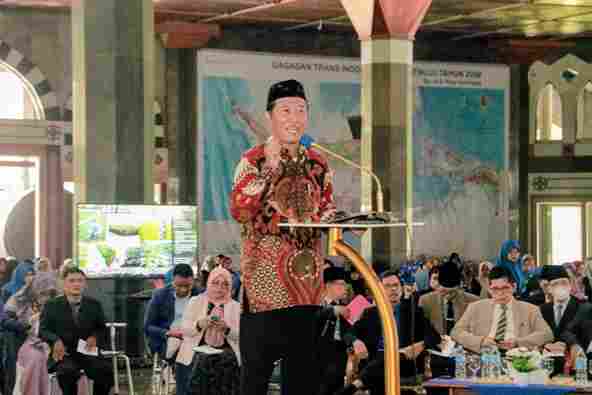
The Al Zaytun Student Training program entered its 25th session on Sunday, November 23, 2025, featuring Prof. Dr. Ir. Ali Zum Mashar, M.Si., a researcher and agricultural practitioner specializing in biotechnology. Following the speaker’s presentation, Sheikh Al Zaytun provided an in-depth response in the closing and closing session of the public lecture, highlighting the importance of national consistency and the central role of educational institutions in achieving food sovereignty.
The Snare of Neoliberalism and the Threat to the Golden Generation
In his presentation, Prof. Ali Zum Mashar clearly dissected the roots of the national food crisis. He called the 35-year food dependency “Neoliberal Colonization,” costing the country hundreds of trillions of rupiah annually. Ironically, Indonesia, as an agricultural country, still imports 90% of its soybean needs and 100% of its wheat needs.
The biggest threat revealed is the invasion of GMO (Genetically Modified Organism) soybeans. These imported soybeans are categorized as animal feed in their country of origin, but are consumed by the Indonesian people. The resulting impact is claimed to cause cerebral stunting, which has the potential to undermine the demographic bonus in 2035 and threaten the realization of Golden Indonesia 2045. This dependency creates “modern slaves” in their own land.
Prof. Ali views Al-Zaytun as a “center of civilizational change” because this institution prioritizes nature-based and environmental education, making it the foundation for a developed and sovereign nation.
Three Pillars of the National Biotechnology Revolution and Innovation
To escape the Neoliberal trap, Prof. Ali launched Three Agricultural Revolutions:
1. Land Revolution: Building secure, sustainable land for self-sufficiency, such as designating 1 million hectares of land for soybeans.
2. Productivity Revolution: Significantly increasing crop yields through biotechnology.
3. Organic Revolution: Returning to the use of regenerative organic fertilizers, eliminating dependence on chemical fertilizers.
Soybeans and Rice: World Champions from the Nation’s Laboratory
Furthermore, Prof. Ali introduced two leading biotechnology innovations as strategic weapons for food sovereignty:
1. Garuda Merah Putih Soybeans (Non-GMO): This variety is claimed to be capable of achieving productivity of 5.3 to 6.5 tons per hectare, far surpassing US soybeans (2.7 tons/ha) and local soybeans (1.2 tons/ha). Its potential is increased because Indonesia, as a tropical country, allows for two to three harvests per year.
2. Trisakti Rice or Kalimah Thayyibah Rice (PKT): This super-fast rice variety requires only 75 days to harvest (vs. 4 months for regular rice), with a potential yield of up to 14–17 tons per hectare. This fast harvest allows irrigated land to be harvested three times a year, creating a national rice surplus of 13–30 million tons per year without clearing new land. Prof. Ali calls PKT a “weapon of international diplomacy.”
Google Microbes (BioP2000Z): Guardians of Soil Fertility
As part of the Organic Revolution, Google Microbes technology (International Patent: BioP2000Z) was introduced. These microbes function as intelligent carbon-based regenerative fertilizers, capable of searching for and combining the nutrients needed by plants and increasing lime uptake in the soil, ending farmers’ dependence on chemical fertilizers.
Shaykh Al Zaytun’s Response: Philosophy, Consistency, and Mission of the Polytechnic
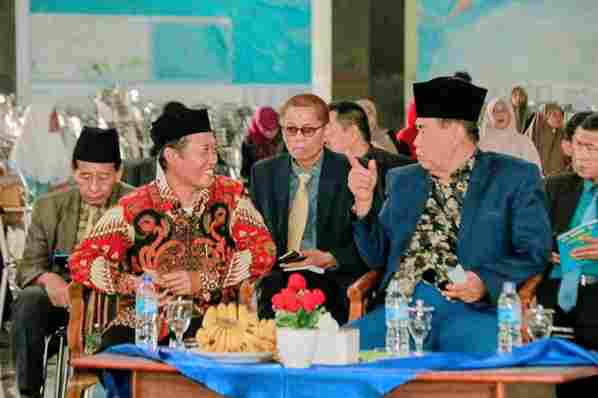
Following Prof. Ali’s presentation, Shaykh Abdussalam Panji Gumilang, S.Sos. M.P., provided a comprehensive response and conclusion.
Rabbul Alamin’s philosophy
Shaykh connects the food problem with God’s fundamental task: to fill His creatures and provide security to the universe, so that he deserves to be called Rabbul Alamin (Guide/Educator of the Universe). He quoted the verse “Dhaharol facade fil bahri wal bahri bima kasabat aidinnas” (Damage on land and sea is caused by human hands), emphasizing that nature does not actually need humans, but humans really need nature.
The Challenge of National Consciousness and Consistency
Shaykh highlighted the problem of “inconsistency” and “lack of awareness” in society. For example, on the occasion of August 17, people sang the song “Who Dares to Lower You” (Red and White Flag), but the flag was still lowered at 5 pm. He called this a symbol of inconsistency that must be ended immediately.
Real Action and Educational Vision
Shaykh emphasized Al-Zaytun’s commitment to be an example:
1. Institutional Food Security: Al-Zaytun prepares 1,600 tons of rice per year (only 1,000 tons are eaten), and the remaining 600 tons are stored and distributed to cooperatives, with the proposal to form a “Red and White Cooperative.”
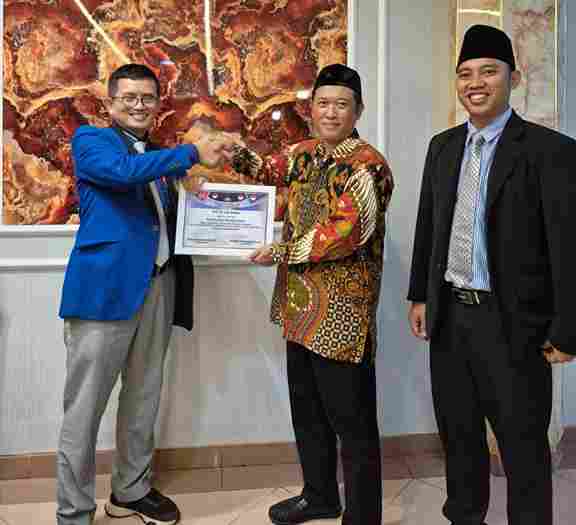
2. Research Competition: Syaykh received a grant of 30 kg of PKT seeds to be planted on 5 hectares, challenging to hold a “research competition” between educated Al-Zaytun students against state-funded researchers.
3. Refusing to become a migrant worker: Syaykh criticized the policy that produces vocational school graduates only to become Indonesian Workers (TKI) abroad. He emphasized that Al-Zaytun Homeland Polytechnic must produce Human Resources (HR) who are able to manage and prosper their own homeland.
In closing, Syaykh said that this symposium was part of Al-Zaytun’s aim to gather 45 professors to prepare a Green Book that would reorganize Indonesian education, make education the foundation for a modern, advanced and faithful civilization, and realize eternal food sovereignty.**
Indramayu, 24 November 2025
——