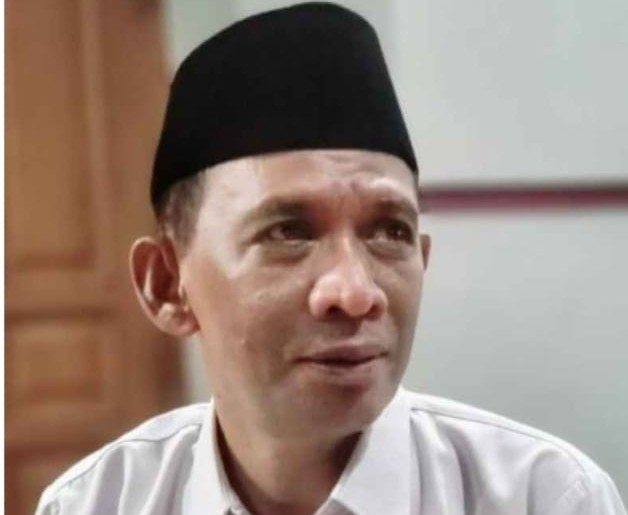
Political Analyst, General Secretary of the Indonesian Ulema Council (MUI) for Indramayu Regency
H. Taufiq Hidayat possesses the necessary “credentials”—he is more than just meritocratically qualified to lead the Golkar Party in Indramayu. He deeply understands the ecosystem and the internal ethos of the Golkar Party—a party described by William Liddle as a “melting pot party,” a gathering point for political activists from diverse social segments, including various mass organizations, professions, and more.
Therefore, his election by acclamation as Chairman of the Golkar Party’s Indramayu Regional Executive Board (DPD) for the 2026–2031 term—which took place during the 11th Regional Conference (Musda) of the Indramayu Golkar Party (Sunday, November 8, 2026) at the Swiss-Belhotel Indramayu—comes as no surprise to this author; it is, in the context of “natural politics,” exactly as it should be. His experience within the Golkar Party is extensive; he rose through the ranks to become a key member of the “inner circle” of the Golkar Party’s Indramayu Regional Executive Board (DPD). Simultaneously, he built a legislative career, serving in various capacities—from ordinary member to Speaker of the Indramayu Regional House of Representatives (DPRD)—and currently serves as a member of the West Java Provincial DPRD.
In his remarks following his election to lead the Indramayu branch of the Golkar Party (as cited by RRI, November 8, 2026), H. Taufik Hidayat outlined a vision for the party to reclaim its position as a political epicenter—specifically by winning the 2029 general election and regaining control over the technocratic leadership of the local government in the 2030 regional head election (pilkada).
During his tenure as Acting Chairman of the Indramayu Golkar Party (as cited by *Radar Indramayu*, October 21, 2026), H. Taufik Hidayat stated that the party’s goal—to secure at least one additional seat per electoral district, reaching a total of 20 seats in the Indramayu DPRD by the 2029 election—is a target rooted in “pragmatic realism.”
In other words, this target of 20 DPRD seats is both rational and measurable, given the social base of the Indramayu Golkar Party and its political approach—characterized by “pragmatic realism” (referred to within Golkar as *kekaryaan*, or a focus on “constructive work”). This approach transcends the traditional electoral divides—what Clifford Geertz once categorized into three social variants: *Santri* (devout Muslims), *Priyayi* (the traditional elite/bureaucratic class), and *Abangan* (nominal Muslims).
Because of its nature as a “melting pot” for diverse social segments, the Golkar Party is arguably best positioned to win the 2030 regional election in Indramayu. The party has developed a sophisticated ability to interpret the public’s collective will and integrate it into a technocratic framework of electoral strategy. The Indramayu branch of the Golkar Party possesses the necessary prerequisites—a strong set of political assets, including a well-established party infrastructure, a developed pool of political human resources, and the social capital required to craft a roadmap toward achieving its two primary political objectives.
Nevertheless, the path is not straightforward; the Indramayu Golkar Party still faces several “pieces of homework” to reach these goals. These are challenges that the party must address with clarity and precision as it prepares for the upcoming political contests: the 2029 legislative elections and the 2030 regional head elections.
First, to borrow a term from Jefry Wonters, the Indramayu Golkar Party must sharpen its “political differentiation”—establishing a distinct identity that sets it apart from other parties, particularly Gerindra and Nasdem. As offshoots of the original Golkar, these parties share a significant overlap in their electoral base. Strengthening the party’s roots within its grassroots social base is the key.
Second, the party must take a more serious approach toward “Generation Z” voters, who account for 25.98% of the Indonesian population. With 70% of this group being first-time voters, they have no personal recollection of Golkar’s dominance during the New Order era. Furthermore, having grown up fully immersed in the digital world, they inhabit a social ecosystem entirely different from that of older generations. Consequently, they are unlikely to be swayed by traditional, large-scale “crowd-based” campaign models.
Third, in preparation for the 2030 regional head elections, it is crucial for the Indramayu Golkar Party to focus on candidate branding, supported by survey-driven political strategy. In the age of social media, a candidate’s genuine capability and integrity can easily be overshadowed if they lose the “virality” battle—even to opponents whose own integrity and competence may fall below standard. Above all, the responsibility of the Indramayu Golkar Party under the leadership of H. Taufiq Hidayat extends beyond merely winning the 2029 general election and the 2030 regional head election; it concerns how the political power attained can guide the social transformation of the community within an ethical framework aimed at affirming justice in the public sphere.
This aspiration for public justice is the very mission behind the establishment of political parties within a democratic system. It is for this reason that Francis Fukuyama describes democracy as a “noble and civilized path,” as it strives to bring about public justice—a task that is arduous, yet noble.
Congratulations to H. Taufiq Hidayat on his election to lead the Indramayu Golkar Party for the 2026–2031 term a significant mandate indeed modest yet noble path—a collective journey toward social transformation, grounded in the ethical values of public morality.
Indramayu, November 9, 2026
Best regards.
—-