President Soeharto’s Intelligence and Spiritual Strength Must Be Ended by Intelligence and Spiritual Strength Too
Author: Jacob Ereste
Freelance Journalist
Indeed, the dimension of spirituality encompasses the scientific, natural, and divine levels. Therefore, human perfection can be seen from their divine intelligence, which is more spiritual in nature. Many acknowledge that President Soeharto’s spiritual content has significantly influenced the lives of Indonesian citizens—not only those of the Javanese ethnic group—but also penetrated the spiritual realms of other Indonesian ethnic groups, without exception.
This President’s profound spiritual weight and content is evident in his ability to unite religion and politics, which are closely intertwined. Thus, Soeharto’s spiritual influence has shaped his personality and outlook on the world. Moreover, the spiritual potential of the Indonesian people is indeed capable of receiving it. Thus, in various political, economic, cultural, and religious studies, Suharto’s 32-year presidency of Indonesia predominantly opened up opportunities to develop new perspectives on understanding and developing spirituality, providing opportunities for reflection for many to pursue and develop their spiritual potential to achieve maximum intelligence through the growth of various associations, groups, or spiritual schools to guide and encourage followers to draw closer to God.
Suharto played a significant role in promoting religious understanding—particularly Islam—in Indonesia by building a number of distinctive mosques, such as the 999 Mosques, built by the Pancasila Muslim Charity Foundation (YAMP) without state funds, even in Kupang, East Nusa Tenggara, by collecting alms from Muslim civil servants and members of the Indonesian National Armed Forces (TNI).
Haji Muhammad Suharto promoted a nationalist and Pancasilaist understanding of Islam. This led to the emergence of several critical figures who considered Suharto’s policies inconsistent with Islamic teachings. For Christianity, Suharto did the same, emphasizing tolerance and supporting Pancasila. This encouraged the Church to play an increasingly active role in nation-building and instilling Pancasila values in its followers. The same applies to Catholicism, Hinduism, and Buddhism.
Despite strict controls, the level of tolerance between religious communities improved relatively during the Suharto era. This interfaith harmony was a crucial part of the macro-policies of the government, known as the New Order, which persistently maintained national stability through various sectors and areas of Indonesian life, aiming to improve the quality of economic welfare, even achieving food self-sufficiency.
At the very least, President Suharto’s administration—despite its top-down approach—was also notable for improving religious literacy among the public, providing access and opportunities for broad religious education. At the very least, Muslims performing the Hajj pilgrimage to Mecca was far more orderly and joyful than in subsequent periods.
Efforts to strengthen the relationship between religion and Pancasila during the Soeharto era included the Pancasila Understanding and Implementation Guidelines Program (P4) funded by the Pancasila Ideology Development Agency (BPIP), although the specifics of the program and its activities were unclear.
At a minimum, the P4 program during the New Order era was implemented through various initiatives, including restructuring, education in schools, and activities within various government and community institutions. Then there was BP7 (Pancasila Implementation and Implementation Education Development Agency), which coordinated the implementation of P4 (Planning for Understanding and Implementing Pancasila), a state ideology generally required for civil servants and the military at that time. So, from Soeharto’s aggressive socialization of Pancasila, it’s clear that the spiritual content was far superior to that of previous and subsequent periods.
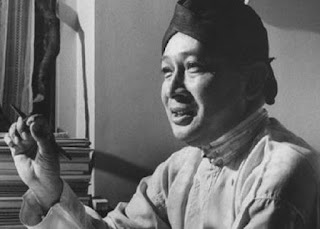
Soeharto not only established religious symbols through traditional Muslim attire but also diligently performed religious rituals, thus projecting his image as a religious leader. He even diligently cultivated relationships with clerics and religious figures, even though many considered this merely to gain support and legitimacy.
An important note during the Soeharto era (1966-1998) is that President Soeharto significantly shaped Indonesia’s spiritual landscape, influencing people’s understanding of spirituality in religious practice. The distinctive character of Indonesian spirituality, linked to Juanda’s nationalism, remains evident today. Thus, cultivating the seeds of spirituality within a religious context became a way to foster national unity and cohesion through spirituality.
Focus development during President Soeharto’s time It can be understood that the goal is to alleviate poverty, which has worsened in Indonesia over the past ten years. The development of infrastructure, industry, and agriculture can be considered successful. Although many consider the legal field, particularly human rights, to be poor. However, the spiritual life of the people has improved significantly due to the support of a relatively healthy and improving economy, allowing citizens to develop their spiritual desires and potential to the fullest. Such was the spiritual intelligence of President Soeharto, who was able to combine his military background with spiritual intelligence, enabling him to lead Indonesia for 32 years.
Suharto’s leadership of at least three decades in Indonesia has become legendary and a kind of myth, having had a significant impact on politics, the economy, culture, and religion, particularly the nuances of spirituality that developed in Indonesia. The reality of his role, his legitimacy as the leader of the New Order, enabled him to create an image of himself leading a strong and stable government. This, however, ultimately ended in a wave of reform that could not ignore the awareness and movement of the people’s spiritual power. Even so, it is still appropriate to say thanks and salute to Suharto for all his good services, without the need to bring up the mistakes and errors of the deceased who has been living peacefully in nature.**
Banten, September 30
2025
—-