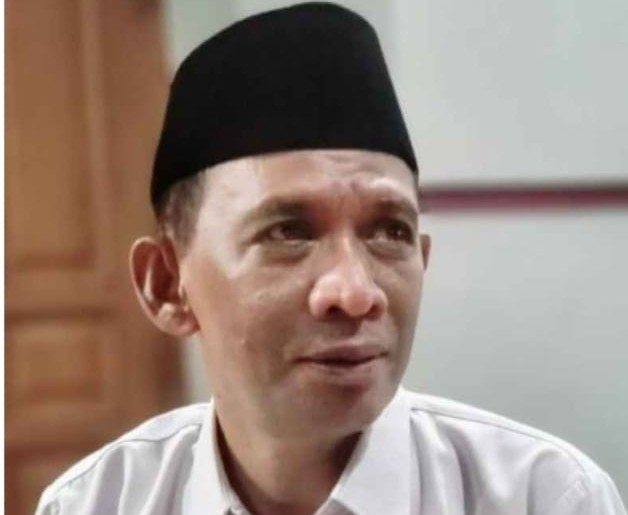
General Secretary of the Indonesian Ulema Council (MUI), Indramayu Regency
The barrage of criticism from various segments of society regarding the excessive actions of certain police officers—who allegedly conducted a “raid” on the “Hamalatul Qur’an” Islamic boarding school (*pesantren*) in Sukoharjo, Central Java—is both natural and understandable. It represents a form of solidarity among the Muslim community, finding a focal point at this particular moment.
On the other hand, it is important that we de-escalate the situation—avoiding constant amplification or exaggeration—without, however, diminishing our empathy for the female students who have suffered severe psychological trauma, nor excusing the reckless conduct of the officers involved.
If left to be framed excessively—particularly through narratives from certain community figures that position the police and Islamic boarding schools (as symbols of Islam) in a direct, confrontational, “head-to-head” conflict—the situation could pose a danger to the integration of Islamic identity within our nation’s social cohesion.
In the social theory of Benedict Anderson—a scholar who conducted extensive research on Indonesia—the nation is envisioned as an “imagined community”: a modern national entity held together by a shared sense of belonging.
Within the diversity of a modern nation, citizens—despite their differences in religion, culture, ethnicity, race, profession, and so on—collectively imagine themselves as part of a single, unified Indonesian national entity.
This perspective suggests that, sociologically, the community of Islamic boarding schools and the community of law enforcement officers are both integral parts of the same national entity. Together, they are meant to advance Indonesia, working toward a shared vision within the bonds of our national identity. In this context, the *santri* (Islamic boarding school student) community and the police force—viewed through the lens of national identity—exist in a “reciprocal” relationship. This is a mutually reinforcing dynamic, where both sides serve to remind one another of their respective responsibilities: upholding the integrity of the National Police (*Polri*) on one hand, and preserving the dignity of the *santri* on the other.
This highlights the urgency of de-escalating the tensions surrounding the aforementioned case. It is crucial to avoid sensationalizing the events at the Hamalatul Qur’an *pesantren* (Islamic boarding school) in Sukoharjo. This is not intended to cover up what occurred, but rather to foster reflection and dialogue between the police and the *pesantren*—a space for mutual introspection.
While legal proceedings regarding the alleged offenses by either party must continue, a collaborative dialogue for self-reflection is essential. As integral components of the nation, neither side should claim victory based on the authority they possess; conversely, it would be equally unwise for the *pesantren* to seek a “win” through the mobilization of digital-age public support.
Since his appointment a few months ago, the Chief of the Indonesian National Police, General (Pol) Suyudi Ario Seto, has adopted the guiding principle “The National Police Together with the Community” (*Polri Bersama Masyarakat*). Through this, he has signaled a new vision—emphasizing the importance of dialogue—by actively engaging with various elements of society, particularly religious and community leaders.
Leading such a vast institution as the National Police is no simple task, especially when navigating complex social dynamics. The challenges involved are multifaceted, spanning a broad and intricate spectrum.
First, within a large institution tasked with maintaining social order and enforcing the law, there are deeply intertwined issues concerning culture, structure, and the individuals (*actors*) involved. Constructing a transformative working ecosystem—one that fosters a coherent, solid, robust, and integrative relationship between the National Police and the community—is a formidable challenge. Second, contemporary social dynamics have moved beyond what Alvin Toffler termed “The Third Wave”—the industrial wave—leaping instead into an era of “social disruption.” In this landscape, official clarifications and press briefings are consistently outpaced by the spread of hoaxes via social media algorithms. Once an issue goes viral, it becomes difficult to contain, regardless of its veracity.
Third, the heightened enthusiasm among the faithful for displaying religious symbols in the public sphere should not automatically be framed as a sign of “radicalization.” Instead, this energy should be channeled into religious dialogues that—rather than creating social barriers—strengthen the integration of Islamic identity and national commitment in an enlightening way.
These three variables represent complex challenges for the police institution. Addressing them requires structural adaptation, a new work culture, the introduction of fresh personnel, and a unified vision. This will enable the police to maintain a friendly, humanistic approach without compromising firmness or professionalism, while simultaneously fostering “meaningful public participation.”
In short, the incident at the *pesantren* (Islamic boarding school) serves as a valuable lesson for the police—one that calls not merely for introspection, but for the courage to adapt in the face of these new realities.
The challenge of “social disruption” requires guiding society toward an orderly existence—one where people are not easily provoked into anger by algorithms of hatred directed at state institutions or other groups that differ from their own.
Moral integrity, exemplary conduct, and the skillful use of language—choosing the right diction and narratives for public communication that truly resonates with the public’s inner state (referred to in religious terms as *bi-lisani qawmihi*, or “in the language of one’s own people”)—are essential in an era where the public sphere is almost entirely dominated by social media platforms and their algorithms.
Let us work together to safeguard the integrity of the National Police (*Polri*) and uphold the dignity of the *santri* (Islamic boarding school community) within constructive social relations—engaging with all elements of the nation to strengthen one another as integral parts of our national fabric.
Wassalam.
Indramayu, November 3, 2026
—–