By: Dr. Ali Aminulloh
“Unite the Muslim community. Save the younger generation from drugs. Eradicate corruption. Do not fall into the trap of debt that undermines the nation’s self-reliance.”
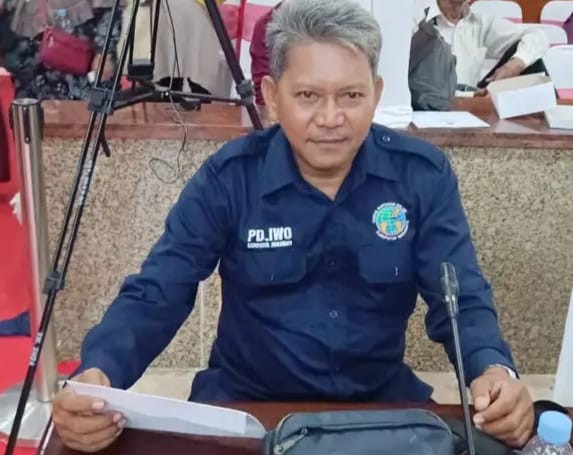
Abdul Rozak delivered these four messages during the 27th-anniversary celebration of Al-Zaytun on Thursday, August 27, 2026. His words were concise yet addressed major national issues: division, the degradation of the youth, the abuse of power, and the loss of self-reliance.
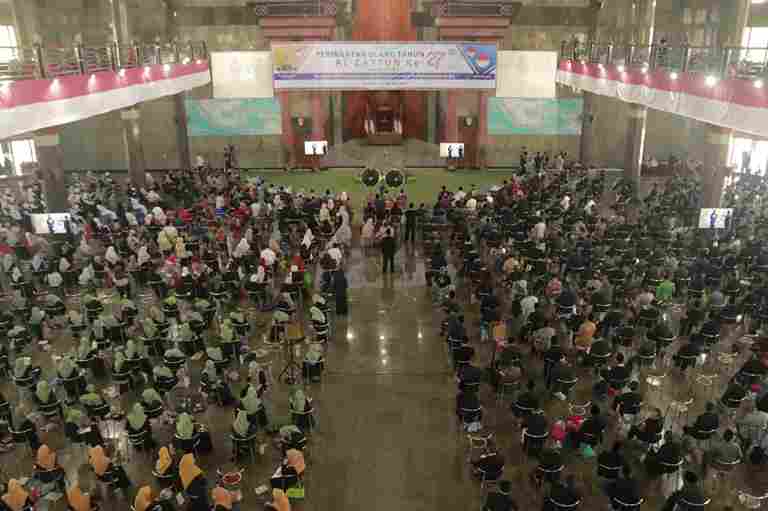
That day, the Rahmatan Lil Alamin Grand Prayer Hall became a meeting place for people from diverse backgrounds. Various figures, academics, professors, interfaith leaders, parents of students, and around a thousand students attended to enliven the celebration.
Abdul Rozak attended as the representative of the Head (Amir) of the Ahmadiyya Muslim Community Indonesia, who was unable to attend due to other commitments. His presence reflected Al-Zaytun’s spirit of fostering fellowship and dialogue amidst diversity.
He expressed his happiness at being able to participate in Al-Zaytun’s anniversary celebration, which centered on the theme of welcoming Indonesia’s centennial of independence by increasing investment in quality education.
In his view, the theme was not merely an interesting idea but a grand aspiration requiring both divine aid and tangible human effort.
“May Allah grant His assistance in realizing this blessed theme,” he said.
Abdul then took the audience back to the year 2000. He recounted how the International Head of the Ahmadiyya Community, Hadhrat Mirza Tahir Ahmad, had been invited by President Abdurrahman Wahid to the State Palace.
During that meeting in June 2000, the President—affectionately known as Gus Dur—asked for views on solutions to the crisis Indonesia was facing at the time.
Among the various insights shared during that meeting, four messages have remained etched in Abdul’s memory to this day. The first message is to unite the Indonesian Muslim community. According to Abdul, sectarian differences have long been a reality in the history of the community. However, such differences should not sever the bonds of brotherhood.
Each group may possess a distinct history, mindset, interpretation, and approach to tradition. Yet, differing identities cannot serve as grounds for negating one another.
He cited a simple principle within Islamic teachings:
“A Muslim is a brother to another Muslim.”
The brotherhood referred to here is not merely a matter of rhetoric in sermons; it must be manifested through mutual respect, protection, and the provision of space for others to practice their beliefs.
Unity does not imply the homogenization of thought. On the contrary, it flourishes when differences are managed with maturity, openness, and a willingness to find common ground.
This message finds particular relevance at Al-Zaytun. During the institution’s 27th-anniversary celebration, individuals from diverse backgrounds gathered in the same space, exchanged greetings, and discussed the future of Indonesian education.
The second message is to safeguard the younger generation from drugs. Abdul recalled that in the year 2000, the term “narkoba” (illicit drugs) was not as widely recognized as it is today. Nevertheless, the threat was already perceived as a grave danger capable of jeopardizing the nation’s future.
The younger generation constitutes the primary force in realizing the vision of a “Golden Indonesia 2045.” It is not enough to prepare them solely for academic excellence; their physical well-being, mental health, social circles, and living environments must also be nurtured and protected.
This is where education plays a pivotal role. Schools and *pesantren* (Islamic boarding schools) are tasked not only with imparting knowledge but also with building personal resilience. Children need to be equipped with the ability to distinguish between right and wrong, the courage to reject destructive influences, and an environment that fosters healthy habits.
The third message is the eradication of corruption. A nation’s progress is determined not merely by its natural resources or technological prowess, but also by the integrity of the people who manage them.
Corruption deprives people of learning opportunities, widens inequality, and erodes public trust. Therefore, efforts to eradicate it must begin while individuals are within the educational system.
Honesty needs to become a habit, not merely a subject of study. Responsibility must be cultivated through daily life. Quality education must be capable of producing individuals who are not only intelligent but also possess the moral courage to reject wrongdoing.
The fourth message concerns maintaining the nation’s economic independence. In his remarks, Abdul recalled advice urging Indonesia to be cautious about relying on loans from international financial institutions.
This message can be interpreted as a call to build strength from within. A sovereign nation must possess the ability to manage its resources, advance scientific knowledge, strengthen the grassroots economy, and determine its future its own future.
Self-reliance does not mean isolating oneself from global cooperation. It means having the ability to stand on equal footing, make decisions freely, and not surrender national interests to other powers.
These four messages converge on a single point: education. Brotherhood requires education that fosters tolerance. Safeguarding the younger generation requires character education. Eradicating corruption requires moral education. National self-reliance requires education that produces knowledgeable, skilled, and productive individuals.
Abdul hopes that every Muslim possesses knowledge that benefits the community, the Indonesian nation, and the world.
“Knowledge must yield benefits as proof that Islam is a blessing for all creation (*rahmatan lil alamin*),” he said.
Beneficial knowledge does more than just enable someone to pass an exam; it shapes individuals capable of solving problems, helping others, maintaining peace, and creating a better life.
Therefore, increasing investment in quality education means increasing investment in humanity. The nation is not merely building schools; it is preparing the people who will define the face of Indonesia’s future.
The 27th-anniversary commemoration of Al-Zaytun serves as a reminder that education and brotherhood are inseparable. Knowledge without tolerance can breed arrogance. Faith without brotherhood can lose its human essence. Meanwhile, intelligence without integrity can turn into a tool for the abuse of power.
As we look toward the centennial of Indonesia’s independence, the four messages reiterated by Abdul Rozak remain vital: nurture brotherhood, protect the youth, uphold honesty, and build self-reliance.
It is through these efforts that a healthy, intelligent, peaceful, and sovereign Indonesia can be realized—not merely through speeches, but through education that instills both knowledge and humanity.**
Indramayu, September 2, 2026
———