National Awakening Is Not History, But a Duty
(Reflection on National Awakening Day, May 20)
By Ali Aminulloh
Nine sweaty young men sat in a circle in the cramped room of STOVIA, Jakarta, May 20, 1908. Without air conditioning, without sophisticated gadgets, they determinedly wove a grand dream that seemed impossible at the time: uniting the divided archipelago through the Budi Utomo platform.
Fast forward to the same date in 2026. In an equally stifling boarding room, a student is busy distributing free artificial intelligence (AI) literacy modules to hundreds of children in remote parts of Indonesia via the device in his hand. The distance spans 118 years, but their heartbeats are the same. They are kindling a flame of awareness that refuses to be extinguished.
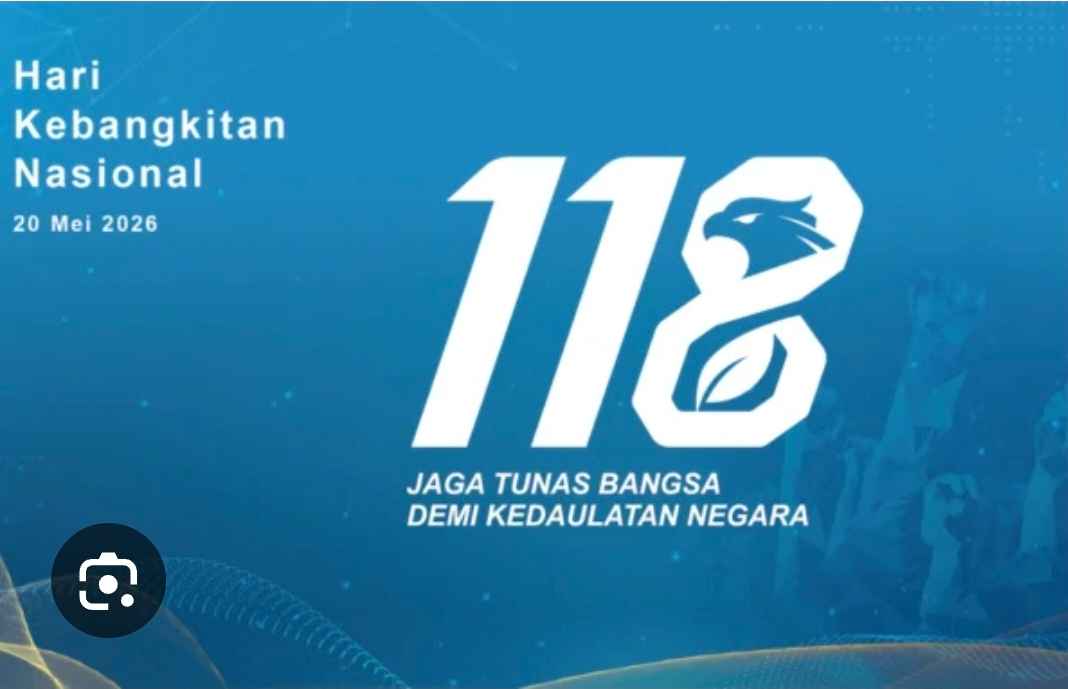
National Awakening Day (Harkitnas), signed by President Soekarno through Presidential Decree No. 316 of 1959, is not just a public holiday routinely celebrated with traditional dress ceremonies or hashtag parades on social media. Harkitnas is a moving monument.
While the common enemy was once physical colonialism, today the challenge has shifted to the climate crisis, the flood of disinformation, and digital inequality. This is where the relevance of the awakening must be redefined. The modern awakening is no longer about taking up arms, but about how education produces whole human beings.
Facing this contemporary era, the ideas of Sheikh Al-Zaytun find their most precise momentum: that the essence of true education is instilling awareness and fostering humanity. Contemporary education should not simply be a factory producing workers, but rather an incubator producing people aware of their own existence. This awareness is then manifested in three fundamental, interconnected pillars, the Trilogy of Awareness: philosophical awareness, ecological awareness, and social awareness.
The first pillar is philosophical awareness, which serves as a compass for finding the reason why we must rise. Before the birth of Budi Utomo, the resistance of Diponegoro, Pattimura, and Imam Bonjol was crushed because they acted independently. They had courage, but lacked the same philosophical awareness that we are one nation with a shared destiny.
In today’s context, philosophical awareness compels the younger generation to reflect on their identity, understand their historical roots, and determine their future direction so as not to be easily swayed by the strong currents of modernization and technological disruption.
Furthermore, a nation’s rise will be illusory if the homeland upon which it stands is in ruins. This is where the second pillar, ecological awareness, becomes a must, as the climate crisis is no longer just a prediction but a reality. In line with Shaykh Al-Zaytun’s view of the importance of humans being in harmony with nature, commemorating today’s National Awakening also means rising up against environmental destruction. Humans educated with ecological awareness will not exploit nature for greed, but will instead care for their living spaces, seas, and forests for the sustainability of future generations.
The final pillar in this trilogy is social awareness, which is the epicenter of the spirit of mutual cooperation. The National Awakening Day theme, “Rise Together to Create a Strong Indonesia,” is a concrete manifestation of this awareness. The era of lone heroes is over, and today is the era of collaboration. Social awareness fosters empathy, recognizing that progress should not be enjoyed by a handful of people in big cities alone. When a young person chooses to go down to the village to teach, create appropriate technology for farmers, or simply refuse to spread hoaxes to maintain peace on the timeline, that’s where social awareness is at work. Education that fosters humanity is education that demolishes the ivory towers of egoism and builds bridges of solidarity.
“Give me ten young people, and I will shake the world,” said Soekarno decades ago. But the history of Budi Utomo and contemporary reflections today teach us something else: you don’t need to wait until you reach ten young people to initiate change.
National awakening is not a finished chapter of history written and neatly bound in a library. It is a task, a writing whose blank lines are deliberately provided to be filled by our concrete actions today.
In 1908, a candle was lit in the dark room of STOVIA by the hands of young people anxious to see their nation colonized.
In 2026, it will be our turn to take up the baton to keep the flame burning. We nurture that flame in our own way, with complete awareness, and with a humanity that continues to grow. Because freedom and rise are verbs that we must continue to practice, without pause.**
Indonesia, May 20, 2026
——-