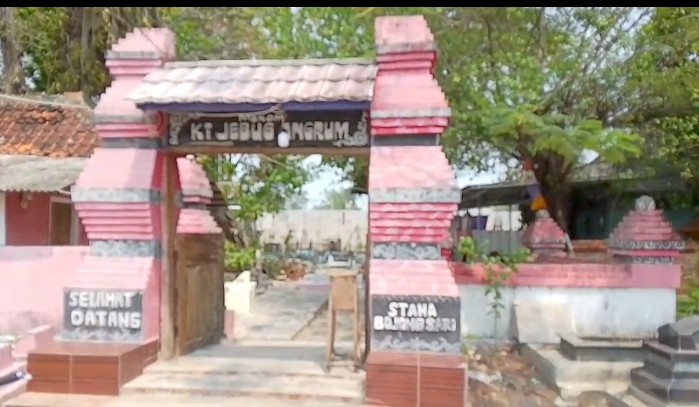
The Sacred Tomb of Ki Jebug Angrum, Setana Bojongsari (Ketapang Block), Indramayu.
By, Wari Wicatman
According to local residents, Ki Jebug Angrum was an ancestral figure—a founding elder—of Bojongsari. That is why the tomb is referred to as *Setana*, a site held in high reverence.
From a cultural perspective, this tomb represents more than just sanctity or mysticism; it embodies three significant values:
1. Local Historical Value.
Bojongsari is one of the older administrative units in Indramayu City. Almost every neighborhood block has its own ancestral figure (*Buyut*). Ki Jebug Angrum serves as a marker of identity for the Ketapang Block. Without such ancestral tombs, Indramayu’s oral history could be lost, as these stories are not recorded in official books.
2. Social Value – The *Unjungan* Tradition.
Every October, Ketapang residents hold an *unjungan* (communal gathering/pilgrimage) at this tomb. Residents pool resources, bring *tumpeng* (cone-shaped rice dishes), and join in communal prayers, followed by entertainment such as *wayang* (shadow puppetry) or traditional theater. The organizing committee chair stated that the goal is not to make petitions for favors, but rather “entertainment, cultural preservation, communal prayer, and fostering social bonds.”
This is a fine example of local wisdom. Amidst the modernization of Indramayu, the *unjungan* provides a reason for migrants to return home, supports the livelihoods of street vendors, and keeps community ties alive.
3. Spiritual Value.
The site is considered sacred because the figure is believed to have been a devout person endowed with *karomah* (spiritual grace) during his lifetime. For pilgrims, visiting the ancestral tomb is an act of praying for the ancestor, not worshipping the tomb itself. As long as the intention is to seek blessings (*tabarukan*) through prayer and *tawasul* (seeking intercession), the practice remains within the *Islam Nusantara* tradition common to the North Coast (Pantura) region.**
Indramayu, September 27, 2026
——-