
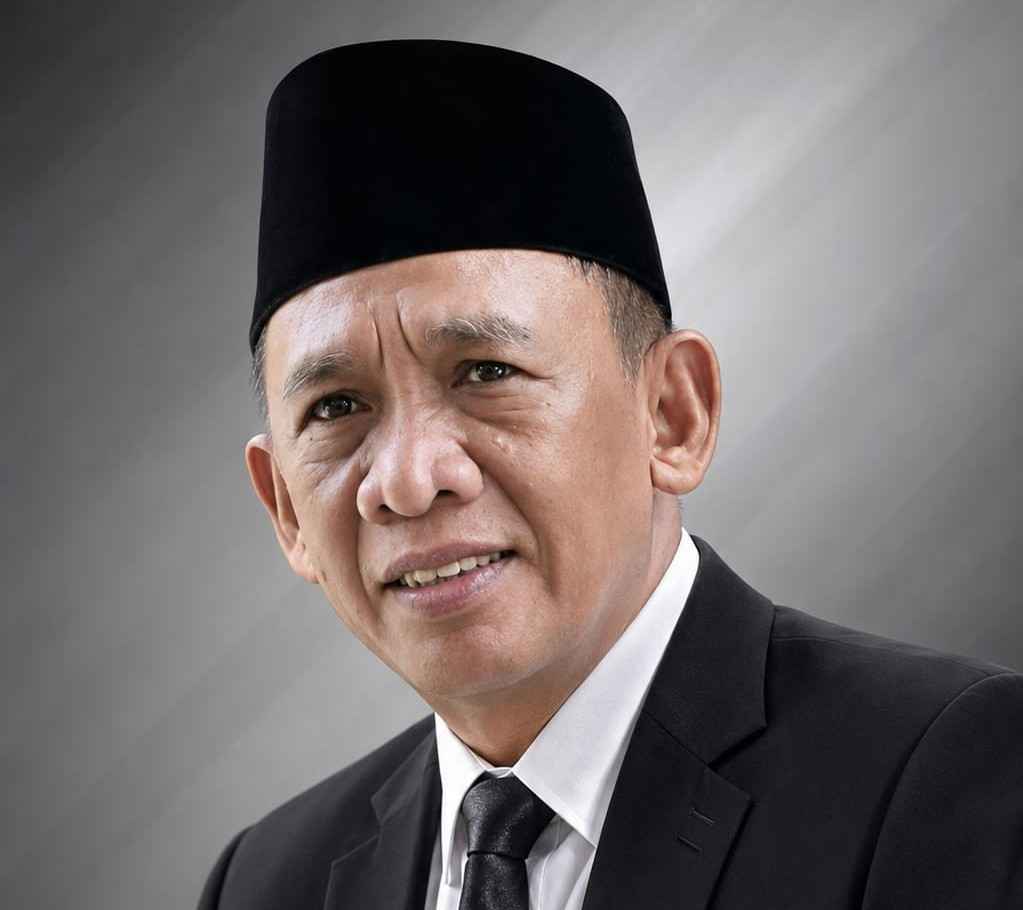
*THE “SMRC” SURVEY AND THE PHENOMENON OF DEDI MULYADI DOMINATING THE NATIONAL ELECTORAL STAGE, BREAKING BACK THE BARRIERS OF JAVANESE POLITICAL MYTHS*
By: Adlan Daie
Political Analyst, General Secretary of the Indonesian Ulema Council (MUI) of Indramayu Regency.
Indramayu, August 1, 2026
In the “SMRC” survey, conducted for the July 2026 period, from various candidate simulations, Dedi Mulyadi, Governor of West Java, commonly known by his initials KDM, almost absolutely dominated the electoral trend on the national political stage.
Even in a head-to-head simulation of KDM versus Prabowo, the incumbent President, KDM’s electoral trend was 59%, a landslide lead over Prabowo’s 28.7%, with the remaining 12.3% of voters undecided.
This is interesting to examine, not only regarding his potential chances of running in the 2029 presidential election, but also about KDM, a politician born and raised deeply within the Sundanese social and ethnic ecosystem.
This is a new phenomenon in Indonesia’s political history. KDM, who hails from the Sundanese ethnic culture and does not lead the nation’s “capital” province, has managed to break through the mythical barriers of Javanese political dominance and the epicenter of Jakarta’s political magnetism.
Indonesian political history, as studied by political anthropologists, is inseparable from Javanese political dominance and the epicenter of power in Indonesia, namely “Jakarta,” a province that is the center of national public attention.
The rise of Susilo Bambang Yudhoyono and Jokowi to the national political stage is inextricably linked to ethnicity: both are “Javanese,” the largest ethnic group in Indonesia, representing 40.67% of the total population.
Prabowo Subianto’s rise within the national political spectrum, despite his looser “Javanese” political gestures, consistently links him to the “Javanese” effect of his Banyumas roots and the political epicenter of Jakarta.
Even though he wasn’t directly elected by the people, the “establishment” of political power under Bung Karno during the Old Order and Suharto during the New Order was inseparable from the dominance of Javanese political symbols and their control of the political epicenter of Jakarta.
This is the sociological reality of Indonesian politics, to the point that it has become a kind of “myth.” If you want to control Indonesia, control “Java,” and controlling Java begins with controlling Jakarta, the epicenter of Indonesian politics.
KDM is a political phenomenon that stands out from the aforementioned political myth that has shaped the traditions and landscape of Indonesian political history.
He has a strong Sundanese ethnic background, an ethnic group centered in West Java province, with a population of 15.1% of Indonesia’s total population. He also does not lead Jakarta, the epicenter of national politics.
This political phenomenon of KDM within the current national political spectrum marks a shift in political sociology, where the relationship between Javanese ethnicity and the dominance of Jakarta’s political epicenter is beginning to weaken in the minds of the Indonesian people.
He has garnered public attention, with a highly positive trend in public perception on social media. He is the first non-Javanese and non-Jakarta political figure to break through the national political divide. The results of the “SMRC” survey above prove its validity.
National-scale research, studies, and public opinion surveys are certainly needed to address the aforementioned political phenomenon, in the context of understanding KDM’s “flaming” political influence in the current national political orbit.
In the context of social media, it must be acknowledged, like it or not, that KDM is now not only leading West Java but also leading the “digital algorithm” on social media platforms.
Every time you open social media, whether Instagram, TikTok, or YouTube, the face that appears is no longer a celebrity, influencer, or national “political figure” such as a minister, party chairman, or others, but rather West Java Governor Dedi Mulyadi, also known as KDM.
On Instagram, Dedi Mulyadi has 3 million followers with a total of 6,683 posts, while on his YouTube channel, he has 7 million subscribers with approximately 4,000 videos uploaded (CNN, April 30, 2025).
He dominates the digital algorithm world, not just representing the Sundanese ethnic group, of which he is a crucial part, within the ethnic context and the province of West Java he leads.
He also transcends the diversity of ethnicities, regions, religions, and political affiliations within the Indonesian political spectrum, with massive and active support from netizens, both organically and militantly.
In the author’s hypothesis, the key to KDM’s political branding strength, enabling him to break through the barriers of Javanese political dominance and the Jakarta epicenter, is his successful integration of political marketing elements by emphasizing the values of integrity, exemplary leadership, and policy benefits within his political communication strategy.
He is not only skilled at playing with content on social media to merely brand his political image, but he also comes with the courage to expose the budget politics that has so far been enjoyed more by routine spending by officials, which has been significantly shifted to public spending with all the pros and cons of implementing its policies.It seems that KDM’s magnetic power on social media has made him acceptable and popular, with a positive trend in public perception so high on a national scale that it has “drowned out” other political figures and is starting to be predicted as a “rising” star in the dynamics of the 2029 presidential election contest.
Of course, as Otto Van Bismoch’s political dictum, “politics is the art of the possible,” politics is a realm of unpredictable possibilities, and the possibilities surrounding KDM in the context of the 2029 presidential election mentioned above are all possibilities where the path of political destiny will find its own path.
For the author, it is currently too early to speculate on KDM’s possible political path in the context of the 2029 presidential election, although discussions on social media about KDM’s leadership have become a cross-provincial trend and are increasingly attracting national public attention.
The author believes that the most important thing now is to critically and constructively monitor KDM’s leadership in West Java to ensure its steadfastness on the path of beneficial political leadership.
At the very least, he can serve as a promising leadership role model for regents and mayors in West Java, fully committed to advancing public welfare and public services, despite all the political risks involved.
Regards.
——


