World Population Day: When Every Human Being Is More Than Just a Number
By: Ali Aminulloh
Indramayu, July 11, 2026
“What is the world’s population today?”
That question might be answered by a series of numbers that constantly change every second. New babies are born, people leave the world, families move, and millions of young people are forming hopes for the future. However, behind these population figures lies a far more important question: does every human being have the opportunity to live a healthy, decent, safe, and dignified life?
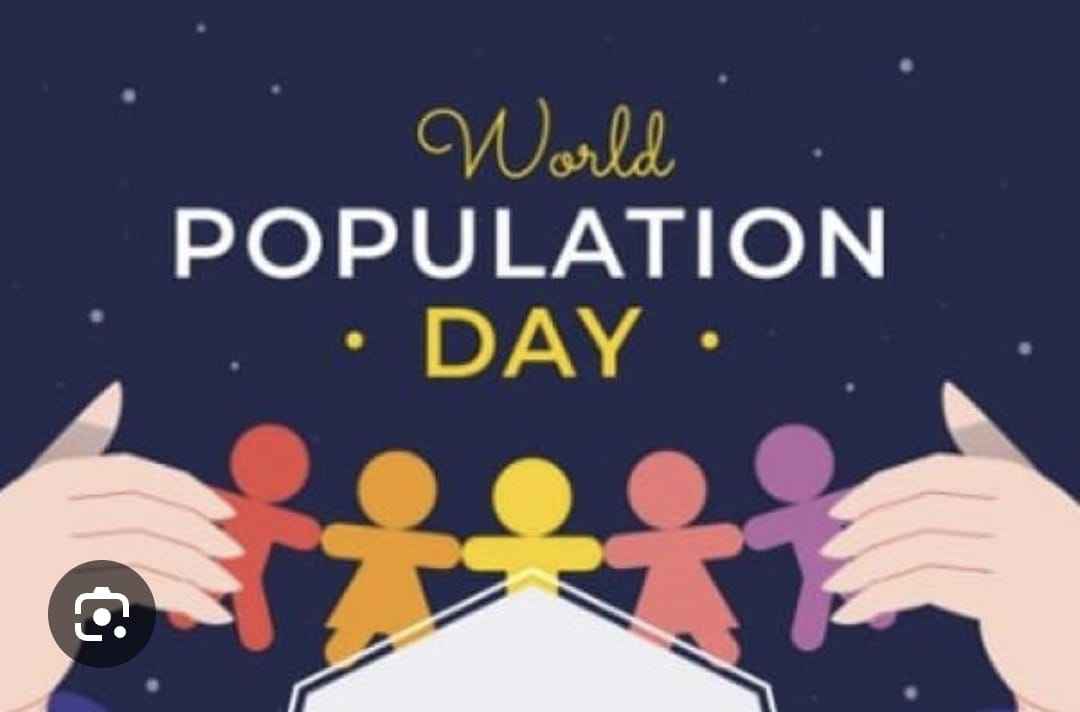
That question echoes every July 11th, when the international community commemorates World Population Day. This commemoration is not simply a moment to count the number of people inhabiting the earth. World Population Day is an invitation to see humans more holistically as individuals with needs, rights, abilities, choices, aspirations, and a future.
The history of this commemoration began on July 11, 1987. At that time, the world’s population was estimated to have reached five billion. This momentum became known as the Day of Five Billion. The world seemed to be shocked. Five billion people meant five billion people needing food, water, education, health care, housing, jobs, and a decent living environment.
“Can the earth sustain the continued growth of humanity?”
This question could not be answered simply by fear of population explosion. Instead, the world was challenged to consider how development could be managed equitably, how resources could be distributed responsibly, and how every child born would have the opportunity to develop their full potential.
The widespread international attention to this issue prompted the Governing Board of the United Nations Development Programme (UNDP) to establish World Population Day in 1989. The first commemoration was held widely on July 11, 1990, in more than 90 countries. That same year, the United Nations General Assembly strengthened the observance through Resolution 45/216.
Since then, July 11th has become a time for collective reflection on the relationship between population, environment, health, poverty, education, migration, urbanization, gender equality, family planning, and sustainable development. The United Nations Population Fund (UNFPA) is one of the main UN agencies that continues to mobilize global attention to these population issues.
World Population Day reminds us that population issues are not simply about the number of people. The real question is: what is the quality of their lives?
What is the meaning of a large population if millions of children still struggle to get an education? What is the meaning of economic growth if families still struggle to access health services? What is the meaning of urban progress if a portion of the population must live in crowded, unhealthy, and disaster-prone environments?
Therefore, population data is crucial. Data is not just a pile of numbers on a government desk. Data is the basis for determining how many schools should be built, how many hospitals are needed, where jobs should be created, and which community groups need greater protection.
Without accurate data, development can easily lose its direction. Schools can be built in inappropriate locations. Health services do not reach those most in need. Social assistance can be misdirected. Meanwhile, women, children, the elderly, people with disabilities, the poor, and residents of remote areas are at risk of being left further behind.
The theme of World Population Day 2026 places special emphasis on the younger generation: “Realizing the hopes and aspirations of young people: today and for the future.”
This theme carries a powerful message. Young people should not be viewed merely as numbers in demographic dividend statistics. They are not merely potential workers, potential voters, or targets of development programs. They are human beings with voices, perspectives, anxieties, and hopes.
“What do young people really want?”
They want a quality education. They need decent jobs. They hope to live in a safe environment. They want the opportunity to raise a family when they are mentally, socially, and economically ready. They also want to be heard when policies regarding their future are being formulated.
However, the path to the future is not always easy. Many young people face high education costs, limited job opportunities, unaffordable housing prices, social pressures, economic uncertainty, conflict, and the threat of environmental damage are all contributing factors. In such circumstances, simply asking young people to “be productive” is certainly not enough.
The state and society must create an ecosystem that enables them to grow. They need to be equipped with knowledge, skills, health, a sense of security, and space to participate. Young people must not only be prepared for the future, but also be involved in shaping that future.
World Population Day can be commemorated through various activities that are closely related to community life. The government can hold policy dialogues, strengthen maternal and child health services, update population data, and open up spaces for youth participation. Schools and universities can organize discussions, writing competitions, population research, environmental campaigns, and reproductive health education.
Civil society organizations can provide youth mentoring, parenting education, prevention of child marriage, skills training, and family strengthening. The mass media and social media can also play a role by disseminating accurate, educational information that does not stigmatize certain groups.
However, the most important form of commemoration is not merely seminars, banners, or social media posts. The best commemoration is a change in perspective on humanity.
We need to stop viewing population solely as a burden on development. Population can be a powerful force if it has access to education, health, employment, and opportunities for growth. Conversely, a large population can become a problem when development fails to provide justice and equity.
For families, World Population Day is a reminder of the importance of careful life planning. Building a family is not just about getting married and having children. It requires physical, emotional, social, spiritual, and economic readiness. Children have the right to love, protection, education, health, and a good growing environment.
For the public, this commemoration fosters awareness that each population group has different needs. Children need protection. Teenagers need education and support. Adults need decent jobs. The elderly need health insurance and respect. No group should be marginalized.
For the government, World Population Day is a call to implement policies that are both data-driven and humanitarian. Population policies should not stop at birth control. Policies must ensure that every life that exists can thrive with dignity.
Ultimately, the world is not just inhabited by billions of people. It is inhabited by billions of stories. There are children who dream of becoming teachers. There are teenagers who want to continue their education. There are mothers who hope to access healthcare. There are farmers who desire a more prosperous life. There are families who yearn for decent housing. There are young people who want their voices heard.
Therefore, as the world commemorates World Population Day, the question we must ask is not simply, “How many of us are there today?”
The more fundamental question is, “Is the world a suitable place for every human being to live, grow, dream, and realize their future?”
Because humans are not just numbers in statistics. Every human being is a life. Every life carries hope. And every hope deserves the opportunity to become a reality.**
—–