*The Promise of World Peace to Nations: Between Hope and Shared Responsibility*
By: Wari Wicatman
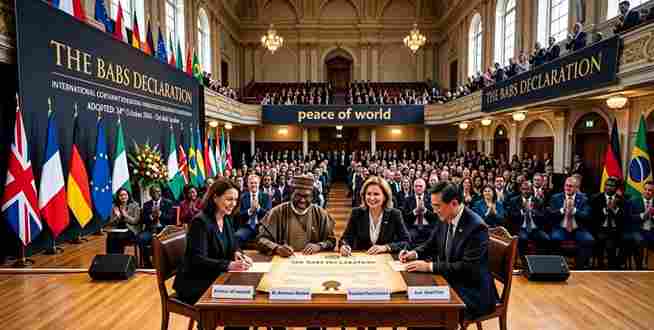
World peace is not just a slogan on the international stage. It is a promise repeated by leaders, written in the charters of global organizations, and passed down from generation to generation. The promise is simple: that every nation can live without fear of war, hunger, and oppression.
1. *The Roots of the Promise Were Written After War*
The promise of world peace was born from pain. After two world wars that killed tens of millions of people, nations agreed to establish the United Nations in 1945.
The UN Charter, in its preamble, states: _“We the peoples of the United Nations, determined to save succeeding generations from the scourge of war.”_
That wasn’t just an opening line. It was a moral contract between nations. From that moment on, the concept of “world peace” became a collective responsibility, not the sole responsibility of any single nation.
2. *What Does the Promise Actually Contain?*
The promise of world peace to nations encompasses three main points:
– *Non-aggression*: Every country is committed to resolving conflicts through diplomacy, not weapons. This principle is enshrined in international law.
– *Respect for sovereignty*: Not interfering in another country’s internal affairs by force. Every nation has the right to determine its own path.
– *Working together for prosperity*: Wars are often fueled by poverty and injustice. Therefore, peace also means working together on the economy, education, health, and climate.
3. *Why Does This Promise Often Feel Fragile?*
In fact, armed conflicts are still occurring in various parts of the world as of 2026. The causes are diverse: struggles over resources, ideology, territorial boundaries, and crises of trust between countries.
The problem is, the promise of peace cannot be implemented on paper alone. It requires political will, transparency, and public pressure from the citizens of each country. Without these, promises remain just promises.
4. *The Role of Small Nations and Ordinary Citizens*
World peace is often considered the purview of the UN and large powers. However, small nations play a significant role. For example, Indonesia, which since the 1955 Asia-Africa Conference has consistently promoted conflict resolution through dialogue.
At the citizen level, the promise of peace is lived through simple actions: rejecting hate speech, accepting differences, and supporting fair trade between nations. Global peace is built from millions of small actions at the local level.
5. *Keeping Promises in a New Era*
Challenges to peace are now widespread. In addition to conventional warfare, there are cyberwarfare, disinformation, and the climate crisis that fuel resource conflicts. The promise of world peace to nations must be renewed in meaning: not only without war, but also without digital injustice and environmental destruction.
This promise can only be kept if every nation dares to see its own interests within the common good. Because ultimately, no country is truly safe if its neighbors are burning.
*World peace is a promise that has not yet been written.* Every generation, including us in Indonesia, has the ink and responsibility to continue it.**
Indramayu, May 26, 2026
——