A PRESIDENTIAL MISTAKE, A WRONG POLICY DIRECTION? A BLURRY PORTRAIT OF NATIONAL EDUCATION PRIORITIES*
By:
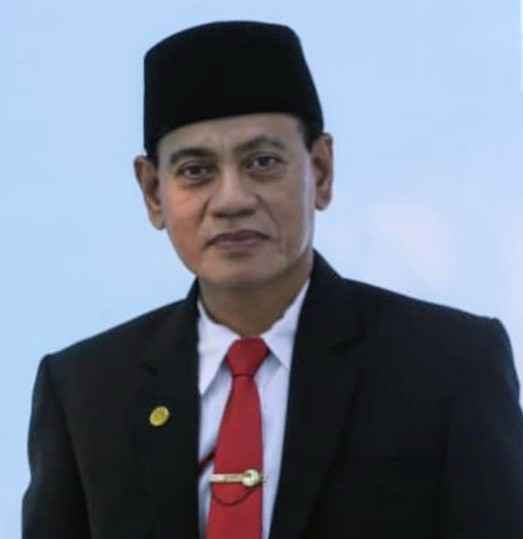
*Masduki Duryat*
_(Rector of the Al-Amin Institute of Islamic Studies, Indramayu and Postgraduate Lecturer at the Syekh Nurjati Cirebon State Islamic University)_
In a matter of seconds, a mistake can reveal a deeper truth.
When President Prabowo, in his official speech at the plenary session of the Indonesian House of Representatives (DPR RI) on May 20, 2026, mentioned a 300 percent increase in teacher salaries—which was then hastily corrected to include those for judges—the public witnessed more than just a slip of the tongue.
But more than that, the nation was reminded: where does education truly stand among the nation’s priorities?
*Mispronunciations that Reveal the Subconscious Mind of Policy*
From a political psychology perspective, a leader’s verbal slips often reflect what is known as a cognitive slip, a reflection of the priority structure operating in the subconscious (Kahneman, 2011).
When the word “teacher” appeared before “judge,” the public briefly hoped for good news for the world of education. However, that hope was quickly dashed, replaced by a bitter realization: education has not truly been a top priority.
Comparatively, the policy of significantly increasing judges’ salaries can be understood within the framework of legal reform and the eradication of corruption. However, on the other hand, the world of education, which supports the quality of human resources, is still struggling with classic problems: teacher welfare, uncertainty about the status of honorary teachers, and inconsistent policy direction.
*Honorary Teachers and the Time Bomb of the ASN Law*
This incident of mispronunciation also adds to the emotional pain of the world of education—including teachers—more specifically honorary teachers.
One of the biggest sources of unrest today is the implementation of Law No. Law No. 20 of 2023 concerning Civil Servants (ASN) mandates that by December 2026, there will be no more honorary staff in government agencies, including teachers. Normatively, this policy aims to create a professional bureaucracy. However, in practice, it has the potential to create an “education tsunami.” Furthermore, their meager honorariums, paid through the School Operational Assistance (BOS) fund, have been questioned by the inspectorate, and their findings are returned to regional coffers without providing a solution.
Meanwhile, data shows that most public schools, especially in regional areas, rely heavily on honorary teachers to maintain the continuity of the teaching and learning process (OECD, 2020). If the elimination of honorary staff is not followed by massive and planned ASN recruitment, what will result is not professionalization, but rather a teaching vacancy.
Even more ironic, many honorary teachers have served for decades with salaries that are far from adequate. The state seems to be “exploiting” their dedication, only to then release them without any certainty. In the context of social justice, this is not simply a policy issue, but a moral one.
*The Threat of Eliminating Study Programs: Efficiency or Killing the Future?*
Another equally worrying issue is the discourse on eliminating study programs deemed “saturated,” including teaching programs in universities. The logic of efficiency is indeed important in higher education governance, but an overly technocratic approach risks ignoring the strategic dimension of education.
The label “saturated” is often based solely on short-term job market absorption, not the nation’s long-term needs. Yet, a future teacher crisis is a real threat if the supply of educators is reduced today (UNESCO, 2021). Eliminating teaching programs is tantamount to breaking the chain of teacher regeneration.
Furthermore, this approach reflects a narrow paradigm: education is seen as a burden on the budget, not a long-term investment. Yet, in human development theory, education is a high-return investment that determines a nation’s competitiveness (Becker, 1993).
*Education: Complex, Challenging, and Noble*
This must be emphasized in this article—rhetorical or merely jargon? But it is important—ignoring education means ignoring the future. Education is the most complex sector because it is intertwined with all aspects of life—economics, politics, culture, and even religion. Every public policy ultimately depends on the quality of human resources produced by the education system.
It is also challenging because the results are not instantaneous, but determine the future of the nation. Unlike infrastructure development, which can be seen in a matter of years, the results of education are only felt within a generation. Herein lies the paradox: something that is most decisive is often neglected because it does not provide short-term political benefits.
But above all, education is a noble profession. It is not simply the transfer of knowledge, but the process of humanizing human beings (Freire, 1970). When teachers are marginalized, what is truly marginalized is civilization itself.
*Rhetoric vs. Reality: The Test of National Leadership*
Presidential Speech the spirit of economic nationalism will lose its meaning if it is not balanced with real support for the education sector. A grand narrative of economic sovereignty is insufficient if the foundation of human resources is fragile.
In this context, the misuse of the term “teacher” is not merely a linguistic incident, but a symbol of the disconnect between rhetoric and reality. The state appears to be ambitious in regulating strategic commodities, for example, regarding the management of palm oil and coal, whose sales must be “single” through Danantara, yet it has not yet fully addressed teachers as a key pillar of human development.
*Conclusion: Don’t Make Education a Victim of Policy Experimentation*
The state may experiment with economic policy, but not with education. The risk of failure in education is too high to bear—it concerns the future of generations.
If the government is serious about building the nation, education must be a top priority, not merely an add-on. Teachers must be viewed as a strategic investment, not a fiscal burden. And policies must be formulated with a high level of sensitivity to the complexities of the education sector. Because ultimately, history will not record the high rate of economic growth, but the quality of human resources a nation produces.**
Indramayu, May 21, 2026
——-