Al Zaytun and the Effort to Produce a Generation of Guardians of Indonesia
By: Dr. Ali Aminulloh, M.Pd.I., ME. (Lecturer at IAI Al-Azis)
In a world rapidly driven by globalization, artificial intelligence, information warfare, and a crisis of humanitarian values, education is no longer sufficient to merely produce a generation articulate about the future. Education must be able to produce individuals capable of safeguarding the nation, safeguarding humanity, and safeguarding Indonesia’s direction. From the boarding school spaces at Ma’had Al Zaytun, this endeavor is evident.
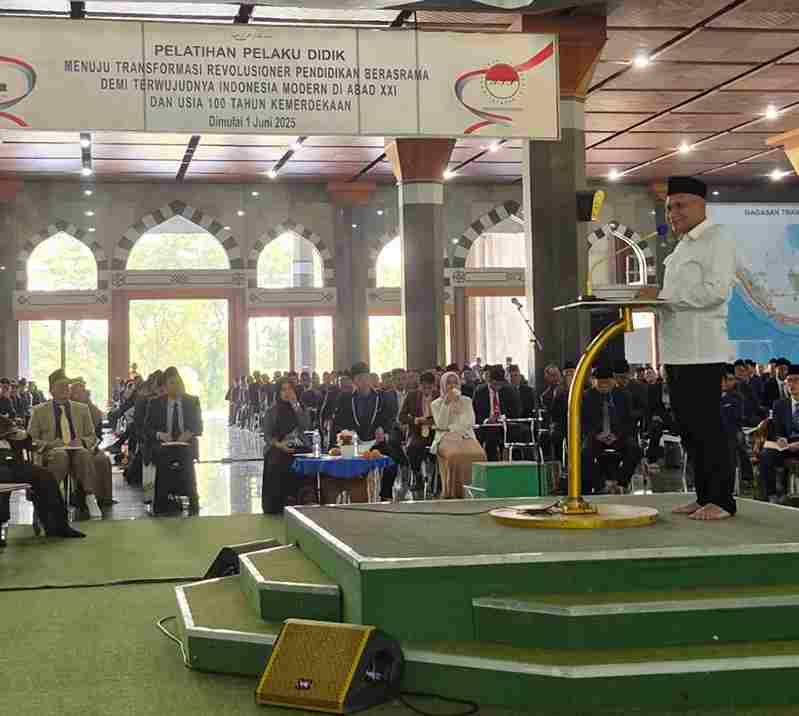
From June 1, 2025, to the present, every Sunday, Al Zaytun has consistently held Student Training as part of the process of building a future generation of Indonesia with character, awareness, and leadership. On Sunday, May 10, 2026, the training entered its 44th session with the theme “Revolutionary Transformation of Boarding School Education Towards Modern Education in the 21st Century and 100 Years of Indonesian Independence.”
The scientific and reflective forum featured Prof. Dr. H. Ermaya Suradinata, SH., MH., MS., a national figure with extensive experience in governance, national resilience, and national character development.
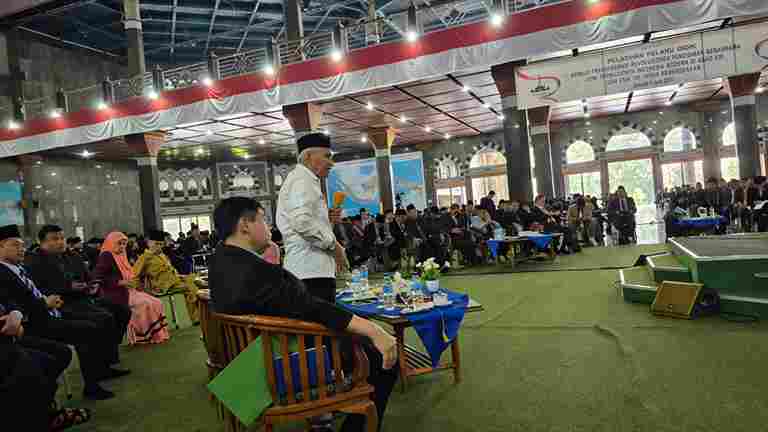
Presenting more than 2,700 participants comprising students, university students, teachers, lecturers, trainers, administrators, and students of Al Zaytun, Prof. Ermaya presented her remarks not only as an academic but also as a former Director General of Social Politics at the Ministry of Home Affairs, Director General of National Unity and Community Empowerment and Security at the Ministry of Home Affairs, Governor of the National Resilience Institute (Lemhannas RI) from 2001–2005, Principal Advisor to Lemhannas RI, Chancellor of President University, Chancellor of the Indonesian National Resilience Institute (IPDN), Chair of the Advisory Board for Indonesian National Character Development, and Member of the Expert Council of the Indonesian National Resilience Institute (BPIP RI) from 2000 to the present.
In a warm yet thoughtful atmosphere, Prof. Ermaya expressed her admiration for Al Zaytun’s development. According to him, what was being built in this environment was not just an ordinary educational institution, but rather a model of educational civilization that combined discipline, spirituality, nationalism, and independence.
He admitted to being impressed by the lively and organized educational atmosphere, especially when he witnessed firsthand the enthusiasm of the Al Zaytun students for learning. He believed that the students and educators at Al Zaytun possessed the courage to think, the ability to engage in dialogue, and a strong social awareness. This was clearly evident in the dynamic and enthusiastic question-and-answer session.
“This is extraordinary. The young people here have the courage to ask questions and a positive way of thinking. They not only learn knowledge, but also learn to understand the nation and its future,” he expressed his appreciation.
He even stated that the quality of Al Zaytun students demonstrated the great potential of producing a future generation of Indonesian leaders. He believed that education that fosters courage to speak, critical thinking, and social awareness, as implemented at Al Zaytun, is crucial for facing the challenges of the 21st century.
“The President of the Republic of Indonesia could emerge from here,” he said confidently.
This statement stemmed from his observations of Al Zaytun’s integrated education system. According to him, good education must be able to foster national character building. Indonesia’s young generation, particularly those aged 12 to 27, is seen as a strategic generation that will determine the direction of Indonesia Emas 2045 and welcome the centenary of Indonesian independence.
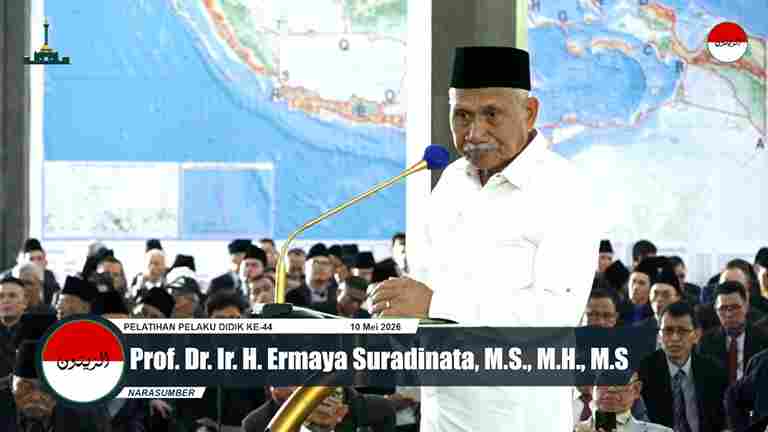
In his presentation, Prof. Ermaya described the world as currently experiencing a situation full of uncertainty. The Ukraine-Russia conflict, the Gaza war, tensions between Iran and Israel, and the United States illustrate that the world is experiencing complex geopolitical struggles. Therefore, Indonesia needs a young generation that is not only intelligent but also possesses mental resilience, national awareness, and the ability to navigate changing times.
He introduced the ASOKA concept, consisting of Ability, Strong, Opportunity, Culture, and Agility, as a new approach to facing the challenges of the digital era. He believes that the younger generation must have adaptive thinking skills and resist being easily swept away by the rapid flow of information.
Prof. Ermaya also warned of the dangers of misuse of artificial intelligence, which can be used to manipulate information, forge identities, and even form misleading opinions. Therefore, students were asked to be more critical, cautious, and deliberate when receiving or disseminating information.
The question-and-answer session became one of the most engaging parts of the training. Rafa Ardiansyah Ariski bin Adam Harloreski, President of the Ma’had Al Zaytun Student Organization, posed a question regarding the role of students in upholding the Pancasila ideology and the integrity of the Unitary State of the Republic of Indonesia (NKRI) amidst the currents of globalization that influence the culture, technology, and lifestyles of the younger generation.
Prof. Ermaya answered this question by emphasizing that Indonesia’s future depends on the young generation’s ability to maintain national character amidst changing times. She stated that students must be able to transform global challenges into opportunities for national progress through education, discipline, and national awareness.
In the next session, Alvan Wibisono bin Sobari Wicaksono from grade 10 R05, who also participated in the 2026 Kibra Capas, asked how to foster a sense of discipline among peers without appearing patronizing.
In response, Prof. Ermaya emphasized that true discipline stems from example and sincerity, not from pressure. She emphasized that students must be able to be “urup,” or a light for their environment, bringing enthusiasm, exemplary behavior, and benefiting others.
According to her, a student is not enough to simply be intelligent for themselves; they must also be able to benefit others, inspire others, and be a beacon of light in society.
However, the training went beyond discussing technological and geopolitical issues. The forum was also filled with profound spiritual and humanitarian messages. Prof. Ermaya emphasized that true education must integrate sharia, Sufism, and knowledge to produce a well-rounded human being.
According to him, sincerity is at the core of all human activities. Learning, teaching, leading, and even maintaining a clean environment can be considered acts of worship if done with the right intention. He emphasized the importance of the relationship between hablum minallah and hablum minannas as the foundation of social and educational life.
This message resonated with the life of boarding school at Al Zaytun, which has always instilled discipline through role models. Environmental cleanliness, respect for teachers and parents, social awareness, and responsibility for others are part of the character-building process for students.
At the conclusion of the event, Prof. Ermaya invited all participants to reflect on the relationship between humans and the universe. He spoke about the sun, earth, moon, and the order of the universe as signs of Allah SWT’s greatness and lessons about balance in life.
This view aligns with Al Zaytun’s educational trilogy, which emphasizes philosophical awareness, ecological awareness, and social awareness.
From these boarding school spaces, Al Zaytun appears to be more than just producing graduates. It is preparing a generation of guardians of Indonesia—a generation that is not only intelligent in facing the times, but also has the courage to uphold values, unity, humanity, and the future of the nation as it approaches 100 years of Indonesian independence.**
Indonesia, May 10, 2026
——-