Keeping Humanity Alive
(Reflection on World Red Cross and Red Crescent Day, May 8)
By: Ali Aminulloh
On a battlefield in Solferino, Italy, on June 24, 1859, a Swiss businessman named Henry Dunant witnessed a scene that changed the history of humanity. Tens of thousands of wounded soldiers lay helpless. Blood mixed with the soil. Screams filled the air. The warring nations were busy winning the war, but forgot to save the people.
Amidst the chaos, Dunant didn’t ask who was friend or foe. He only saw the people who needed help. Together with civilians, he mobilized emergency relief while uttering a simple but immortal phrase: Tutti fratelli (we are all brothers).
From that tragedy, the International Red Cross and Red Crescent Movement was born. A humanitarian movement that today exists in 191 countries, with millions of volunteers working selflessly on the battlefields of war, disasters, famine, and disease outbreaks.
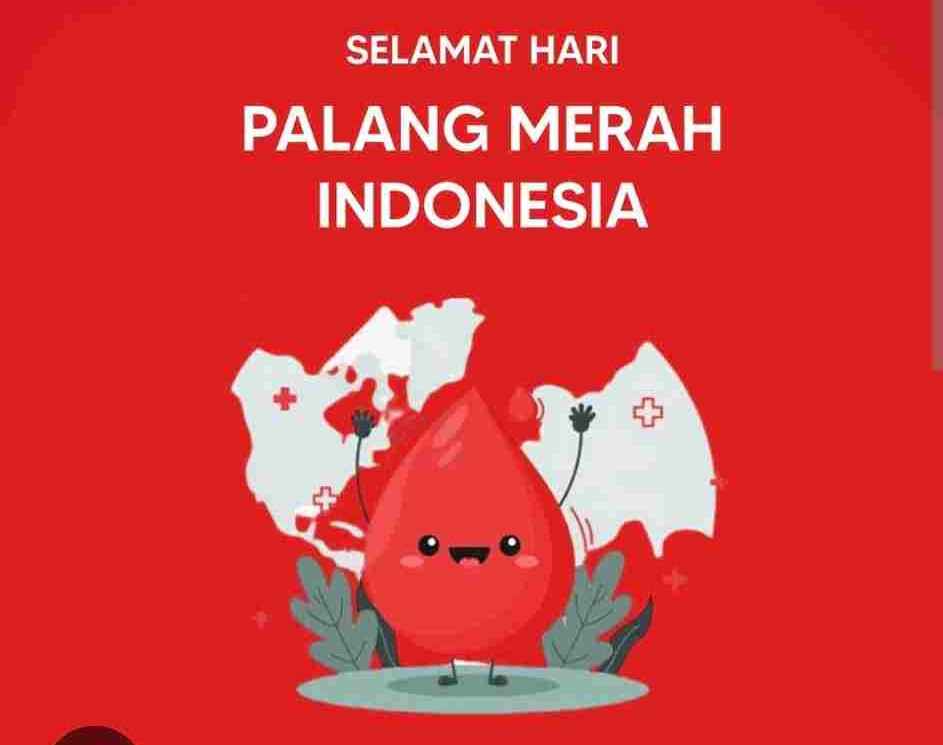
That’s why every May 8th, the world commemorates World Red Cross and Red Crescent Day. In 2026, the global theme is Keeping Humanity Alive.
This theme feels particularly relevant amidst a world continually shaken by conflict, the climate crisis, and fading social empathy. From Gaza, Sudan, Ukraine, to the flash floods in Aceh and North Sumatra, humanitarian threats now manifest in many forms. Yet, at the same time, Red Cross and Red Crescent volunteers remain on the front lines, bringing medicine, blood, food, and hope.
At this point, the commemoration of May 8th becomes not just an annual ceremony, but a moment of civilization. It is an invitation to revive humanitarian values through what Sheikh Al Zaytun calls the Trilogy of Consciousness: philosophical consciousness, ecological consciousness, and social consciousness.
Philosophical Consciousness: Seeing Humans as Brothers
Philosophical consciousness teaches humans to deeply understand the essence of themselves and others. Humanity is not merely a matter of ethnicity, religion, nation, or political group. Above all, humans are fellow creatures of God who have the right to life and the right to be helped.
What Henry Dunant did was truly a concrete exercise of philosophical awareness. He helped soldiers from both sides without distinction of identity. For him, a wound was still a wound, and a life was still a life.
This value is increasingly important today in a society easily divided by differing views. The digital world often breeds hatred, judgment, and social hostility. People are quicker to attack than to understand.
In fact, humanity grows from the awareness that the suffering of anyone is a moral calling for all.
Therefore, PMI volunteers who donate blood for people they don’t even know are truly living the most fundamental philosophy of humanity: that human life is interdependent.
Ecological Awareness: Disasters Are Messages from Nature
The 2026 theme of Keeping Humanity Alive also cannot be separated from the increasing global environmental crisis. Tidal floods, droughts, extreme weather, and forest fires serve as reminders that ecological damage now directly impacts human life.
In the Trilogy of Awareness, ecological awareness teaches that humans are not masters of nature, free to exploit, but rather part of an ecosystem whose balance must be maintained.
When the Indonesian Red Cross (PMI) assists flood or drought victims, they are not only dealing with the impact of the disaster but also facing a global ecological crisis.
Indramayu, for example, has faced the threat of tidal flooding and climate change in recent years, impacting the lives of coastal communities. In these conditions, humanitarian volunteers are at the forefront of saving the community.
However, humanitarian work does not stop at evacuating victims. Ecological awareness demands the birth of a new culture: protecting rivers, reducing waste, planting trees, and developing more environmentally friendly lifestyles.
Because protecting humanity is impossible without protecting the earth on which we live.
Social Awareness: The Power of Mutual Cooperation and Volunteering
The Red Cross and Red Crescent thrive on the power of volunteers. Millions of people work without pay. They are there when others are displaced, starving, or losing family.
This is where social awareness finds its meaning.
Social awareness is not simply compassion for suffering, but the courage to step in and help. In an increasingly individualistic modern society, volunteerism is a very valuable resource.
Indonesia itself has millions of PMI volunteers actively assisting with blood donations, first aid training, disaster mitigation, and victim evacuation. They prove that solidarity is still alive.
For the world of education, especially universities and schools, the spirit
this is important to instill in the younger generation. Students are not only academically intelligent; they must also have social awareness.
When engineering students help build emergency stretchers, health students provide first aid training, or communication students disseminate disaster education, science is meeting humanity.
That is the true manifestation of social awareness.
Safeguarding Humanity from Dying
World Red Cross and Red Crescent Day is not just about the history of humanitarian organizations. It is a reminder that the world still needs people who care for others.
Amidst war, disaster, and a global moral crisis, Shaykh Al Zaytun’s Trilogy of Awareness offers a path for profound reflection. Philosophical awareness teaches us to see humans as brothers and sisters. Ecological awareness reminds us that the earth must be cared for together. And social awareness guides humans to be present and help selflessly.
Because, truly, humanity will not survive through slogans alone. It lives through helping hands, caring hearts, and the courage to be present for others.**
Indonesia, May 8, 2026
——-