Firefighters: More Than Fire Extinguishers
(Reflection on International Firefighters Day, May 4th)
By: Ali Aminulloh
While many people choose to move away from danger, there is a group of people who are actually moving closer.
When the smoke thickens, the flames rise, screams of panic erupt, and residents scramble for safety, they arrive with sirens blaring, breaking through the crowd, breaking through the fear.
They are firefighters.
But today, in Indonesia, they are no longer just firefighters.
They have become the most visible face of community first aid.
Because now, when residents don’t know who to call, the answer is almost unanimous: call the fire department.
A snake climbs into the ceiling, the fire department comes.
A ring gets stuck on a finger and swells, the fire department is called.
A child gets stuck in the bars of a fence, the fire department moves.
A cat can’t get down from the roof, the fire department intervenes.
An elderly person is locked in the bathroom, the fire department opens the door.
The “call the firefighters for anything” phenomenon that’s been trending on social media isn’t just a public joke. It’s a reflection of a major shift in how society views this profession: fast, responsive, with minimal bureaucracy, and always ready to help.
The firefighters are now the emergency number for any emergency.
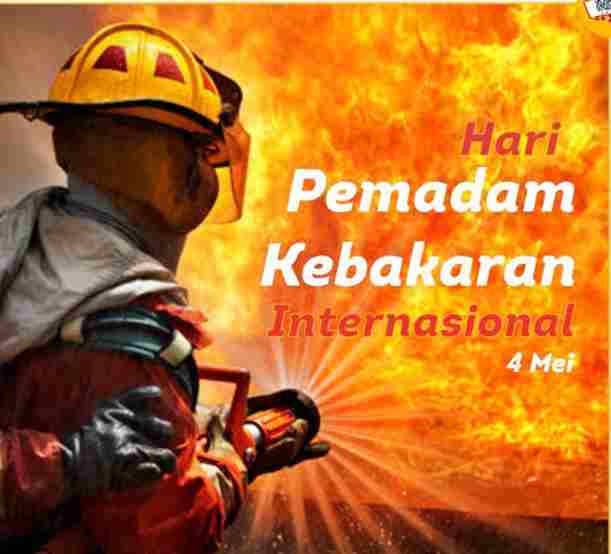
May 4th is commemorated worldwide as International Firefighters Day, a time to honor firefighters who have died in the line of duty. This commemoration stems from the 1998 tragedy in Linton, Australia, when five firefighters died trapped in a forest fire due to a sudden change in wind direction. A year later, the global firefighters community designated May 4th as an international day of solidarity for the profession that risks its lives on the front lines.
Indonesia commemorates this day not only as an annual ceremony, but also as a reminder that the duties of firefighters have expanded. According to Minister of Home Affairs Regulation No. 16 of 2020, firefighters are not only responsible for extinguishing fires but also for providing rescue services in emergencies that threaten the safety of lives, animals, and property.
The meaning is clear: the state recognizes that firefighters today are indeed more than just water sprayers.
We can see this in the many unique incidents that have gone viral in recent years.
In Surabaya, firefighters had to rescue a toddler whose head was trapped in a plastic chair. The parents were crying in panic, neighbors gathered, but no one dared to act. The firefighters arrived with cutting tools, and a few minutes later the child was freed.
In Bandung, a pregnant woman sought help from the firefighters because a stainless steel ring was stuck on her swollen finger. The hospital had difficulty opening it, but firefighters, using special tools, managed to cut the ring without breaking the skin.
In East Jakarta, a family called the firefighters after a large monitor lizard hid under their bed. That night, they didn’t dare enter the room. Once again, the firefighters were the ones who solved the problem.
In Depok, firefighters rescued a python from a resident’s washing machine.
In Semarang, a firefighter team climbed onto the roof of a house just to rescue a cat trapped for two days.
Instances like these sound simple, sometimes even comical. But for the residents who experienced them, they were emergencies that triggered panic.
And amidst the panic, the firefighters emerged as the most reliable institution.
Phone calls are answered quickly.
Officers depart quickly.
Solutions are implemented quickly.
Without asking who they are, where they are from, or what they are doing.
That’s why firefighters hold a special place in the hearts of the public.
They work not only to fight visible flames, but also to fight the flames of panic that burn in the minds of residents.
Often, what they extinguish isn’t a burning house, but rather fear.
Often, what they save isn’t a collapsing building, but rather the peace of mind of families.
This profession operates across a vast spectrum of humanity: from major threats to small issues that, if left unchecked, could become disasters.
Therefore, when people today spontaneously say, “Just call the firefighters,” they are actually expressing trust.
Trust that there is always someone ready to come when everyone is at a loss.
International Firefighters Day should be an important moment of reflection for all of us.
That behind the thick uniforms, hard helmets, sooty faces, and blaring sirens, there are people who leave their homes every day with no guarantee of returning safely.
They push through smoke when others shy away.
They enter tight spaces when others dare not.
They climb, cut, lift, evacuate, calm, and sometimes even face situations that are never listed in the job description.
Because for firefighters, emergency calls are never selective.
As long as there’s someone in need of rescue, they go.
That’s why, today’s firefighters these are more than fire extinguishers.
They are panic extinguishers.
Despair extinguishers.
Helplessness extinguishers.
And when those red sirens sound across the city streets, it’s not just fire trucks that are on the move. It’s hope.**
Indonesia, May 4, 2026
——-