Agricultural Revolution: Heavenly Knowledge for the Indonesian Earth
By: Ali Aminulloh
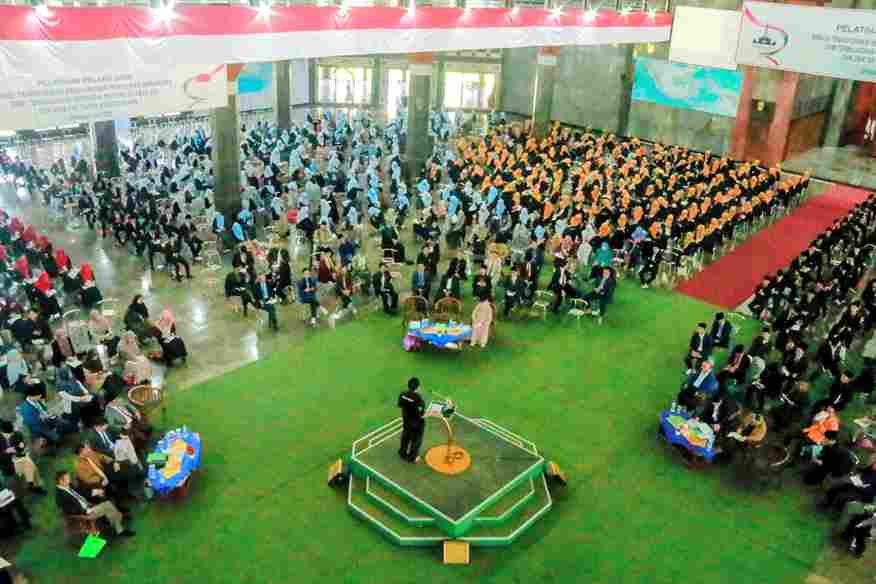
Mahad Al Zaytun reaffirmed its commitment as a center for civilization-based education through continuous student training. With the overarching theme “Revolutionary Transformation of Boarding School Education Towards a Modern Indonesia in the 21st Century and 100 Years of Indonesian Independence,” this forum serves as a strategic platform for developing a superior generation.
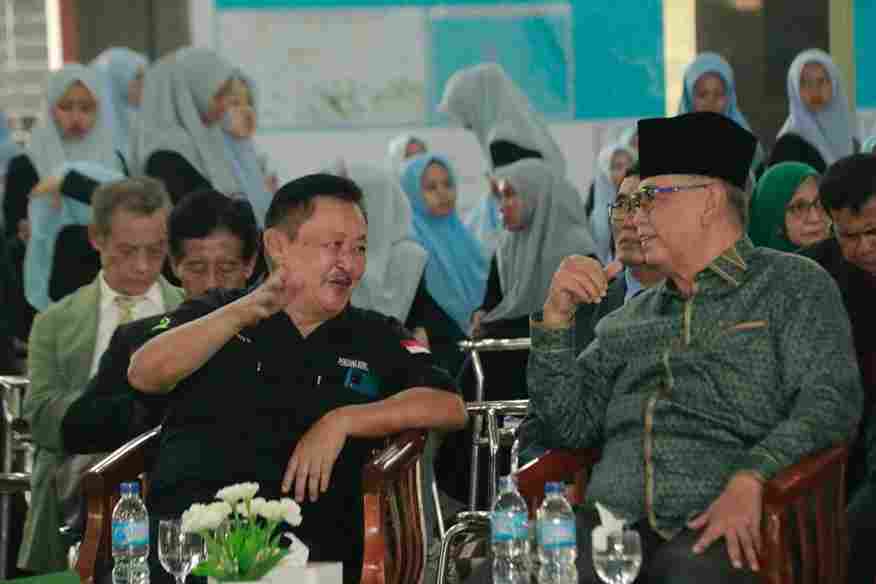
The 41st session featured a figure who is not only an academic but also a field practitioner: Prof. Dr. Ir. Gembong Priyatmo Arbyantono, M.Sc., a professor of agriculture who has long researched and developed integrated agricultural systems based on the environment and spirituality.
Before hundreds of students, he spoke not only about farming techniques but also encouraged participants to view agriculture as a way of life, even as part of their religious obligations and a civilized responsibility.
Soil, Water, and Heavenly Knowledge
His presentation began with something unusual: the story of the creation of the earth. He explained that the soil that today is the source of life was originally just dead rock that was brought to life by water and microorganisms.
“One centimeter of soil can take a hundred years to form,” he said, emphasizing the length and value of this natural process.
From this, he introduced the idea that microorganisms are the “main actors” in soil fertility. He even referred to them as “professors who graduated from natural universities” who work tirelessly to maintain the balance of the ecosystem.
However, he argued that modern humans are the main destroyers. Excessive use of chemicals has killed the micro-life in the soil. As a result, the soil becomes dependent, plants become disease-prone, and production becomes unsustainable.
He called this condition a form of “betrayal of the earth” and offered a solution through what he called the science of ecological conversion.
Changing the Fate of Farmers: From Tradition to a Modern System
Professor Gembong, not just focusing on environmental aspects, also highlighted the socio-economic issues of farmers. He saw that farmer poverty was not solely due to limited land, but also due to an unfair system.
The solution was a total transformation: from traditional farmers to independent agricultural entrepreneurs.
He introduced the concept of corporate farming, which involves collective land management to make it more efficient, modern, and empowered with greater bargaining power.
This transformation, he said, must go through the following stages:
– character building,
– increasing knowledge,
– strengthening the village economy,
– and implementing technology.
“Villages are producers. Villages must become the center of the country’s economy,” he emphasized.
Environmentally Friendly Technology and Limitless Innovation
In his presentation, he also demonstrated various innovations he has implemented:
from rice that can grow without water, plants that can withstand seawater, to agricultural systems that can increase productivity manyfold.
He also criticized modern agricultural practices that damage the environment, such as excessive pesticide use and improper waste management.
Instead, he developed a system based on microorganisms, organic fertilizers, and fermentation technology that not only increases yields but also maintains the balance of nature.
Q&A Session: From Multifarm to Animal Nutrition
The participants’ enthusiasm was evident during the question and answer session. One of the students, Ilham Firdaus, asked a question about the relationship between the multifarm system and the livestock sector, particularly in fulfilling feed nutrition and the quality of livestock products.
In response, Prof. Gembong explained that an integrated farming system is the primary solution for improving livestock quality. Agricultural waste such as straw, previously considered worthless, can be processed through a fermentation process into high-quality feed.
He mentioned that the protein content of straw, which was initially only around 2 percent, can increase to almost 10 percent after fermentation. This has a significant impact on livestock growth, even enabling optimal daily weight gain.
Furthermore, he emphasized that the concept of the food-feed-food cycle is key to sustainability: agricultural products become livestock feed, and livestock products, in turn, become a source of food.
He also criticized policies that are not based on system readiness, such as livestock procurement programs without realistic calculations of feed requirements. For him, everything must be based on thorough planning and sound science.
Agriculture as a Path to Civilization
At the end of the session, Prof. Gembong invited the students to view agriculture from a broader perspective.
Agriculture is not just a job, but a path of service. Farmers, he believed, are the ones who give the most, yet are least appreciated.
He even made it a habit to pray for the farmers at every meal: a symbol of respect for their role in sustaining life.
His message was simple yet strong:
The future belongs not only to those who are technologically savvy, but also to those who are able to maintain the balance of nature.
This training is proof that education at Al Zaytun is not only oriented towards knowledge, but also towards character development and a grand vision for civilization.
Amidst global challenges: the food crisis, environmental damage, and economic inequality, the message conveyed feels relevant: that solutions for the future can start from the land, from the villages, and from human awareness to return to harmony with nature.**
Indramayu, April 20, 2026
—-