Have We Seen the Essence of Eid Homecoming?
By: Dr. Ali Aminulloh, M.Pd.I., ME. (Lecturer at IAI Al-Azis)
Amidst the hustle and bustle of Eid today, the streets are filled with vehicles, social media is filled with happy images, and dining tables are overflowing with dishes. But beneath all this, there’s a quiet question we rarely ask: are we truly connecting, or are we simply carrying out a meaningless tradition?
Homecoming has become an annual ritual. People are willing to travel hundreds of kilometers, spend large sums of money, and even crowd together for one goal: returning to their hometowns. Houses are once again bustling, laughter erupts in living rooms, hands are shaken, and the word “sorry” is uttered repeatedly. But often, all of this remains superficial: a mere formality, without truly touching the heart.
In fact, in a hadith, the Prophet Muhammad (peace be upon him) emphasized that those who wish to have their livelihoods expanded and their lives prolonged should maintain kinship. The term used is not simply “not breaking off,” but “connecting.” This is an active act that requires presence, care, and sincerity. Scholars like Imam An-Nawawi explain that silaturahim is not just visiting, but also encompasses providing benefits, helping, maintaining communication, and even refraining from harming others. This means that silaturahim is both a work of the heart and a social effort.
In modern social psychology, this concept aligns with the social bonding and attachment theories developed by John Bowlby. Humans naturally need secure emotional attachments. Warm family relationships foster a sense of security (secure attachment), which is the foundation of mental health. Meanwhile, from the perspective of positive psychology, popularized by Martin Seligman, the quality of relationships is a key factor in human happiness. Without meaningful relationships, material success often loses its meaning.
Furthermore, the Eid al-Fitr tradition can be understood through a deeper framework, namely the Trilogy of Consciousness initiated by Shaykh Al-Zaytun: philosophical, ecological, and social consciousness.
First, philosophical consciousness. Eid is not just a celebration, but a moment of existential reflection: who we are, where we come from, and where we are returning. Silaturahim in this dimension is an effort to return to nature: cleansing relationships of ego, resentment, and arrogance. When someone sincerely apologizes, they are truly subduing their ego and acknowledging their limitations as human beings. This is the point at which relationships are no longer formal, but become a path to purifying the soul.
Second, ecological awareness. Going home (mudik) is not only a movement of people, but also a movement of life. Crowded cities are less stressful, quiet villages come back to life. The economy flows from the center to the periphery, creating a new balance. From this perspective, silaturahim impacts not only individuals but also the broader socio-economic ecosystem. It revitalizes small shops, drives transportation, and strengthens the pulse of life in hometowns.
Third, social awareness. This is the essence of silaturahim itself. In Robert Putnam’s theory of social capital, networks of relationships and trust are key assets in social and economic life. When families gather, what is built is not only warmth but also trust. From this, opportunities arise in the form of job information, business ventures, and even collaborations. Fortune often flows not from what we know, but from who we know and how we maintain those relationships.
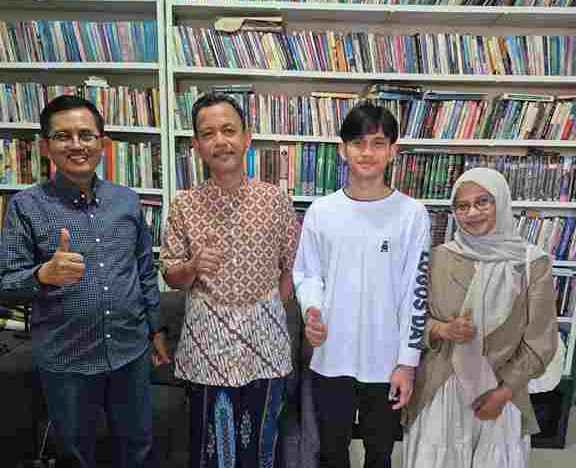
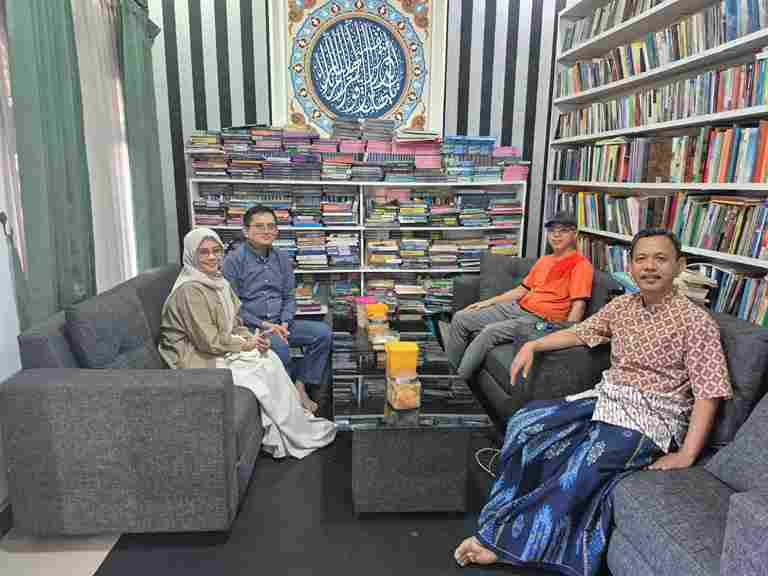
On Monday, March 23, 2026, in the warm atmosphere of Eid al-Fitr, I had the opportunity to meet with my cousin in Tasikmalaya, Dr. Asep Majdi Tamam, who now serves as Vice Rector III of Cipasung University. The meeting felt simple, yet meaningful, especially since we hadn’t seen each other for a long time. From him, I learned that perseverance in devoting oneself to knowledge brings not only financial success but also broader blessings in life: recognition, respect, and a strong sense of self-existence in society.
What he experienced aligns with Abraham Maslow’s theory of human needs. After basic needs such as physiological and safety are met, humans will move on to social needs (a sense of belonging), esteem needs, and ultimately, self-actualization. The gatherings that occurred during that meeting not only fulfill social needs, namely a sense of connection and acceptance, but also strengthen the need for self-esteem and meaning. We feel recognized, appreciated, and have a place in others’ lives.
From the perspective of classical scholars, as explained by Ibn Hajar Al-Asqalani, the meaning of “enlarged sustenance” in the hadith does not always mean an increase in quantity, but can also be a blessing such as a sense of sufficiency, peace, and usefulness. While “life extension” isn’t just biological, it also means a meaningful life. This aligns with modern psychological findings: people with strong social connections tend to be healthier, live longer, and be happier.
The Eid al-Fitr tradition in Indonesia is truly a profound manifestation of all this. It’s not just a cultural tradition, but a complex system, combining spiritual, psychological, and economic values. Mudik (homecoming) becomes a bridge that reconnects those who are far away, halal bihalal (gatherings) become a space for reconciliation, and togetherness becomes a life-giving energy.
But herein lies the true test. Are we returning home merely to fulfill a social obligation, or do we truly desire to repair relationships? Is our “sorry” merely an oral tradition, or is it born from a deep philosophical awareness, broad ecological consciousness, and sincere social conscience?
Because words without soul will only pass through the ears, never reaching the heart.
Eid al-Fitr isn’t truly about new clothes, sumptuous meals, or long journeys. It’s a moment to reconnect what’s been broken, soften what’s hardened, and revive relationships that have nearly died. That’s where sustenance finds its way, and life finds its meaning.
Perhaps what we need to ask is no longer, “How many homes have we visited?”, but “How many hearts have we truly touched?”
Because in the end, what makes life feel spacious isn’t the amount of possessions, but the breadth of the relationships we nurture. And what makes life feel long isn’t the number of years, but the depth of meaning we fill them with.**
Indonesia, March 27, 2026
——