THE BEGINNINGS OF THE MALAY PEOPLE
Author: Hamly Hadi
(History Observer)
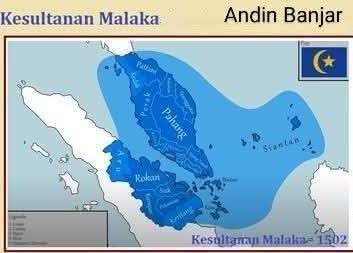
Parameswara (1344–1414) or Iskandar Syah (Jawi script: إسكندر شه) was the last king of Tumasik (Singapore), ruling from 1389 to 1398. He fled Palembang after the Majapahit naval invasion in 1398, and then established his new fortress at the mouth of the Malacca River in 1402.
In the book “The History of Malaya A.D. 1400–1959,” it is stated that Parameswara fled to Malacca due to an invasion by the Kingdom of Siam. The Siamese representative in Singapore, Tamagi, was killed by Parameswara.
Initially, Malacca was a stopover for the Sea People, descendants of the collapsed Srivijaya fleet, who lived independently at sea. The Sea People advised Prameswara to flee there. Prameswara’s initial arrival in Malacca numbered only 100 people, but due to its strategic location as a stopover for traders from the Middle East, Gujarat, India, and China, Malacca quickly flourished and became a major port.
In the account of Portuguese adventurer Tom Pires, entitled “Suma Oriental,” the origins of the Malay people began in Malacca, founded by Prameswara and his followers. This word is derived from the Javanese language. When Prameswara and his followers fled from Palembang to Malacca, they were called Malays. The Malay identity emerged as a Muslim people after Prameswara and his followers converted to Islam in 1406. It was at this time that the Malay identity emerged, with its distinctive Islamic customs and clothing, which adopted elements from the Middle East, China, and India.
Following the collapse of the Malacca Sultanate, it was replaced by the Johor Sultanate. During the Johor Sultanate, more and more people from the Indonesian archipelago arrived on the peninsula, including the Javanese, Bugis, Makassarese, Banjarese, Minang, Acehnese, Mandailing, Baweanese, and others. They were all included in the Malay group because they were all Muslim, leading to the Malays’ increasing dominance of the peninsula.**
Banjarmasin, South Kalimantan, December 19, 2025
References:
1. The Influence of Islam in Malay Literature (1976) “The Influence of Islam in Malay Literature” Seminar on Islamic and Malay Culture. UKM.
2. English). Accessed December 14, 2019.
Gungwu, Wang (2003). Only connect!: Sino-Malay encounters. Eastern Universities Press. ISBN 981-210-243-4.
3. Suma Oriental by (1512) Tom Pires.**
———-