A Treasure of High Value: Sheikh Al-Zaytun’s Commitment to Protecting Topsoil in Polytechnic Development
By Ali Aminuloh
Sheikh Al-Zaytun’s commitment to the environment was never mere rhetoric. Loving the earth is implemented in concrete steps, especially in every development process at Ma’had Al Zaytun. His principle is simple and profound: development should not sacrifice the environment, but rather, it should be a way to improve it.
This principle is clearly visible in the monumental project of building the Tanah AIR (Al Zaytun Indonesia Raya) Polytechnic campus. The Sheikh always paid attention to the condition of the soil on which the buildings were erected, especially the top layer, geologically known as topsoil.
Why is topsoil so important?
This 10 to 30 cm thick layer of soil is the most fertile, rich in humus, loose, and porous. It is where plant roots grow and microorganisms thrive, making it key to fertility. Most importantly, the formation of topsoil is a natural process that takes tens to hundreds of years; it cannot be formed instantly. This is what makes topsoil a “highly valuable treasure.”
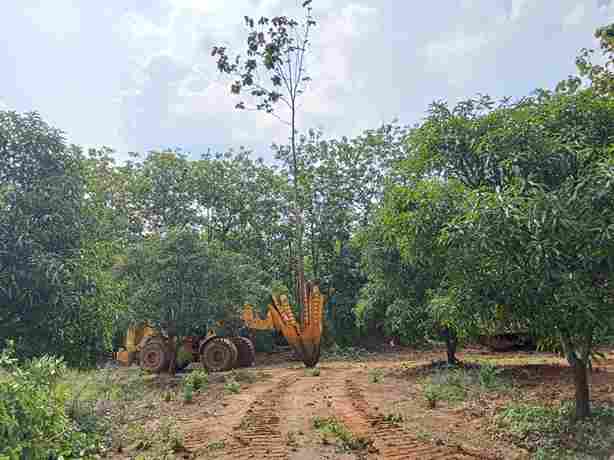
Topsoil Conservation in the Field
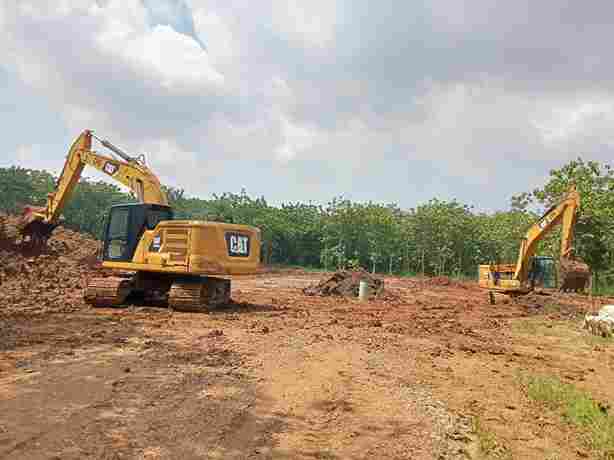
On the third day of supervision of the Polytechnic construction, Wednesday, December 3, 2025, the on-duty team consisting of M. Soleh Aceng, SH. MH (Team Leader), Maratu Solihah, S.Pd., and Khoirul Amri Pratama, S.Pd., closely supervised the excavation and removal of this treasure.
According to Jibril, the Field Coordinator for the construction, the Sheikh’s attention to topsoil was extraordinary.
The conservation process was carried out in a structured manner:
1. Tree removal using a Bigjhon.
2. Soil extraction for the building site: first, the topsoil was extracted to a depth of 50 cm using a bulldozer.
3. Soil removal: The collected topsoil was then lifted by a backhoe and transported using a dump truck, before being transported to the Al-Zaytun agricultural and plantation lands.
4. Subsoil Separation: After the topsoil has been salvaged, the layer beneath it, the subsoil, is excavated to a depth of 50 cm. This denser, less fertile, but mineral-rich layer is set aside. This subsoil is not discarded but will be reused as backfill after the earthen nails are hammered in.
With this step, Al-Zaytun ensures that the land on which the building stands can support the structure, while the surrounding agricultural land remains fertile thanks to the supply of nutrient-rich topsoil.
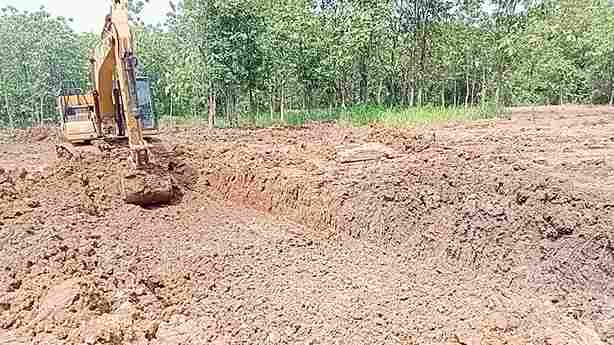
Trilogy of Awareness: Development that Manages the Environment
This environmentally friendly development model stems from the trilogy of awareness consistently advocated by the Sheikh: Philosophical Awareness, Ecological Awareness, and Social Awareness.
The practice of carefully salvaging and removing topsoil is a concrete implementation of Ecological Awareness. This action serves as an important lesson that development and environmental stewardship can go hand in hand. Development at Al-Zaytun does not sacrifice the environment, but rather manages the environment so that the topsoil formed over decades is not wasted and can continue to support life in other areas.
The story of topsoil at Al-Zaytun is not merely a technical development, but a philosophical message about respect for nature. To build the future (Polytechnic), we must respect the past (soil formation processes) with sincerity and awareness.**
Al Zaytun Indonesia, December 3, 2025
—–