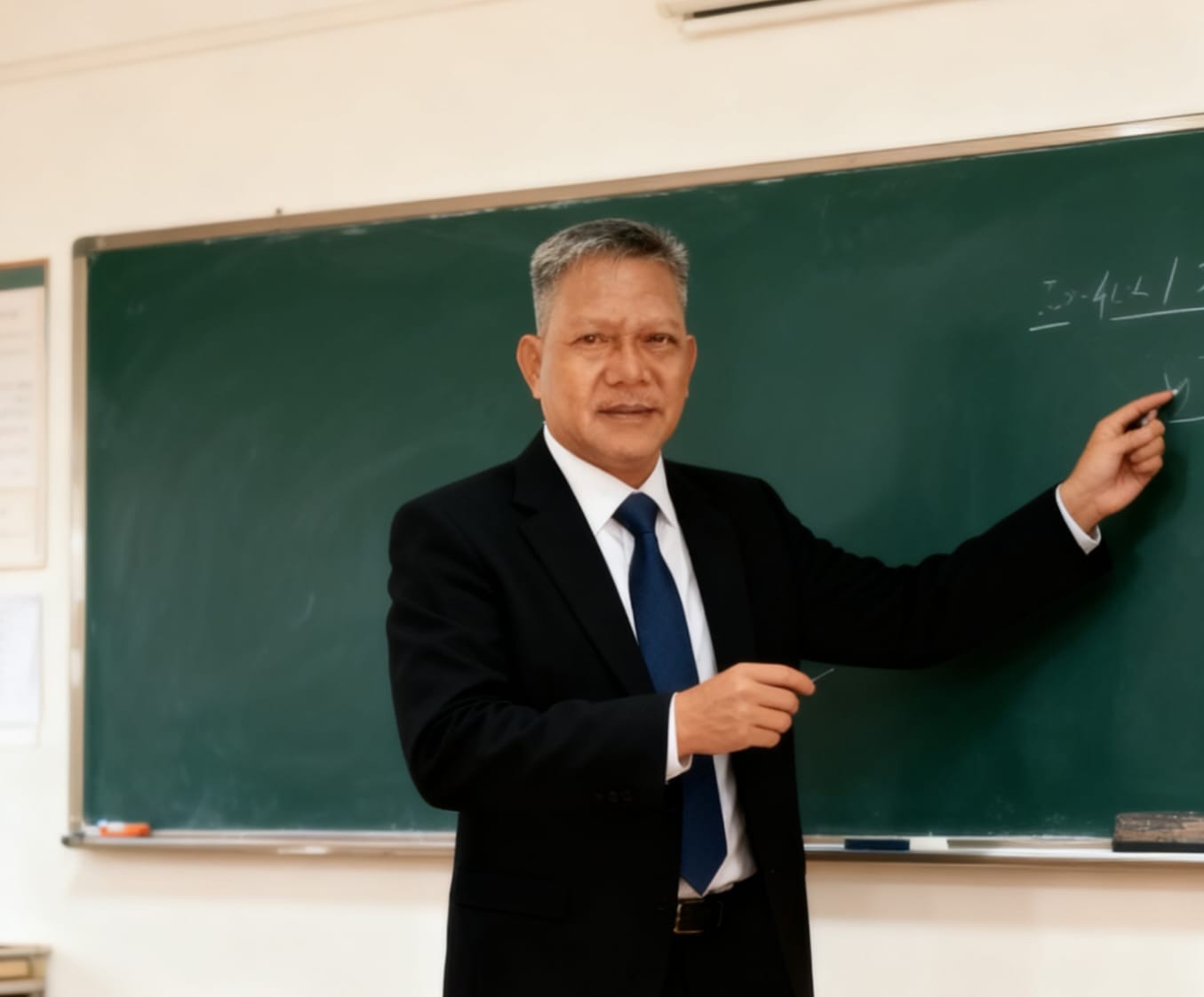
Food Sovereignty Ecosystem: Integrating Technological Innovation and the Foundation of Statehood
By Dr. Ali Aminulloh, M.Pd.I., ME (Lecturer at IAI Al-Azis) – Extracted from the Public Lecture on Student Training
Indramayu, November 30, 2025 — Ma’had Al-Zaytun reaffirmed its commitment to building a boarding education ecosystem as a form of contribution to the nation. This commitment was realized through the 26th Student Training, which focused on the L-STEAMS (Law, Science, Technology, Engineering, Arts, Mathematics, and Spirituality) framework to strengthen the capacity of human resources in the agricultural sector.
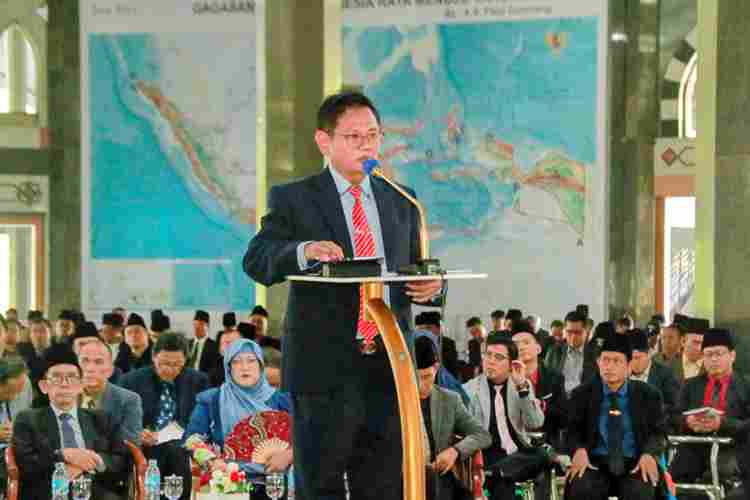
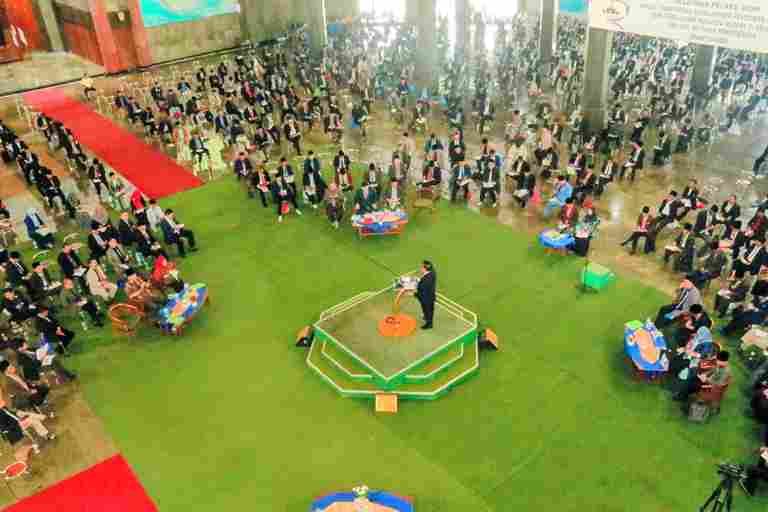
The Public Lecture on Educator Training was attended by no less than 1,500 Al-Zaytun stakeholders, including YPI administrators, lecturers, teachers, students, leaders of Al-Zaytun educational support units, Wali Santri, and the Indonesian Food Security Farmers Association (P3KPI). The forum presented two complementary perspectives: an academic perspective on technological modernization from Prof. Dr. Ir. H. Ahmad Faqih, S.P., M.M., IPU., CIRR., Rector of UGJ, and the insights of Sheikh Al-Zaytun on the ideological foundations and practical education reform. The result was a holistic blueprint for realizing Golden Indonesia 2045.
Academic Vision: Leap of Innovation and Modern Agriculture
Prof. Dr. Ir. H. Ahmad Faqih began by emphasizing that agriculture is the foundation of civilization. To achieve food sovereignty, Indonesia must undertake a major transformation through modernization.
Three Strategic Pillars and Global Challenges
Prof. Faqih outlined three crucial roles agriculture plays for the country:
1. Supporting National Food Security, especially in the face of import vulnerabilities and geopolitical shocks.
2. Largest Employer of Labor, maintaining socioeconomic stability.
3. Contributing to GDP through downstream and derivative industries.
The challenges faced are very real, including the impact of Climate Change, shrinking land-use urbanization, and the need to achieve a “Technology Obsession” so that production (such as fruit harvesting) can be carried out year-round, regardless of the season, in order to compete in the global market.
Pillars of Innovation
The solution, according to Prof. Faqih, lies in the adoption of technology:
• Precision Farming: Utilizing AI, drones, and sensors to precisely map crop needs, increasing efficiency by up to 40%.
• Automation and Mechanization: Using machines to speed up the planting and harvesting processes, mimicking labor efficiency in developed countries.
• Biotechnology: Key to developing superior varieties with high productivity and short growing periods, catching up with yields lagging behind other countries.
This transformation requires Quadruple Helix collaboration, and he pointed to Al-Zaytun as an ideal model of a Living Laboratory where 24-hour Experimental Learning activities can integrate research and practice.
A Fitting Response: The Foundation of the State and Structural Reform
Welcoming Prof. Faqih’s technical presentation, Sheikh Al-Zaytun, AS Panji Gumilang, provided a comprehensive insight, grounding the technological vision within the nation’s ideological and structural framework.
The Principle of Ulil Amri and Economics
The Sheikh emphasized that every step of development must adhere to the Belief in the One Almighty God, as stated in Pancasila. He referred to the verse of obedience (Atiullah wa ati rasul wa ulil amri minkum), explaining that after the Prophet Muhammad’s death (khatamu nabiyyin), those who never cease to follow Divine commands are the Ulil Amri.
“In the context of Indonesia, Ulil Amri is the State System itself. Therefore, the madzhab (system) established by the state must be adhered to,” said the Shaykh.
The Shaykh then criticized the economic and banking system, claiming that the practice of Murabahah and Riba loans still burdens customers, even priority customers. He stated that an indicator of national progress is that people have easy access to money and capital from financial institutions. “Ring, tomorrow I’ll borrow this much money. Out,” said the Shaykh. If this has not been achieved, Indonesia cannot be considered advanced.
Polytechnics: Implementing the Theory the State Needs
To address structural problems and achieve efficiency, the Shaykh called for educational reform by increasing vocational education and polytechnics. He clearly distinguished the roles of these two institutions:
“What the country needs now is not universities that produce theory, but educational institutions that are capable of putting theory into practice. That is polytechnics. Universities produce theory. Universities are rosihuna fi al-‘Ilm, while polytechnics are those that put it into practice.” The Sheikh emphasized that the prioritized majors must be those that directly support food security: Agriculture, Fisheries, Animal Husbandry, Agricultural Mechanical Engineering, and Forestry.
Al-Zaytun’s Independent Production Ecosystem
The Sheikh’s vision goes beyond establishing a polytechnic, but rather transforming it into a self-sufficient production center. He envisioned that Al-Zaytun Polytechnic should produce its own agricultural equipment (Al-muryat)
and transport vehicles (Al-Adiyat) needed by Al-Zaytun farmers. Therefore, they purchase agricultural equipment from the Tanah AIR Polytechnic.
This concept creates a self-sufficient ecosystem in Indramayu, ensuring that the technical innovations taught (such as mechanization and agricultural engineering) are directly implemented locally.
Holistic Blueprint for Sovereignty
The presentations by Prof. Faqih and Shaykh Al-Zaytun, despite their different focuses, are two sides of the same coin. Prof. Faqih provides the what and how (technological innovation and academic collaboration), while Shaykh provides the why and where (ideological foundations of statehood and practical educational reform).
The unity of these two perspectives presents a Holistic Blueprint towards a Golden Indonesia 2045:
Food sovereignty is not only achieved through drones and biotechnology, but also through adherence to the state system, economic reforms that facilitate public access to capital, and educational transformation that prioritizes practice. Ma’had Al-Zaytun, with its living laboratory model and production polytechnic, serves as a microcosm that demonstrates that innovation and the foundations of nationalism can synergize perfectly.
This is the greatest legacy of the 26th Student Training: the belief that the future of Indonesian agriculture lies in combining advanced science with the courage to reform basic institutions, producing human resources firmly rooted in national values and skilled in implementing technology.**
Indonesia, November 30, 2025
——