UNNES-UNISFAT COLLABORATE ON THE KOSABANGSA PROGRAM IN TAHU VILLAGE, BABALANLOR VILLAGE, PEKALONGAN REGENCY
Author: Nur Fateah
Lecturer, Unnes
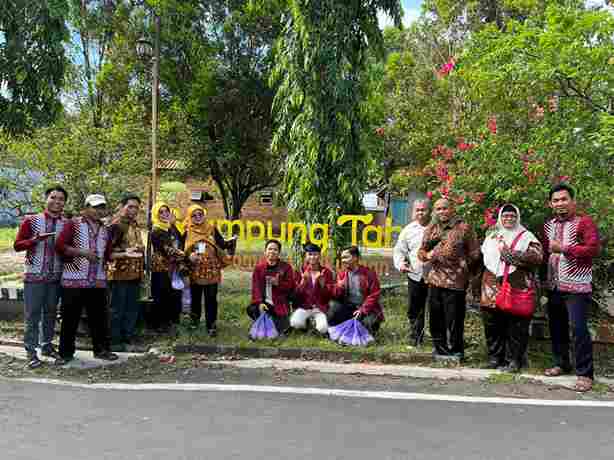
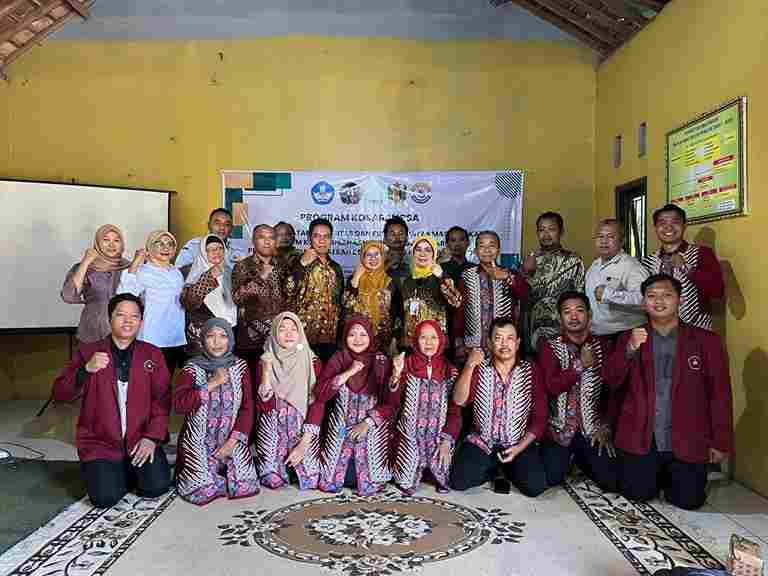
Coordination of the Kosabangsa Program with the Support Team, Implementation Team, and Partners in Babalanlor Village, Pekalongan Regency
The Kosabangsa 2025 Program from the Directorate of Research and Community Service, Directorate General of Research and Development, Ministry of Higher Education, Science, and Technology (Kemdiktisaintek), has brought a breath of fresh air to the community of Babalanlor Village, Bojong District, Pekalongan Regency. Through the collaboration between Sultan Fatah University (Unisfat) Demak and Semarang State University (UNNES), local tofu and tempeh entrepreneurs and young entrepreneurs received support for capacity building based on appropriate technology (TTG) and comprehensive business mentoring.
The program, titled “Enhancing Community Capacity and Productivity in Sustainable Entrepreneurship Based on Regionally Superior Products,” targets two primary partners: the “Margo Mulyo” Cooperative, a soybean processing business specializing in tofu production, and the “Muda Bangkit” young entrepreneur group, which manages food processing and garment factories. This program will run throughout 2025 with funding support from the Ministry of Higher Education, Science, and Technology.
The implementing team from Unisfat consists of Achmad Nuruddin Safriandono, M.Kom (Chairman), Dyah Kusumawati, S.Sos, M.Si, and Agung Nugroho, ST, MT. They work alongside a mentoring team from UNNES, led by Prof. Dr. Siti Harnina Bintari, M.Si, and Drs. Meddiati Fajri Putri, S.Pd., M.Sc, and Drs. Sunyoto, M.Si. The mentoring team’s various patented technologies and innovations are being implemented at Kosabangsa’s target partners.
During this activity, several appropriate technologies (TTG) were provided and implemented directly on-site. For the Margo Mulyo KUB, the technologies implemented included a steam boiler, a food-grade stainless steel boiling pan, and a tofu press. This technology replaced conventional methods that previously relied on rice husk stoves and unhygienic equipment.
Meanwhile, for the Muda Bangkit group, technological support included a multi-purpose shredder, an ergonomic LPG frying stove, an oil spinner, a soybean huller, and a high-speed three-needle sewing machine to support the food processing and garment manufacturing sectors.
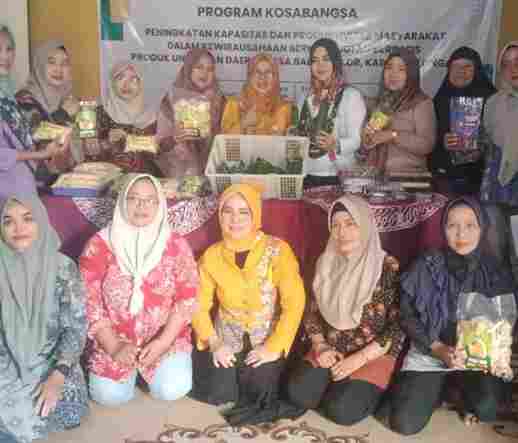
In addition to the TTG assistance, both Partner groups also received training in producing various village-based food products, including tahu pong (tofu pong), tofu crackers, tofu meatballs, purple sweet potato brownies, purple sweet potato sticks, and purple sweet potato pudding.
In addition to increasing production, the Kosabangsa program also strengthened management and marketing aspects. Entrepreneurs received assistance in digitizing bookkeeping, developing packaging designs, registering brands, and developing online and offline marketing strategies. In fact, P-IRT and halal certification are also facilitated to increase the competitiveness of local products.
According to the mentoring team, Babalanlor Village has great potential as a center for Tofu Village Tourism, but still faces obstacles such as outdated equipment, small production capacity, and immature management. Through intensive mentoring and the application of technology, this program is expected to significantly increase the level of community empowerment.
The impact of the Kosabangsa program has shown positive results: increased production capacity, diversification of food products made from tofu, tempeh, and purple sweet potatoes, cross-city marketing in Central Java, and the production of educational digital content to expand business promotion.
The Kosabangsa program in Babalanlor is expected to continue until the community is self-sufficient in business management, maximizes the potential of the tourism village, and contributes more to regional economic growth.**
Semarang, November 17, 2025
—–