Revolution From the Kitchen: Uniting Science, Nature, and Real Action
By: Dr. Ali Aminulloh, M.Pd., ME.
LSTEAM-Based Educational Transformation
Ma’had Al-Zaytun continues to affirm its commitment to a revolutionary transformation from boarding school education to a modern, 21st-century education based on LSTEAMS—Law, Science, Technology, Engineering, Art, Mathematics, and Spirituality. Within the broader framework of building a scientific civilization integrated with spirituality and sustainability, since June 1, 2025, Al-Zaytun has consistently presented professors from across disciplines to enrich the academic community’s knowledge.
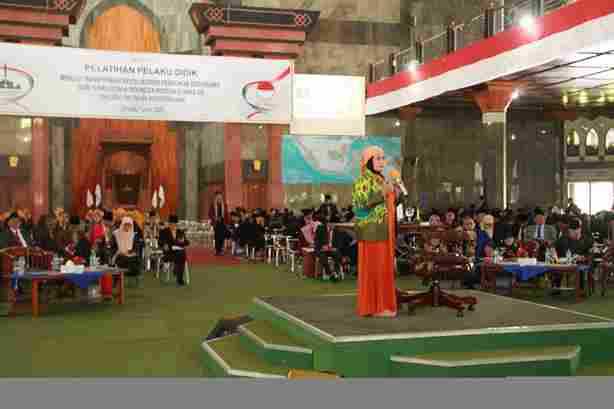
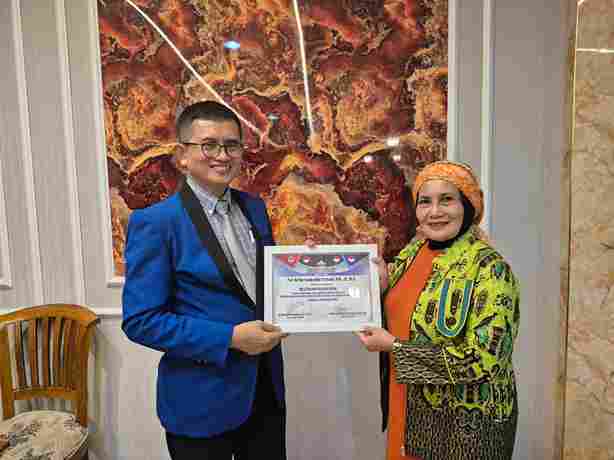
The 19th session, Sunday, October 19, 2025, featured Prof. Hertien Koosbandiah Surtikanti, M.Sc., ES., Ph.D., Professor of Ecotoxicology (Environmental Toxicology) from the Faculty of Mathematics and Natural Sciences, UPI Bandung. In his inspiring lecture, he addressed the theme “The Role of Ecoenzymes in the Integration of the Tri Dharma of Higher Education and Green Campus” — a topic that is not only scientific, but also very down-to-earth and relevant to today’s global environmental crisis.
Ecoenzymes: A Magical Elixir from the Kitchen to Save the Earth
From behind the kitchen floor, a small revolution has emerged with a big impact: ecoenzymes. This liquid, produced by fermenting organic waste, has become a symbol of the global movement to live in harmony with nature.
“Ecoenzymes are not just cleaning fluids,” said Prof. Hertien, “they are part of a new ecological consciousness.”
The process is simple yet meaningful. A mixture of molasses, fresh fruit scraps, and water in a ratio of 1:3:10 is then fermented for three months in a sealed container.
The result: a fresh, vinegar-like liquid rich in decomposing microorganisms. Fruit peels from fruits like pineapple, papaya, and orange are ideal ingredients, while ingredients like durian or cabbage should be avoided.
More than just a household experiment, ecoenzymes teach the principles of a circular economy—nothing is wasted; everything can be recycled into value.
From a humble kitchen, an ecological solution is born that can address the global crisis.
The Three Pillars of Higher Education in the Green Movement
Prof. Hertien emphasized that ecoenzymes are not only ecological products, but also an integrative model for the Three Pillars of Higher Education—education, research, and community service.
In education, ecoenzymes create contextual learning spaces. Students can understand the concepts of biotechnology and environmental toxicology directly through fermentation practices and microorganism analysis. Meanwhile, in research, ecoenzymes offer a wide range of potential: from testing their effectiveness as natural liquid fertilizers, decomposing water pollutants, and even using them as eco-friendly cleaning agents.
In community service, ecoenzymes serve as a tool for empowerment.
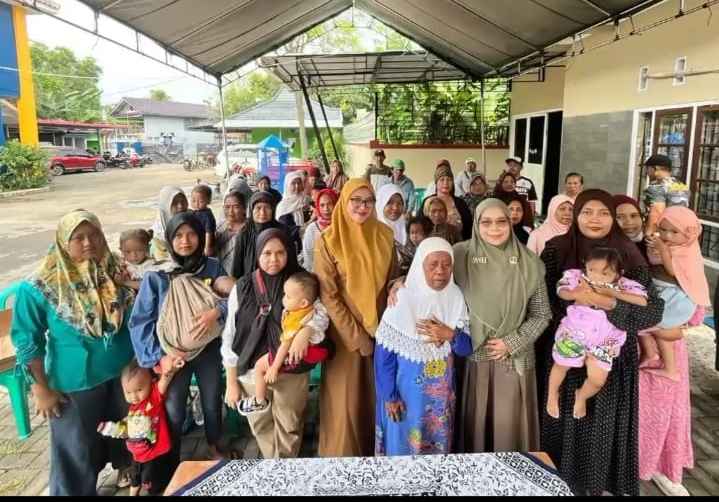
Prof. Hertien shared her experience encouraging women from the Family Welfare Movement (PKK) and farmer groups in Purwakarta to make organic liquid fertilizer and natural pesticides, and even initiated a campaign to pour ecoenzymes into Lake Bagendit to restore water quality. This movement has spread to Indonesian diaspora communities in Bangkok and Vietnam, making ecoenzymes a symbol of the nation’s ecological diplomacy.
From Green Campus to Global Movement
On campus, ecoenzymes have become a driving force for green culture. They connect the laboratory with the field, transforming theory into concrete action. Globally, the use of ecoenzymes aligns with the Sustainable Development Goals (SDGs): clean water (SDG 6), sustainable cities (SDG 11), and climate action (SDG 13).
The wonder of this fermented liquid has proven to be multifunctional: organic fertilizer, natural cleaner, water purifier, natural pesticide, and even disinfectant. During the COVID-19 pandemic, even the Indonesian Red Cross (PMI) in Bandung used ecoenzymes as a natural disinfectant spray.
Every drop of ecoenzymes is not just a product of fermentation, but a symbol of the synergy between science, social awareness, and spiritual responsibility to the earth.
Epilogue: From Waste to Blessing
In this moving reflection, Prof. Hertien concluded his lecture with a moving statement: “Waste is not the end, but the beginning of a new life.”
This statement carries a profound message for the world of education and the wider community. It demonstrates that big changes often begin with small, conscious actions.
Ecoenzyme is not just a chemical formula, but a moral and spiritual movement to atone for human wrongdoings against nature. In the hands of educators, scientists, and students, it has become a symbol of the collaboration between science, faith, and concrete action.
If every home, school, and campus is willing to take this small step, we will be writing a new chapter in history: a revolution from the kitchen that saves the earth.**
Indramayu, October 21, 2025
—-