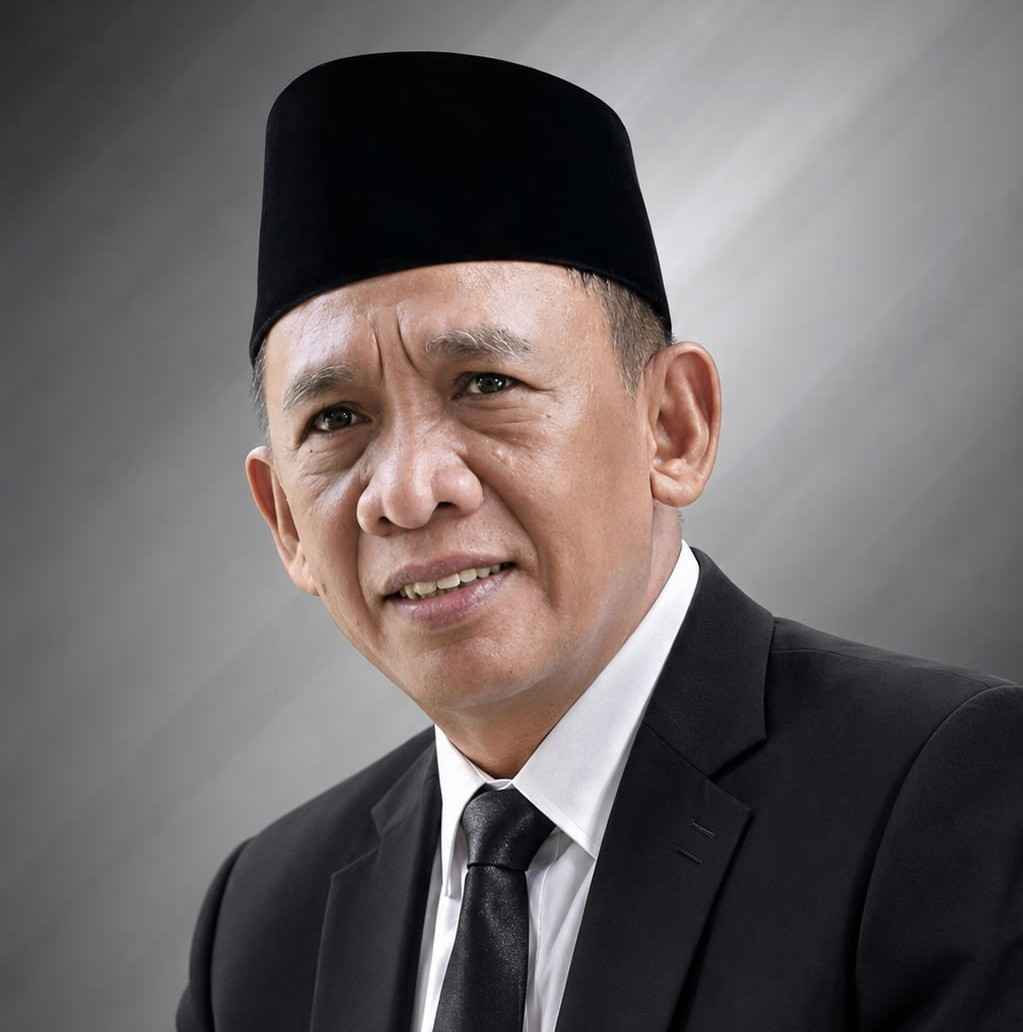
Dr. Tobroni, S.Pd, M.Pd., and the Education Workshop in Indramayu, An Analysis of the Burden of Democracy
Author: Adlan Daie
Political and Socio-Religious Analyst
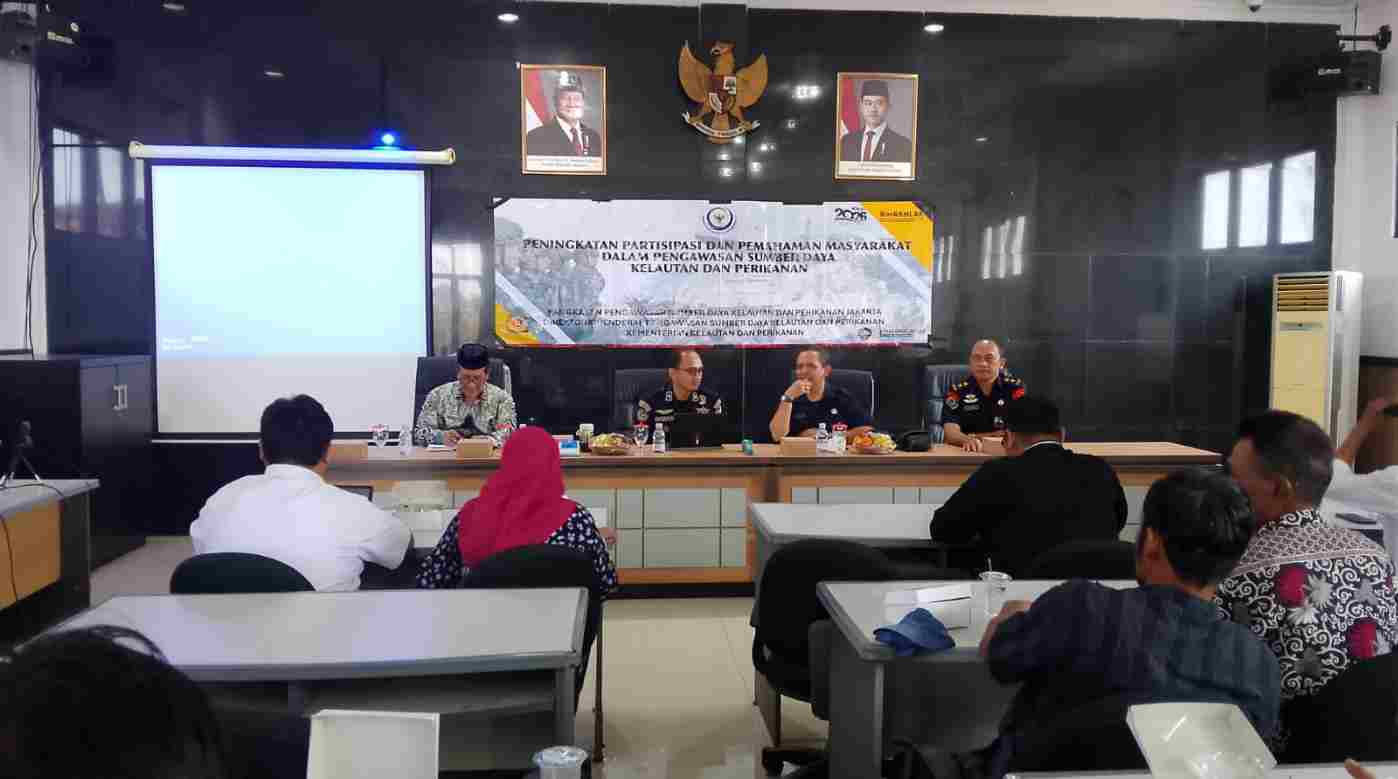
It was interesting to read about Dr. Tobroni, S.Pd, M.Pd, Rector of Darul Ma’arif University (UDM) Kaplongan, Indramayu, in the context of the “Education Workshop” held at the initiative of H. Dedi Wahidi, a member of Commission X of the Indonesian House of Representatives, at the Swiss Belinn Hotel in Indramayu (Saturday, October 4, 2025). The workshop was attended by the Head of the Indramayu Education Office and officials from the Indonesian Ministry of Primary and Secondary Education.
The interesting aspect is not only that Dr. Tobroni, as an academic, was one of the resource persons at the “Education Workshop,” which focused on the socialization of 13-year compulsory education, specifically on addressing the issue of out-of-school children (ATS). The participants were practitioners and education activists, mostly from the Nahdlatul Ulama (NU) social group in Indramayu.
From the perspective of the author, who attended the event in person, the interesting aspect lay in Dr. Tobroni’s presentation style and method. He articulated the educational problems in Indramayu without using lengthy, overly complicated descriptions and “theoretical arguments.”
He constructed his presentation by contrasting Indramayu with Mauritius, a country in East Africa with an image of “undevelopment” and backwardness.
In the (classical) social theory of Soedjatmoko, Rector of the United Nations University in Tokyo, Japan (1980), this comparative approach, incorporating data analysis in the context of education, is part of positioning education as an instrument of “social engineering.”
In other words, education as an instrument of social engineering is where educational institutions are not understood as mere machines for producing mechanical skills for the workforce, wrapped in statistics, but rather as pillars for the growth of social foundations in the formation of a mature democracy.
It is indeed a bit “apple to apple,” meaning it’s not on par with Dr. Tobroni’s presentation. Dr. Tobroni’s remarks at the workshop above. A comparison of “Mauritius” as a “state” with Indramayu, a regency and autonomous region within the Unitary State of the Republic of Indonesia (NKRI).
However, in terms of area, potential, and population, they are relatively similar, making a demographic comparison relatively “reasonable,” and making sense in interpreting the social burden on the maturity of democracy as a political system.
First, the striking difference in the comparison of the two “regions,” as constructed by Dr. Tobroni in the education workshop above, is the average education level of their populations. This difference was emphasized by Dr. Tobroni.
In “Mauritius,” the average education level of residents is 15 years (D3), while Indramayu’s education level is 6.9 years, stated the Head of the Indramayu Education Office, Dr. H. Caridin, in his remarks at the workshop. This means that the average Indramayu resident is still in the first grade of junior high school/Islamic junior high school.
Second, the comparative construction above is clearly not simply a difference in educational statistics. In one social structure (Mauritius), it forms a balance between social classes, while in Indramayu (and indeed in Indonesia), it is a social pyramid.
From the perspective of political analyst Jeffery Wonters, the social pyramid construction is certainly oligarchic, where the upper class, namely the wealthy and educated, is very small but can “dictate” to the very large lower-middle class. Demographically, in Indramayu, and even in Indonesia in general, the Nahdlatul Ulama (NU) social group is a part of it.
This is our problem, not just a disparity in average education levels, but also a lack of democratic maturity. Moreover, our society is abundant with information but lacking in literacy. As a result, it is difficult for us to find leaders, in Rocky Gerung’s words, who possess “ethical” and adequate capacity.
In a society with the above social pyramid construction, it is almost certain that the majority of our society is easily manipulated by image manipulation because education is not a social engineering instrument for fostering democratic maturity. As a result, politics is merely the domain of soap opera actors, not leaders.
So, democracy is not just about the technicalities of voting in general elections and regional elections, but also about the prerequisites for the growth of the educational process within a social balance as an instrument of “social engineering,” a process of social transformation that impacts the formation of…
This is where education in Indramayu, and indeed Indonesia in general, should be directed: not merely pursuing the average education index of our society, but rather education as an instrument of social engineering to shape democratic maturity.
A mature democracy will not only produce a mature leader with a vision of public enlightenment but also narrow the social class gap in social, economic, and educational formations.
This is specifically the major “homework” for Nahdlatul Ulama (NU), as the largest Islamic organization in Indramayu, and indeed in Indonesia, to pull its citizens along through the long journey of vertical social mobility. **
Indramayu, October 6, 2025
—-