Prof. Dr. Sugiyono, M.Pd. at Al Zaytun: Building Research-Based Learning
By: Dr. Ali Aminulloh (Lecturer at IAI Al Zaytun)
The Mosque Welfare Institute (LKM) of the Rahmatan lil Alamin Al Zaytun Indonesia Mosque affirms its commitment to making the mosque not just a place of ritual worship, but a center of education and civilization. In preparation for the 100th anniversary of Indonesian independence, ongoing student training will be held within the mosque starting June 1, 2025.
Sunday, August 10, 2025, marks the 11th week of the training series.
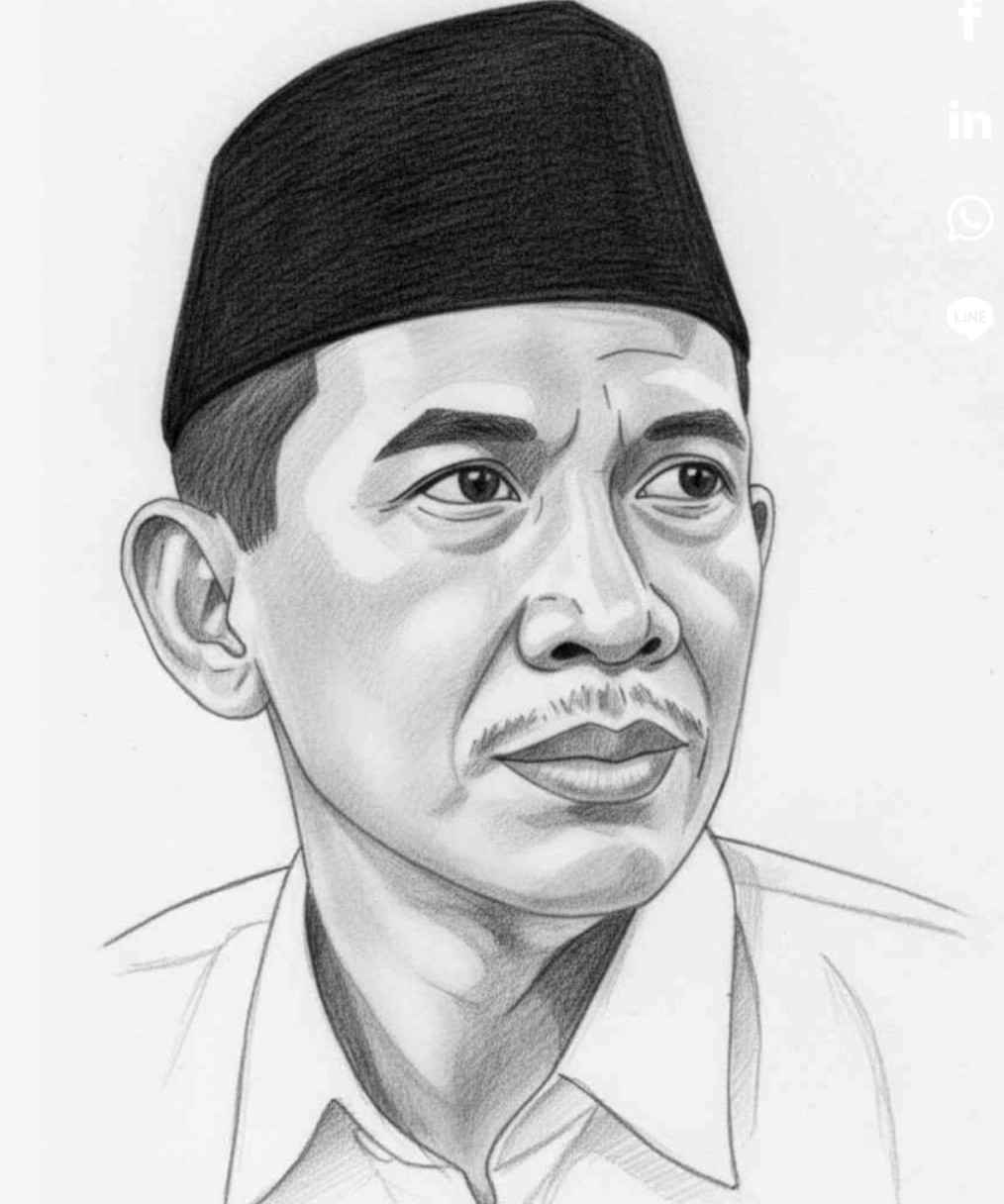
The theme of this training is “Revolutionary Transformation of Boarding School Education for the Realization of Modern Indonesia in the 21st Century and the 100th Anniversary of Independence.” This session will focus on research-based learning in Islamic boarding schools (pesantren) and will be presented by Prof. Dr. H. Sugiyono, M.Pd.
A professor from the Faculty of Engineering at the University of Jakarta (UNJ), he challenged conventional thinking about education and research in a public lecture at the Al-Zaytun Islamic Boarding School. He emphasized that the key to a nation’s progress lies in research, and that it is time for educational institutions in Indonesia, including Islamic boarding schools, to adopt research-based learning.
The professor, who specializes in welding, expressed his critical views on the Indonesian education system, which tends to “trademark” despite spending significant funds.
Prof. Sugiyono highlighted several key issues in Indonesian education, including quality, relevance, and equity. The quality of education in Indonesia struggles to compete with neighboring countries, while the relevance of graduates to the workforce is often at odds. Furthermore, educational equality, both in terms of region and quality, has not yet been achieved, making zoning policies difficult to implement.
The most prominent issue was the constant change in education policy with each change of minister, likening it to “buying gasoline and always starting from zero.”
The Path to a New Civilization: Research and Innovation
In his presentation, Prof. Sugiyono divides research into several levels. The most basic is descriptive research, which simply involves photographing objects and reporting them. The next level is proving existing theories, which he believes does not lead to progress because it only tests beliefs, not adding to knowledge. A higher level is innovation, which involves developing something that already exists, such as modifying a tractor to make it more effective. Then there’s invention, which involves discovering information or facts that already exist but were previously unknown, such as Columbus’s discovery of the Americas. The pinnacle of all levels is creative research, which involves creating something that has never existed before.
Professor Sugiyono believes that Islamic boarding schools (pesantren) have enormous potential for development through research. He encourages students, students, and university students to be sensitive to the phenomena around them, as Isaac Newton did when he saw an apple fall or James Watt when he saw steam press against a pot lid.
He believes that these simple things can yield discoveries that are of extraordinary benefit to civilization.
Initiating Research-Based Learning in Islamic Boarding Schools
To realize research-based learning, several adjustments are necessary.
First, policies that support this learning model are needed.
Second, the curriculum must be adjusted to complement STEM (Science, Technology, Engineering, and Mathematics) subjects with research activities.
Third, educators must improve their ability to guide students in conducting research.
Fourth, facilities and infrastructure must be adequate to support research activities.
Finally, graduation evaluations should focus more on research outcomes as the main indicator of success.
The implementation of research-based learning in Islamic boarding schools is expected to encourage students to think critically and analytically, integrate Islamic scholarly traditions with modern science, and prepare them to continue on to higher education and face future challenges.
At the end of his session, Sugiyono criticized the education system that prioritizes memorization and encouraged students to apply the values they have learned. He concluded his presentation with a pantun, “The jasmine flower smells fragrant.
It grows abundantly on the edge of the yard.
Let’s examine our own potential and the environment.
So that Al-Zaytun Islamic boarding school can progress sustainably.”
Epilogue: Educating to Build Civilization
Liberating education is education that not only leads us to theoretical understanding, but also guides us to discover, create, and implement knowledge for the advancement of civilization.
Prof. Sugiyono’s presentation is not just an academic lecture, but rather a roadmap to a brighter future, where every individual, from farmers to professors, they become researchers who make significant contributions to the nation. By prioritizing research, Indonesia will not only be able to compete but also become a shining beacon of civilization.**
Indramayu, August 11, 2025
—