Reflections on Al-Zaytun’s 27th Anniversary
By: Dr. Ali Aminulloh
From the perspective of the sociology of education, a school is never merely a place for transferring knowledge from teacher to student. Education is a social institution that shapes character, instills national values, expands social mobility, and determines the trajectory of a civilization. Therefore, when an educational institution endures for 27 years, what is being celebrated is not just the passage of time, but a consistent commitment to human development.
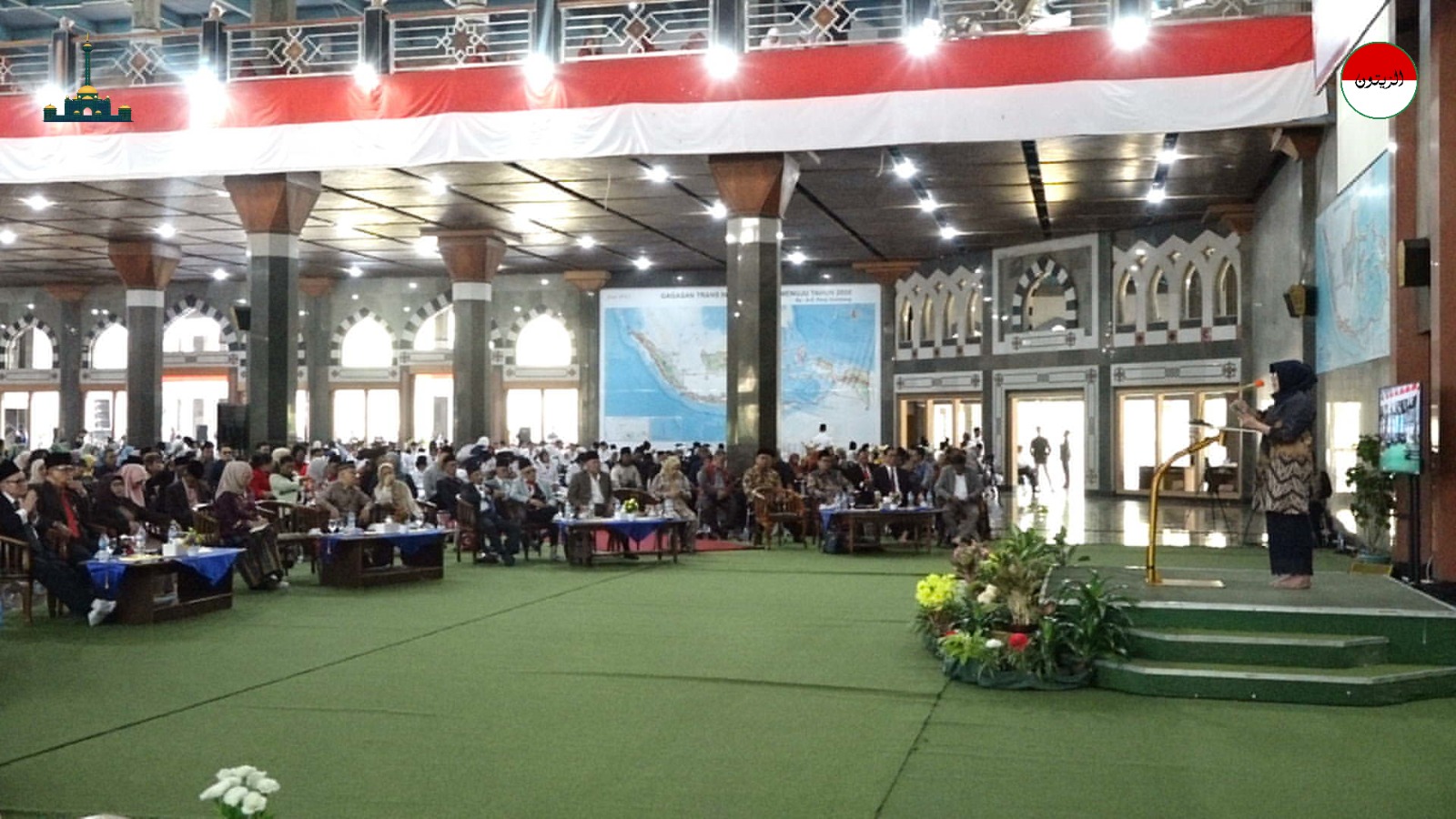
This idea was central to the reflections offered by Prof. Dr. Ciek Julyati Hisyam, M.M., M.Si., during the 27th-anniversary commemoration of Al-Zaytun on Thursday, August 27, 2026. A professor at the State University of Jakarta and an expert in the sociology of deviant behavior, she invited the audience to view Al-Zaytun not merely as a boarding school, but as a social laboratory where education, nationalism, self-reliance, and human development converge.
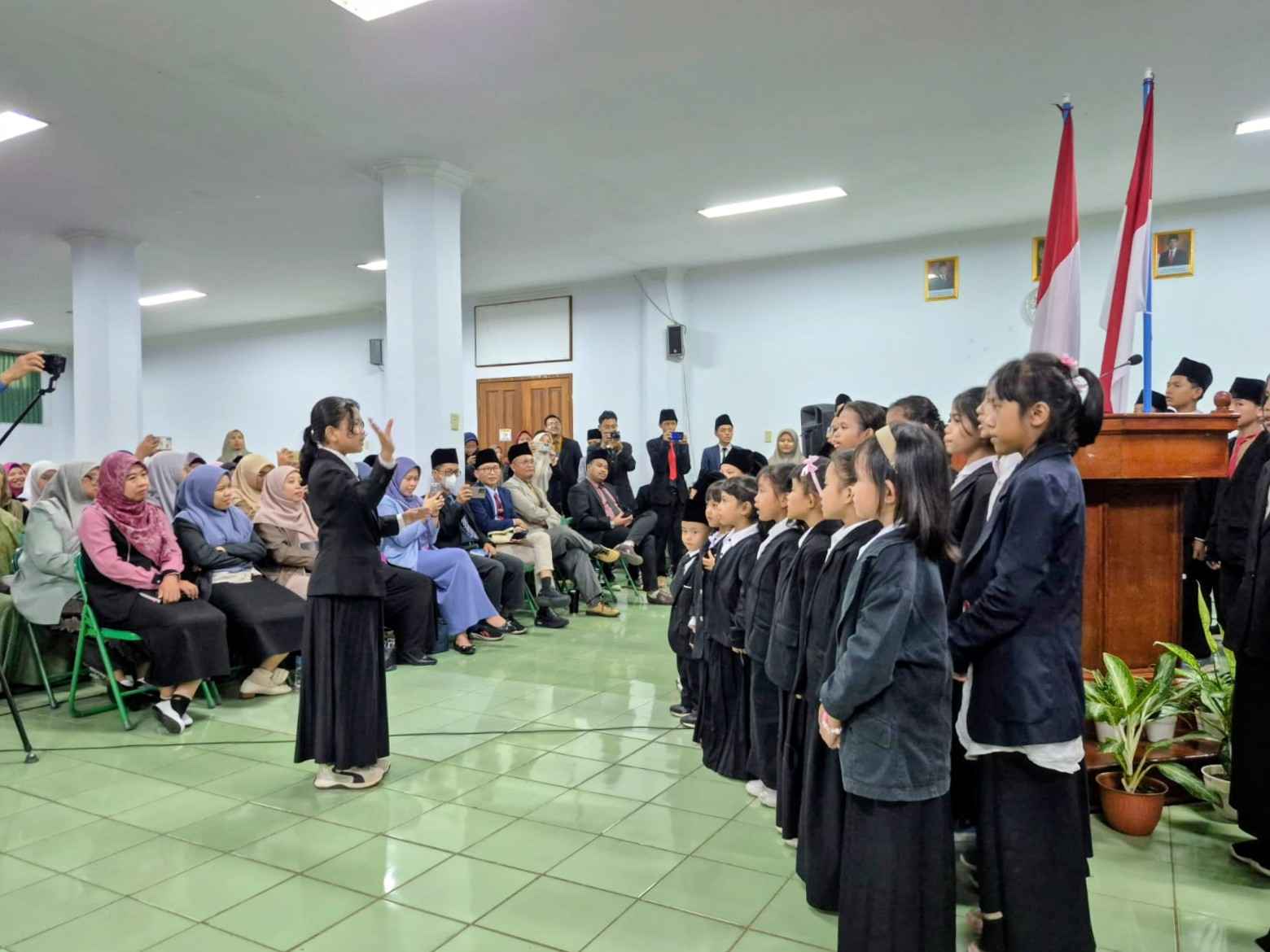
The commemoration was attended by various figures, academics, professors, lecturers, educators, interfaith leaders, parents, and approximately one thousand students. Yet, Prof. Ciek’s attention was particularly drawn to the “Trans Indonesia Raya” map displayed in the room.
She interpreted this map—conceived in 2015—not merely as a geographical illustration, but, as an academic, viewed it as the representation of a development vision.
Her analysis noted that the arrangement of points on the map begins in Eastern Indonesia and moves westward. The direction of this movement follows the sunrise and runs counter-clockwise, mirroring the movement of *Tawaf* (circumambulation).
For Prof. Ciek, this symbol conveys the message that Indonesia’s development must pay serious attention to the eastern region. Areas that have long served as sources of natural wealth must be positioned as subjects of development, rather than merely as sites for exploitation. “This demonstrates a visionary idea, as well as the depth of Syaykh Panji Gumilang’s love and aspirations for a greater Indonesia,” he said.
That map served as a gateway to discussing a more fundamental issue: the direction of Indonesia’s educational development. In his view, natural wealth holds no strategic significance if the nation fails to cultivate people capable of managing it fairly, intelligently, and sustainably.
Education is the foundation of nation-building. Yet, in practice, the sector continues to face structural challenges—ranging from budget constraints, unequal access, and teacher welfare issues to higher education capacity and policy inconsistency.
Prof. Ciek highlighted the reallocation of a portion of the education budget toward the Free Nutritious Meal program. While he does not dispute the importance of student nutrition, he questions the consequences if funding for this program diminishes the resources available to support the educational process itself.
This criticism underscores the need for consistency in budgetary policy. Programs aimed at nutrition and those focused on improving educational quality should not be viewed as mutually exclusive; both represent investments in human capital that require an integrated approach.
Amidst these challenges, Prof. Ciek sees Al-Zaytun as an institution bold enough to envision initiatives that transcend the typical capacity of a single organization. He views the proposal to establish boarding-based educational facilities across 500 regencies as a grand vision for expanding access to quality education.
“I see Al-Zaytun as akin to a state, given its commitment to the education of the nation’s children,” he remarked.
This statement is not intended to suggest replacing the role of the state, but rather to highlight the immense social responsibility borne by an educational institution. When the state faces limitations, public participation must be strengthened through partnerships, institutional innovation, and long-term investment.
Boarding-based education offers the potential for a more holistic learning experience. The educational process is not confined to classroom hours; it encompasses character building, discipline, self-reliance, a sense of community, life skills, and social habits. However, expanding this model requires support in terms of human resources, funding, curriculum, facilities, governance, and quality assurance. Therefore, the concept of establishing 500 educational sites should not remain merely a dream; it must be translated into a measurable and sustainable development roadmap.
According to Prof. Ciek, the theme of Al-Zaytun’s 27th-anniversary celebration—gearing up for Indonesia’s centennial of independence by increasing investment in quality education—holds strategic relevance.
He questioned why the call for educational investment is being voiced more strongly by a single educational institution rather than becoming a mainstream priority in national development.
“It is Al-Zaytun that is doing the building, but why isn’t Indonesia itself making major investments in education?”
This question touches on a crucial issue in public policy. Education is often recognized as a priority in planning documents, but its implementation still faces a gap between normative goals and budget realities.
One impact is evident in the plight of teachers. Prof. Ciek highlighted the diverse employment statuses of educators, such as government employees with work contracts, part-time teachers, and various other forms of employment relationships that create differences in welfare.
Teachers, however, hold a strategic position in shaping the nation’s character. They not only deliver subject matter but also serve as figures who instill values, build discipline, and shape students’ perspectives on life.
“Teachers lay the foundation for the nation’s character from an early age, yet many teachers still lack fairness,” he said.
He compared this situation to the system implemented at Al-Zaytun. Based on his observations, the institution strives to place teachers and lecturers in a more equal relationship, without creating stratification based on terms of work status that can demean educators.
Teacher welfare, in educational studies, cannot be separated from the quality of learning. Teachers living in economic uncertainty will find it difficult to focus their energy and thoughts on student development.
Therefore, investment in education must include investment in educators. Magnificent buildings and sophisticated technology will not produce quality education if teachers do not receive recognition, certainty, and opportunities to develop their competencies.
Prof. Ciek also highlighted the issue of access to higher education. According to the data he presented, tens of thousands of prospective students who had been accepted to state universities discontinued their enrollment due to financial constraints.
At the same time, universities faced reduced budget support and were required to increase student enrollment to maintain their operations. As a result, the number of students increased, but learning spaces and facilities did not always grow commensurately.
He cited the experience of Jakarta State University (UNJ). Several study programs accepted a large number of students, while classroom capacity was limited. Online lectures were ultimately used as a solution to the space constraints.
This phenomenon demonstrates the paradox of higher education. Universities are expected to expand access, but they do not always receive adequate resource support. When costs are passed on to students, disadvantaged groups are the first to lose opportunities.
It is in this context that Prof. Ciek points out: Ciek assessed the strategic value of the plan to develop boarding schools in 500 regions. This idea could be an alternative to expand access while providing education that integrates academics, character, skills, and social aspects.
He hopes this development will encompass all levels, from early childhood education, elementary school, secondary school, and even higher education. He believes the foundation of education must be built from the earliest stages of a child’s development.
Children need a safe, open environment that encourages physical, intellectual, emotional, and social development. Early childhood education should not become a space that restricts children’s movement and creativity.
Prof. Ciek’s discussion then turned to the concept of habitualization of Pancasila. He found this idea in a book on the supra-rational thinking of Shaykh Al-Zaytun, which he read before the event.
From a sociological perspective, habitualization is the process of making a value a habit that is repeated until it becomes ingrained in consciousness and behavior. Therefore, memorizing Pancasila as five formulas is not enough. Its values need to be practiced in daily life.
Mutual cooperation, respect for diversity, justice, humanity, unity, and deliberation must be present as social practices. When these values become habits, Pancasila is no longer a symbolic space, but is grounded in people’s actions.
Prof. Ciek assessed that the process of habitualizing Pancasila once received strong attention through educational programs in the past. However, after political change, the continuity of instilling these values weakened.
He did not propose reviving the old approach without evaluation. His main message was that changes in methods should not result in the loss of the substance of Pancasila education.
“The training may change, but Pancasila must not be neglected,” he emphasized.
Al-Zaytun, according to Prof. Ciek, has become one of the spaces where Pancasila values are habituated. Educational activities, boarding school life, respect for diversity, and instilling a sense of patriotism are all part of this process.
mentioned.
However, the habitualization of national values requires the presence of the state. It is not enough for the state to be present merely through regulations; it must also provide protection, legal certainty, institutional support, and consistent policies.
Prof. Ciek uses the phrase “the state is not yet present” rather than “the state is absent.” This choice of words is academically significant, as it indicates that the state’s presence can still be strengthened through policy evaluation and improvement.
She links this issue to the trajectory of higher education at Al-Zaytun, including the institution’s transition from a university to a specialized college (*sekolah tinggi*) and efforts to re-establish a polytechnic. In her view, strengthening vocational education could serve as a pathway to both broaden the habitualization of Pancasila and produce a generation equipped with tangible skills.
Beyond education policy, Prof. Ciek highlights the importance of language in public communication. Indonesia is home to diverse ethnic groups, languages, cultures, and levels of understanding. Consequently, every policy must be articulated using clear terminology that leaves no room for dangerous interpretations.
She cites the use of the word “cripple” (*melumpuhkan*) in the discourse on crime control as an example. Such a term is open to varying interpretations and could potentially incite actions that conflict with the principles of the rule of law and human rights.
“We are a nation governed by the rule of law. Every term used in policy must have clear criteria and boundaries,” she stated.
This perspective demonstrates that language is not merely a tool for conveying policy; it also shapes social action. Inappropriate word choices can lead to confusion, legitimize violence, or even result in rights violations.
Therefore, public officials must use language that is precise, responsible, and easily understood by the public. A sound policy is not only correct in its objectives but also clear in its formulation and implementation.
In the concluding part of her remarks, Prof. Ciek called on the public to support Syaykh Al-Zaytun’s ambitious vision of establishing boarding-school-based education systems across 500 regions in Indonesia.
“Supporting” does not imply accepting every idea without scrutiny. In the academic tradition, support should be accompanied by research, planning, constructive criticism, evaluation, and quality oversight to ensure a vision is realized responsibly. The 27th-anniversary commemoration of Al-Zaytun served as a moment of reflection on the relationship between education and the nation’s future. Quality education requires budgetary commitment, teacher welfare, affordability, policy continuity, careful public discourse, and the habitual practice of Pancasila values.
As Indonesia approaches its centennial of independence, building physical infrastructure is not enough. The nation must cultivate individuals who are knowledgeable, possess strong character, are skilled and sovereign, and are capable of living amidst diversity.
The academic message delivered by Prof. Ciek Julyati Hisyam centers on a fundamental realization: education is not an expense to be slashed when budgets are tight. Education is an investment in civilization. What is instilled in the classroom today will determine the quality of Indonesia in the future.**
Indramayu, September 3, 2026
——–