
Energy Independence, Igniting Three Awarenesses
By Ali Aminulloh
Indramayu, July 10, 2026
The sun never sends a bill. The wind doesn’t ask for payment when it moves leaves. The water flowing from upstream to the rice fields never asks who owns the land. Nature provides energy as a gift. The question is, have humans managed it with knowledge, responsibility, and justice?
On Friday, July 10, 2026, the world community is once again invited to reflect on the meaning of Global Energy Independence Day. This commemoration is not an official international day designated by the United Nations. It grew out of a public awareness movement encouraging humanity to reduce dependence on fossil fuels and expand the use of alternative energy sources.
The commemoration can be traced back to a proclamation in Los Angeles in the mid-2000s. July 10 was chosen to coincide with the birthday of Nikola Tesla, the scientist whose work transformed the way humans generate, transmit, and use electricity.
Tesla was born in Smiljan on July 10, 1856. Through his development of alternating current electrical systems, polyphase systems, and induction motors, he helped pave the way for more effective transmission of electrical power over long distances. The alternating current technology he developed and popularized later became a crucial part of the Niagara Falls Power Plant project.
More than a century later, the light Tesla lit seems to ask modern humanity: why is electricity generated, to whom is the energy distributed, and what kind of future is it intended to illuminate?
These questions find relevance when read through the Trilogy of Consciousness initiated by Shaykh A.S. Panji Gumilang, namely philosophical consciousness, ecological consciousness, and social consciousness. Energy independence is not simply a matter of replacing fuel oil with solar panels. It is a process of developing a new way of thinking about the relationship between humans, nature, technology, and justice.
Energy and Philosophical Consciousness
Philosophical consciousness invites humans to view energy not merely as a commodity, but as a force that sustains life. No home can function without energy. No school can develop digital learning without electricity. No industry, hospital, modern agriculture, communication system, or transportation can operate without a power supply.
Therefore, energy independence should not be interpreted simply as a country’s ability to produce its own fuel. Energy independence is the ability of humans to master knowledge, technology, and natural resources to ensure a dignified life.
A nation is not truly independent if its lights are on, but its entire life is easily shaken by fluctuations in global oil prices. A village is not truly sovereign if its farmers are always waiting for diesel to power their water pumps. A family is not energy secure if the majority of its income is spent on increasingly expensive fuel.
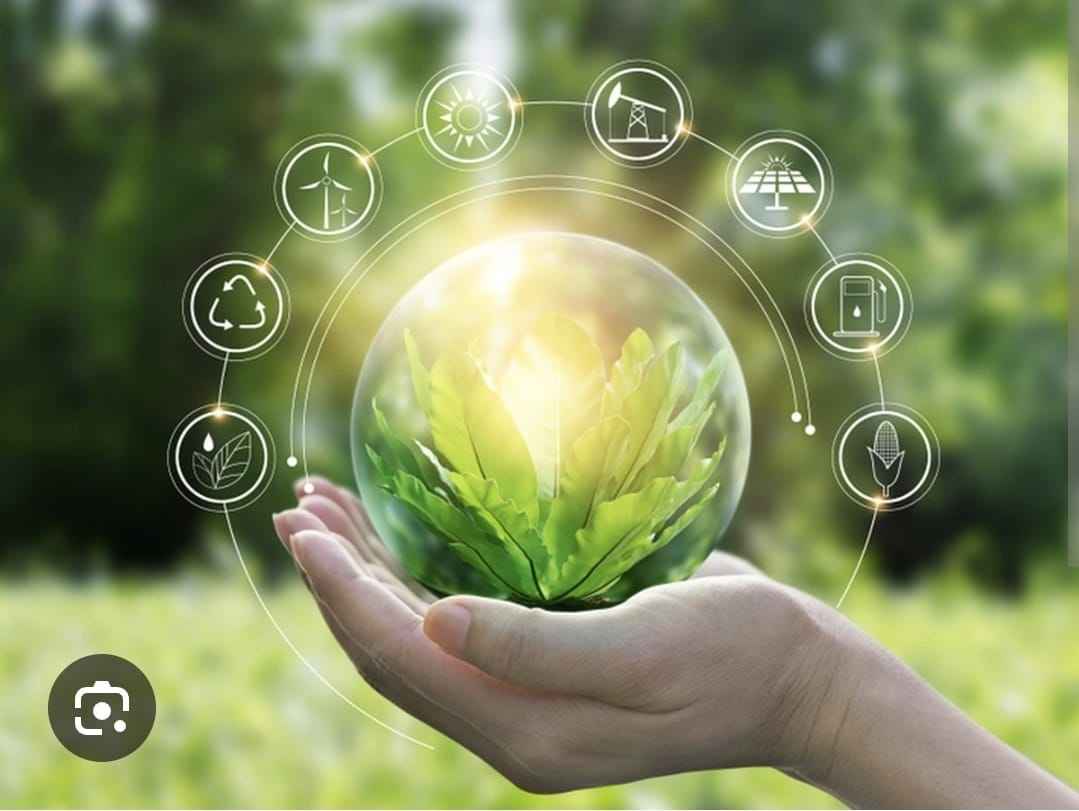
Energy independence means having choices. The sun can be converted into electricity. Water flow can drive turbines. Wind can turn generators. Animal manure can be processed into biogas. Rice straw and husks are no longer seen as waste, but as valuable energy sources.
This is where philosophical awareness comes into play. Humans no longer simply ask, “How much energy can we extract from nature?” Humans must begin to ask, “For what purpose is energy being used, and what kind of legacy will we leave behind?”
Technology is simply a tool. It can bring benefits when guided by values. However, it can also exacerbate damage when driven by greed. Energy independence must therefore begin with a free mind: the courage to break free from wasteful consumption patterns, the courage to develop knowledge, and the courage to view nature as a partner in life, not simply an object of exploitation.
Energy and Ecological Awareness
Ecological awareness reminds us that every energy choice leaves a footprint. Smoke from fuel combustion doesn’t stop at the chimney. It travels into the atmosphere, affecting air quality, human health, the weather, soil, water, and the survival of various living things.
Energy independence, therefore, is not enough to simply replace imported sources with domestic ones if those sources continue to damage the environment. Truly liberating energy is energy that can meet the needs of the present without depriving future generations of their rights.
Indonesia is indeed moving in this direction, but the journey remains long. The Ministry of Energy and Mineral Resources noted that the mix of new and renewable energy in 2025 reached 15.75 percent, with an installed capacity of around 15,630 megawatts. This figure demonstrates progress and also serves as a reminder that renewable energy has not yet become a major force in the national energy system.
Ecological awareness doesn’t always have to be realized through massive projects. It can start with installing solar panels on rooftops, solar-powered streetlights, processing livestock manure into biogas, using energy-efficient equipment, and even planting trees around water sources.
In agricultural areas like Haurgeulis and other agrarian regions, energy independence can be very tangible. Solar-powered irrigation pumps can reduce farmers’ dependence on diesel fuel. Solar-powered grain dryers can reduce post-harvest costs. Rice husks can be used as biomass. Cow and goat dung can be processed into fuel for cooking or powering simple generators.
These practices are no longer just ideas. By 2025, for example, the construction of solar-powered irrigation power plants in several operational areas of PT Bukit Asam will have benefited 1,169 farmers and helped irrigate approximately 639 hectares of land. The project in Muara Enim demonstrates that clean energy can directly address water needs, agricultural productivity, and the well-being of rural communities.
When the sun pumps water to rice fields, renewable energy is no longer a mere seminar topic. It transforms into a water flow that saves crops, grain that fills barns, and income that supports farming families.
Energy and Social Awareness
Social awareness positions energy as a matter of justice. Electricity should not only light up tall buildings, while people in remote areas remain in darkness. Clean energy technology should not be accessible only to those who can afford expensive equipment.
The latest data from the International Energy Agency shows that approximately 730 million people worldwide will still lack access to electricity in 2024. Behind that number are children studying with limited lighting, health centers struggling to store vaccines, and small businesses unable to operate their equipment adequately.
Therefore, energy independence must become a social movement. The government needs to prepare regulations and infrastructure. Universities and schools must strengthen energy research and education. The business world needs to promote responsible investment. Communities must be involved as owners, managers, and beneficiaries.
Cooperatives, farmer groups, village-owned enterprises, Islamic boarding schools, and local communities can be a vital force in developing small-scale energy generation. Communal solar panels can be managed collectively. Biogas installations can be built through mutual cooperation. Maintenance costs can be shared collectively, while the benefits are used for irrigation, lighting, agricultural processing, and educational activities.
This is energy independence with a social dimension: energy from the surrounding environment, managed collectively, and used for the common good.
Without social awareness, the energy transition can create new inequalities. The wealthy enjoy electric vehicles and solar-powered homes, while the poor continue to face high tariffs and limited access. Therefore, the energy transition must be a just transition, not just a technological change, but also an equitable distribution of benefits.
From Tesla’s Light to the Light of Consciousness
Nikola Tesla demonstrated that a single idea can transform civilization. He envisioned widespread electricity when many still doubted it. But the job of the current generation is not simply to remember his genius. Our task is to continue his courageous thinking in the context of the needs of the times.
Through philosophical awareness, humans understand that energy is a trust for life. Through ecological awareness, humans ensure that energy is not obtained by destroying the balance of nature. Through social awareness, humans strive to ensure that the light and benefits of energy can be enjoyed by all levels of society.
The Trilogy of Awareness emphasizes that true progress is not only measured by how much energy is generated, but also by how wisely that energy is used. It is not enough for a nation to have large power plants if its natural environment is damaged. It is not enough for electricity to be abundant if the common people do not benefit. It is not enough for technology to develop if humanity loses its moral compass.
World Energy Independence Day on July 10 should be a momentum to liberate ways of thinking. From dependence to independence. From waste to efficiency. From exploitation to sustainability. From control by a few to participation and shared prosperity.
The sun it has been around for millions of years. The wind continues to move. The water continues to flow. Biomass continues to grow with life. It’s all available all around us.
Now the question is no longer whether nature has enough energy for humanity. The question is: does humanity have enough awareness to manage it?
When philosophical awareness provides direction, ecological awareness maintains balance, and social awareness ensures justice, energy independence is no longer a slogan.
It becomes a path to a sovereign life, a sustainable earth, and an enlightened civilization.**
——-


