The Crisis of Prospective Principals;
The Delegitimization of the Educational Leadership Profession
By:
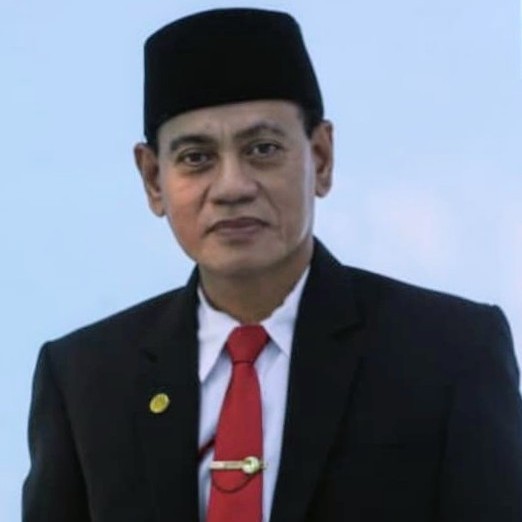
(Masduki Duryat)*
No nation claims to be civilized without first honoring its educators. However, in this country, education thrives within a heartbreaking paradox.
Education budgets boom, statistics are read with pride, programs are announced with fanfare, but in classrooms, teachers often feel alone.
The state is present in the form of regulations and administration, but absent in empathy, welfare, and moral protection.
Only 11 Percent Interested in Becoming a Teacher
On the other hand, a 2024 survey by the Indonesian Teachers Association (PGRI) found that only 11 percent of young people are interested in becoming teachers. This figure should cause panic in the nation, but the opposite is true: it simply passes by, drowned out by the din of development discourse, which is more preoccupied with discussing the MBG Program, toll roads, EV batteries, and other lighthouse projects. Amidst all this excitement, we are quietly eroding the foundations of our own civilization. If young people don’t want to teach, who will run this republic?
This decline in interest is not a random phenomenon. It is the accumulation of long-standing signals that have been acutely ignored: the stagnant social status of teachers, inhumane workloads, and welfare often inferior to non-formal professions. A World Bank education researcher once stated that “teacher motivation is fundamentally shaped by how a system values them.” And today, our system still displays teachers as costs, not investments in the future.
Low Interest in Becoming a Principal
A paradoxical phenomenon has recently emerged in Indramayu: among those who are already teachers—while previously being a prestigious position for teachers—there is a lack of interest in becoming principals (especially in elementary schools).
Arief Wahyudi, Head of the GTK Division at the Indramayu Education Office, stated that there are 132 vacant principal positions in elementary schools and 11 in junior high schools. Of these, there are 143 Acting Principal positions, with 103 remaining as of December 2025, with 86 in elementary schools and 15 in junior high schools.
If the positions are filled simultaneously, Arief continued, the total number of vacancies will be 226. Meanwhile, preparations for filling positions through the BCKS selection process have resulted in three categories: 100 positions for grade III/C and above, with 71 in elementary schools and 29 in junior high schools. 87 positions for grade III/B and P3K are being proposed to be included in the application.
Reasons for Lack of Interest in Becoming a Principal
The Indramayu Regency Education Office has taken several steps to increase teacher interest in becoming principals—especially in elementary schools—for example, inviting teachers, especially those already at the III/C rank, and providing solutions for prospective junior high school principals, due to the oversupply of applicants, to transition to elementary school principal positions.
Unang Nuansah, an education practitioner and a public elementary school principal in Indramayu, stated that there are at least several reasons why teachers are reluctant to apply to become elementary school principals.
First, job demands are not commensurate with the allowance. For example, a teacher’s allowance of IDR 327,000 after becoming a principal becomes IDR 435,000, meaning the allowance only increases by around IDR 108,000.
Second, there is talk of independent BCKS training, costing around 7 to 8 million rupiah. Teachers feel that if they have already spent money from the start, their goals after becoming principal will be different. “How will they recoup their investment?” The issue of independent training has become a national issue. Although the Department of Education and the Ministry have denied that funding for BCKS training must come from the Regional or National Budget (APBD), the idea of independent training has already spread widely among teachers without further review.
Third, reports are often sudden and must be submitted immediately. This discourages teachers from stepping out of their comfort zone. Rather than being bothered by time-consuming and thought-provoking reports, they still choose to remain teachers.
Fourth, the high risks of becoming a principal include accountability for the School Operational Assistance (BOS), pressure from superiors, journalists, NGOs, and even external accountability, such as from the inspectorate, the Supreme Audit Agency (BPK), and the police.
Fifth, many PPPK (Student Candidates for Primary and Secondary Education) have registered as prospective principals, but the government is not yet ready to appoint PPPK as principals due to the ongoing contract or work agreement system, which makes them unsuitable for a sustainable career.
Sixth, Regulation of the Minister of Education and Culture No. Law No. 7 of 2025 limits the career of a principal to only four to eight years. This limits the hopes of young teachers who are qualified to be principals to not retire. There’s a sense of prestige in returning to teaching after four to eight years.
Several of the points above were also echoed by the Head of the Teacher and Education Division at the Regency Education Office Indramayu, Arif Wahyudi.
Solutions Offered
The Indramayu Regency Education Office, through the Head of the Teacher and Education Department (GTK), has faced the reality of low interest in becoming elementary school principals by taking swift action, such as offering prospective junior high school principals on the waiting list the opportunity to become elementary school principals. They are inviting civil servant teachers with rank III/C to apply to become principals.
The Head of the GTK Division also offered transparency in the recruitment of prospective principals, including interviews and administrative procedures, during the opening of the BCKS (School Leadership Coaching Program).
Of course, more technical steps must be taken by the Ministry of Education, the Regional Government, and the Indramayu Regency Education Office:
First, the regional government must reformulate incentives. Principal allowances must be designed based on workload and job risks. A significant increase is not merely a matter of welfare, but a signal of state recognition. An OECD study (2019) shows that a competitive incentive system directly contributes to the quality of school leadership.
Second, the government must ensure zero-cost recruitment. All forms of BCKS training must be fully funded by the regional/national budgets (APBD/APBN), and this must be communicated widely to restore teacher confidence.
Third, de-bureaucratize the duties of school principals. Administrative burdens irrelevant to improving the quality of learning must be reduced through the digitization of an integrated reporting system.
Fourth, the central government needs to clarify the career pathway for PPPK (Commissioned Officers). If PPPK are allowed to participate in the selection process, there must be legal certainty for their appointment.
Fifth, regulations on principal tenure need to be reviewed with a more flexible approach, for example through a performance-based extension scheme.
Sixth, legal protection for school principals must be strengthened so they do not work in the shadow of administrative criminalization.
We must not allow the interest in becoming teachers and principals to experience an acute crisis. The principal crisis—in Indramayu—is a reflection of a broader crisis in education policy.
If this strategic position continues to be abandoned, we are witnessing the delegitimization of the educational leadership profession.**
Indramayu, March 18, 2026
*)The author is the Rector of the Al-Amin Institute of Islamic Studies, Indramayu, and a lecturer in the Postgraduate Program at UIN Siber Syekh Nurjati Cirebon. He lives in Kandanghaur, Indramayu.
——