
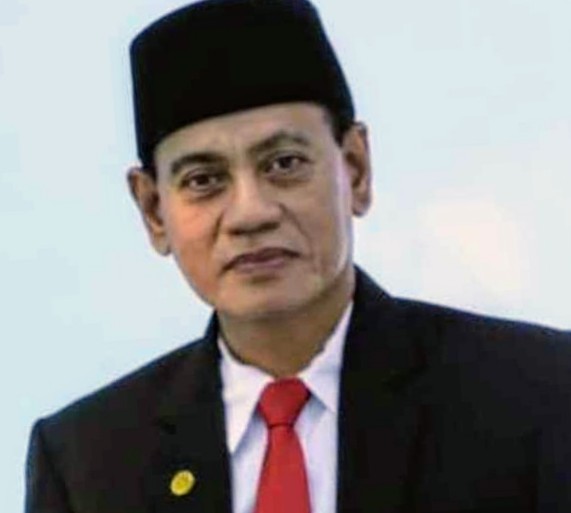
By:
*Masduki Duryat*
_(Rector of the al-Amin Institute of Islamic Studies, Indramayu, and Postgraduate Lecturer at UIN Siber Syekh Nurjati Cirebon)_
_“You are a good person if others feel happy when you are by their side.”_
In the book *Slilit Sang Kiai*, Emha Ainun Nadjib writes that no human being ever truly loses love. Thus, the act of murder is, in reality, very difficult to comprehend.
Unless, that is, we have truly become the ultimate evildoers, bandits, and traitors—descending even to the level of beasts and devils. When we plunge a sword into a brother’s chest, we demonstrate a level of bestiality far exceeding that of the victim himself.
Consider the acts of assassinating character, destroying a brother’s dignity, or casting him aside—all for the sake of a lust for power. Or doing so to secure power, impose order, stoke inter-group tensions, incite conflict, or entrench oppression—all while claiming to act on behalf of the people. Or killing a brother because he is no longer viewed as such, having been cornered by power and hostility. Consider the arrogance of deeming one’s own interpretation the absolute truth and condemning those who hold differing views. Such attitudes frequently fragment our society.
*Abu Jahim: A Mirror*
Abu Jahim recounts: During the Battle of Yarmuk, I was searching for my cousin, who was stationed on the front lines. I carried water to assist him, thinking he might be thirsty. When I found him, he was lying there, drenched in blood. He was groaning in pain, with little hope of survival. Seeing his condition, I rushed toward him to offer a drink. But before I could reach him, I heard someone else cry out, “Give me water.” Hearing the sound, my cousin motioned to serve the person first and gave him a drink of water. So I approached him, it turned out that I really knew him, he was Hasyim Ibn Abbas.
Before I gave him drinking water, I heard people groaning and asking for a drink. Hasyim motioned to give drinking water to the person who was groaning nearby. When I was about to approach him, he had already died as a martyr. Then I rushed to meet Hasyim, but Hasyim had also been martyred. Without waiting long, I rushed to meet my cousin. My heart really couldn’t stand it, because it turned out that I found out that he had also died as a martyr.
What does it mean? Love has built togetherness, love teaches unlimited solidarity. Love is _sharing_ said Jalaluddin Rakhmat. Love has universal value, as does cooperation in the name of humanity.
The Prophet once said; _”Help your brothers, both those who do wrongdoing and those who are wronged. Helping people who do wrongdoing is to prevent them from doing wrongdoing.”_ (HR. Anas Ibn Malik). Helping people—including leaders—who do wrongdoing is also a form of love.
*Rasulullah; His Love Has No Limits*
The noble values shown by the Prophet’s companions are the fruit of the Prophet’s exemplary legacy. This beautiful example made a deep impression on followers and even people who were once enemies with him. No one attributed bad qualities to him, except on the basis of lies and was motivated by hatred and arrogance.
He always spread a smile, visited friends or neighbors who were sick, cared about other people. His love for his people far surpassed that of a mother for her child.
A very phenomenal event, when he preached Islam to the city of Taif. Hoping for a warm welcome, he instead met with rejection and verbal abuse from the people of Ta’if. He was pelted with stones along the way, with blood streaming profusely from his hands and feet. Yet, he showed not the slightest trace of anger or resentment. On the contrary, noble words fell from his lips when the Angel Gabriel and the Angel in charge of the mountains—ready to crush the people of Ta’if with a mountain as punishment for their conduct—came to him.
The angel accompanying Gabriel, after offering a greeting of peace, said to the Prophet, “O Muhammad, if you wish, I can bring down the *akhsyabain* (the two great mountains of Mecca, Mount Abu Qubais and Mount al-Ahmar) upon them.”
The Messenger of Allah replied, “No; rather, I hope that Allah—Mighty and Majestic—will bring forth from their descendants people who worship Allah alone, associating nothing with Him.”
Indeed, according to the account of Yunan Nasution, after escaping danger and reaching a safe place outside the city of Ta’if, the noble Prophet offered a prayer filled with a deeply moving, heartfelt cry—devoid of hatred, yet brimming with hope:
“O Allah, to You I complain of the weakness of my strength, the scarcity of my resources, and my insignificance in the eyes of people, O Most Merciful Lord. You are the Protector of the weak and the oppressed. You, O Allah, are the Sovereign; to You I entrust myself. Wheth to an enemy who is far away and hates me, or to a close friend to whom you have given authority to manage my affairs? If You are not angry with me, then I don’t care about anything else, as long as You bestow goodness and spaciousness on me…”._
*Hatred; Potential for Horizontal Conflict*
Another unforgettable event in prophetic history in the context of loving – and at the same time rejecting hatred – in Islam.
In this context, the event of the liberation of the city of Mecca _(Fathu Mecca)_ is interesting for us to pay attention to together. After the liberation of this holy city, the Prophet Muhammad SAW said, _”Whoever enters Abu Sufyan’s house will be safe. Abu Sufyan said, _Only how many people can be accommodated in my house? safe, and whoever locks the door is safe._
At the door of the Masjid al-Haram the Prophet continued his words, _”O people of Mecca, what do you see regarding my actions against you?_ They answered, _Yes, O noble brothers and sons of noble brothers_. The Prophet said again, _Go, you are all freed.”_
In this historic event, the spirit of brotherhood of the Prophet Muhammad SAW was visible. There was no revenge in the hearts of the Prophet and his companions against the residents of the city of Mecca. Instead, there is love for others, spreading peace and harmony, and avoiding hostility.
In fact, judging from history, residents of the city of Mecca often oppressed and intimidated the Prophet Muhammad SAW and his followers, especially before the Muslims moved to Medina.
Had the Prophet or his companions chosen to retaliate for the treatment the Muslim community once endured, it might well have been understandable, given the heinous acts of oppression frequently perpetrated by the people of Mecca against Prophet Muhammad (PBUH) and his followers. Yet, revenge was not the path Prophet Muhammad (PBUH) chose.
Instead, driven by love, he forgave them and absolved them of their past transgressions. Indeed, the people of Mecca came to be known as “the liberated ones.” Consequently, they pledged allegiance and embraced Islam.
It is regrettable that this spirit of brotherhood—rooted in mutual love—seems to have faded from the consciousness of Indonesian Muslims in recent times.
Some Muslims are all too easily swayed by external provocations, quick to take offense, and prone to losing their sense of objective and balanced reasoning. Primordial fanaticism and excessive egoism fan the flames of hatred. Tensions, disputes, and self-righteous claims regarding interpretations—and even acts of killing—frequently arise even among fellow Muslims.
Indramayu, August 25, 2026
———


