From Selling Bananas to Achieving IDR 12.7 Billion in Revenue
( The Story of an Al-Zaytun Alumnus Building Handeuleum Farm from the Village )
By: Ali Aminulloh
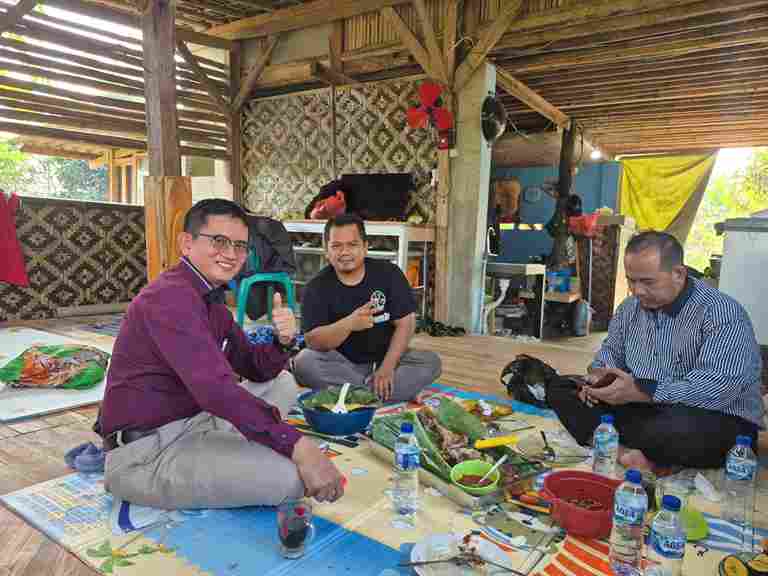
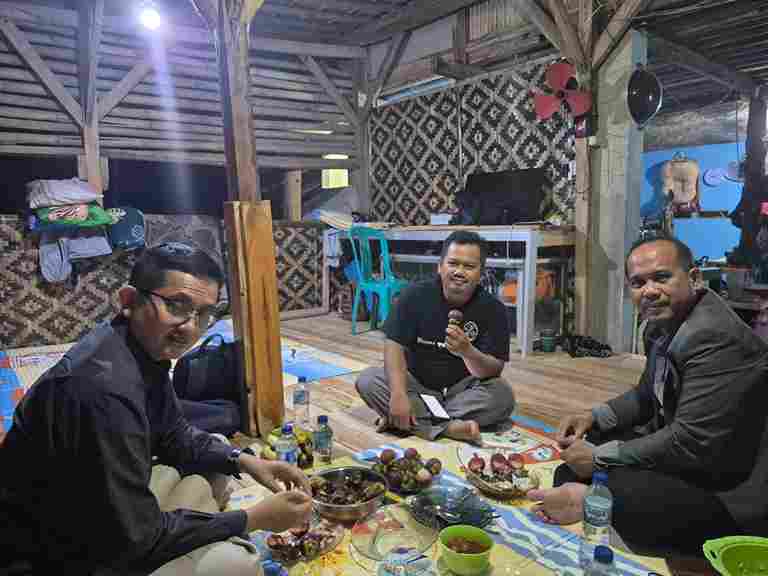
Wednesday, August 12, 2026. Night slowly descended upon the foothills of Mount Handeuleum. The air in Cibungbulang felt cool, carrying the scent of grass, earth, and livestock pens. From a distance, the sounds of goats and sheep calling to one another could be heard. It was here that I had the opportunity to stay—not merely to rest, but to witness a grand endeavor born of courage, perseverance, and a deep love for one’s hometown.
The place is called Handeuleum Farm, an agricultural and livestock complex located in the Sindangsari Block of Situ Udik Village, Cibungbulang District, Bogor Regency. Spanning approximately 8.5 hectares, the farm is managed by Husnul Muttakien, an alumnus of Al-Zaytun’s second graduating class.
The name “Handeuleum” is derived from the mountain and the village where the business grew. In the Sundanese language, *handeuleum* refers to a black or dark color. Yet, beneath that dark hue, the *handeuleum* plant is actually known for its medicinal properties.
That philosophy seems to mirror Husnul’s own journey. Dark times do not always signify the end. When faced with perseverance, knowledge, and courage, adversity can transform into a healing force that restores hope.
From the Classroom to the Farmland
Husnul did not set out on the path of a livestock entrepreneur from the very beginning. After graduating from Al-Zaytun in 2006, he dedicated himself to a career in education. He served as a teacher at Al-Zaytun for five years, a head of Early Childhood Education for two years, and the principal of Nurul Falah High School in Tasikmalaya for five years.
His background as an educator shaped his mindset in managing the business. For him, agriculture and livestock farming are not merely about planting, tending, and selling. The entire endeavor demands knowledge, discipline, patience, and a continuous learning process.
In 2013, Husnul began cultivating a plot of land spanning approximately two hectares. Of this total area, roughly 6,000 square meters was his own property, while the remainder was acquired through a land-pledge arrangement. He cultivated pineapples, citrus fruits, papayas, chili peppers, and various other crops.
However, the journey was not always smooth. At one point, a portion of the family land had to be pledged as collateral to cover childbirth expenses. Yet, this situation did not cause Husnul to give up; instead, he worked even harder to reclaim the land for his family.
The year 2021 marked a pivotal moment. The previously pledged land was finally redeemed. On March 14, 2021, Handeuleum Farm began to be developed and managed with greater seriousness. In the early stages, Husnul worked alongside his parents, starting the business from humble beginnings: selling bananas.
There was no grand office and no abundant capital. All they had was the land, their own labor, the courage to take risks, and the conviction that the earth’s produce would sustain those willing to nurture it.
Preserving Biodiversity
Today, Handeuleum Farm has evolved into an integrated agricultural enterprise. The site encompasses fruit orchards, horticultural plots, and pastures for fodder, alongside enclosures for cattle, goats, sheep, and laying hens.
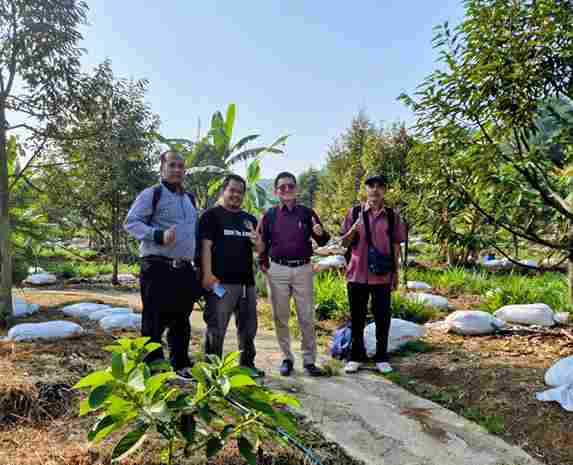
The orchards are planted with approximately 100 durian trees and 15 mangosteen trees, as well as a variety of local fruit species—such as *kupa*, *alkesa*, *kemang*, *jamblang*, *namnam*, breadfruit, *jengkol*, lychee, papaya, *cempedak*, *tanduk* bananas, and *raja bulu* bananas.
The decision to cultivate such a diverse range of fruits demonstrates that the farm is not driven solely by the pursuit of short-term economic gain. It reflects a commitment to maintaining biodiversity and preserving local fruit varieties that are becoming increasingly rare. In the horticulture sector, Handeuleum Farm cultivates corn, legumes, cucumbers, rice, and various other agricultural commodities. Forage grass is also grown to meet livestock needs, ensuring the farm’s operations do not rely entirely on external supplies.
From Five Goats to Thousands of Livestock
Handeuleum Farm’s livestock operations began with just five Javanese goats. From that modest start, the herd population steadily expanded. Today, the facility houses three cattle barns with a capacity of around 50 head, 22 sheep pens, goat pens, and a layer hen unit.
By 2024, Husnul owned approximately 86 Garut sheep ewes. A year later, business development focused increasingly on breeding Garut sheep. This strategic move was crucial, as it allowed the farm to move beyond simple livestock trading and gain the capability to produce its own breeding stock.
Livestock health is a top priority. All animals receive regular vaccinations and vitamins, and comprehensive health checks are conducted every three months with the assistance of a livestock health team.
A workforce of at least 25 employees supports these operations. They work across various roles, ranging from animal caretakers farm operations, feed provision, enclosure maintenance, and livestock health, through to distribution and marketing.
Business management has also been divided into several regions. Five area managers oversee business networks in Tasikmalaya, Cibungbulang, Pamijahan I, Pamijahan II, and Gunung Bunder. From its origins as a family business, Handeuleum Farm has gradually grown into an organized agribusiness network.
Five Markets, Five Avenues of Impact
The success of a livestock business is determined not only by the size of the herd but also by market certainty. Husnul understands that farmers struggle to grow if they can only raise livestock without knowing where to sell their produce.
Consequently, Handeuleum Farm has established at least five marketing channels.
The first market consists of farmers or breeders who purchase livestock for rearing and breeding purposes. The second market serves aqiqah (Islamic birth celebration) needs, with demand ranging from five to ten animals per day.
The third market is the slaughter livestock market in Jatiasih, Bekasi, where an average of around 100 animals are sold weekly.
The fourth market caters to Eid al-Adha requirements. In 2026, the Handeuleum Farm network recorded sales of approximately 4,200 goats and sheep, as well as 318 cattle. These animals were distributed to various regions across Indonesia. Handeuleum Farm has also earned the trust to serve as a vendor or partner supplying sacrificial animals to national institutions, including Bank Mandiri (Head Office), Dompet Dhuafa, and the National Board of Zakat (BAZNAS).
Relationships with philanthropic institutions were actually initiated back in 2014. At that time, Husnul met the demand for sacrificial animals by sourcing livestock from other farmers. That experience served as a crucial asset in building a broader marketing network.
The fifth market relates to village food security programs. Handeuleum Farm is involved in supplying goats and sheep to communities across five districts in Bogor Regency, covering 12 villages. Their activities go beyond merely selling breeding stock; the Handeuleum Farm team also provides guidance on livestock rearing and assists in marketing the community’s produce.
The livestock population raised in partnership with the communities across these 12 villages has now reached approximately 850 head. This model has transformed Handeuleum Farm from a simple livestock sales company into a driving force for the rural economy.
Growing a Business, Revitalizing the Village
Husnul’s business journey actually began long before Handeuleum Farm was established. Through PT Agroe Jaya Satria, he developed a ginger trading and export business in 2014. That experience taught him the importance of understanding market needs, maintaining commodity quality, and building trust with partners.
Today, his combined business units generate an annual turnover of approximately IDR 12.7 billion (as of 2026). While that figure is certainly impressive, Handeuleum Farm’s greatest value lies in more than just revenue or livestock numbers.
Its true value is found in the jobs created, the farmers who gain market security, the villages receiving guidance, and the growing belief that a major enterprise can be built right from a rural village.
Husnul proves that education does not always have to lead to a desk job; knowledge can be applied in the fields, the barns, the markets, and within the community. His experience as a teacher lives on in the way he mentors farmers. The difference is that his classroom is now much larger: vast plantations, livestock barns, and villages striving for self-reliance.
Handeuleum Farm also demonstrates that encouraging a new generation of farmers and livestock breeders requires more than just words. Young people need tangible proof that the agricultural sector can be managed in a modern, professional, sustainable, and profitable manner.
At a time when many young people leave their villages to seek a life in the city, Husnul chose to return home and build a future on his own land. He has not only created a job for himself but has also opened up livelihood opportunities for others. The night deepened at Handeuleum Farm. Occasional sounds of livestock could still be heard from the pens. In a place whose name literally means “dark,” I instead saw light: the light of courage to make a start, the steadfastness to rise up, and the conviction that Indonesia’s food self-sufficiency can be cultivated from within its villages.
It all began with small steps: cultivating a plot of land, raising five goats, and selling Bu a single bunch of bananas. Yet, when such small steps are taken with knowledge, hard work, and courage, they can evolve into an economic movement that breathes life into thousands of hopes.**
Indramayu, August 13, 2026
——