When the Scale No Longer Determines Self-Worth
By: Ali Aminulloh
A Day Without Dieting and a Call to Reconcile with Your Body
Early in the morning, many people start their day with the same ritual: look in the mirror, take a deep breath, and then step on the scale.
The needle moves slightly to the right, and suddenly their mood collapses.
Breakfast is canceled. Rice is avoided. Guilt sets in.
In an age where bodies are judged by size, food is calculated with fear, and social media floods our eyes with near-impossible beauty standards, people are slowly losing one of the most fundamental things: the ability to accept themselves.
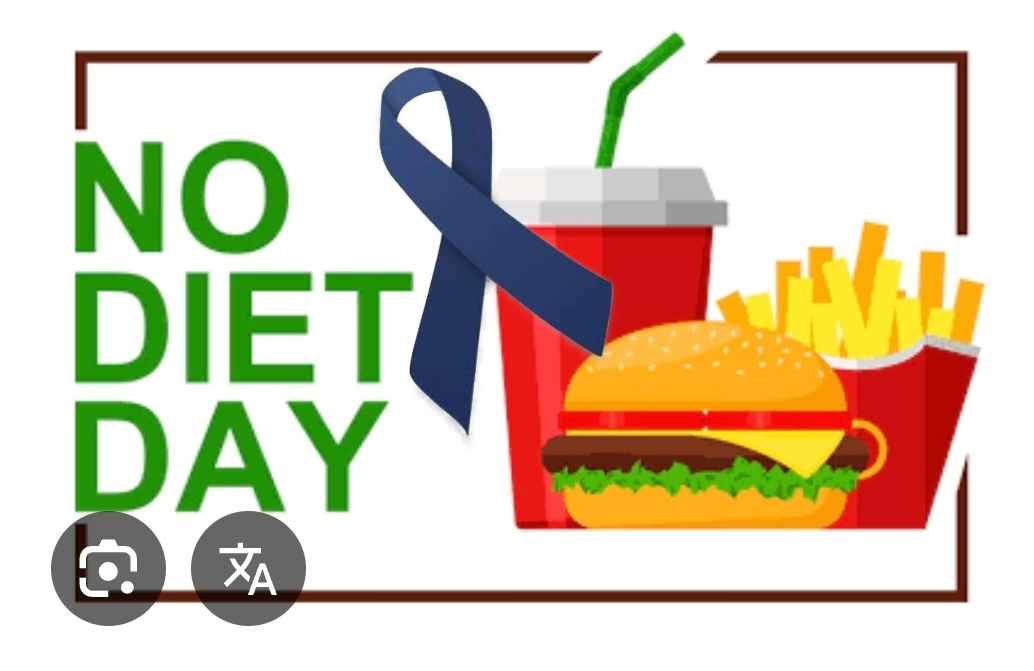
Therefore, every May 6th, the world commemorates International No Diet Day: a momentum born not to encourage people to stop living healthily, but rather to stop the unnecessary internal war against their own bodies. This day was first coined by British activist Mary Evans Young in 1992 through the “Ditch That Diet” movement, as a form of resistance against extreme diet culture, body shaming, and social pressures about the ideal body.
But in truth, No Diet Day is more than just an anti-calorie campaign.
It is a call to civilization.
And if drawn into the grand idea developed by Sheikh Al-Zaytun about the Trilogy of Consciousness: philosophical consciousness, ecological consciousness, and social consciousness, then No Diet Day is a highly relevant moment to re-examine humanity’s relationship with the body, food, and each other.
Philosophical Consciousness: The Body Is Not an Enemy to Be Conquered
Philosophical consciousness teaches humans to ask profound questions:
What was this body created for?
Is it merely an aesthetic object?
Is human worth determined by waistline?
This is where many modern people get stuck. The body is treated like a never-ending project. A little fat is considered a failure. A little weight gain is considered a disgrace. The number on the scale becomes the judge of happiness or disappointment.
The body is not a display item.
The body is a trust from life.
No Diet Day reminds us that health is not synonymous with thinness. Happiness is not synonymous with size S. In fact, numerous studies show that restrictive diets actually trigger stress, eating disorders, decreased metabolism, and a negative relationship with food.
This means that today’s diet issue is no longer just about the menu, but about perspective.
Modern humans are too busy slimming down to cultivate gratitude.
Philosophical awareness leads humans to accept that the body is not to be hated, but understood.
It is not an enemy to be starved, but a friend to be cared for wisely.
Ecological Awareness: Food Is a Companion of Life, Not a Source of Fear
The second trilogy is ecological awareness: an awareness of the harmony between humans and the universe, including the food the earth produces.
Ironically, modern diet culture has damaged this sacred relationship.
Food, which should be a source of energy, gratitude, and pleasure, has become a source of anxiety.
Rice is considered a threat.
Bread is considered a sin.
Fat is considered a disaster.
People no longer eat out of hunger, but out of fear.
Fear of getting fat.
Fear of being judged.
Fear of not meeting standards.
Yet the earth grows food to sustain life, not to add to human psychological trauma.
No Diet Day invites us to return to a more ecological pattern: eating enough, choosing balanced nutrition, enjoying the process, respecting our bodies, and building sustainable habits. Instead of torturing ourselves with extreme restrictions that only last a few weeks and then end in a culinary revenge binge.
This is now the central message of the global No Diet Day campaign: health is built through sustainable habits, not through instant solutions.
A healthy body is born from a peaceful relationship with food.
And a peaceful relationship with food is born from the awareness that nature provides enough, not to be feared, but to be used wisely.
Social Awareness: Stopping Judging Others’ Body Shapes
What is often overlooked is this: diet culture is not just a personal issue. It is a social issue.
How many people lose self-confidence simply because of comments like:
“Why are you getting fat?”
“Go on a diet?”
“You’re pretty, but if you lose a little…”
These simple sentences sound ordinary, but they secretly hurt.
No Diet Day is a social call to stop society’s habit of measuring human worth based on physical appearance. Because human bodies are diverse. There are those who are tall, short, full, thin, giving birth, sick, recovering, aging and all of them are still worthy of respect.
Social awareness in the Syaykh Al-Zaytun trilogy demands empathy:
Don’t use other people’s bodies as material for judgment.
Because often, someone who looks “fat” is struggling with hormones.
The one who looked “thin” was recovering from an illness.
Which those who appear “not ideal” are struggling to accept themselves.
A healthy society is not one where everyone is thin.
But one that can stop mocking and start appreciating.
No Diet Day, then, is a social education to humanize people without size constraints.
Beyond Dieting, Towards a Saner Life
This warning does not mean that people are forbidden from maintaining their weight.
It does not mean that nutrition is neglected.
It does not mean that all eating patterns are wrong.
What is being fought is obsession.
What is being corrected is the culture of shame.
What is being stopped is psychological violence in the name of the ideal body.
Every now and then, people really need to stop counting calories and start calculating how much time they spend hating themselves.
No Diet Day actually teaches one simple lesson:
Life is too precious to be spent simply hating the mirror.
Epilogue:
In light of the Trilogy of Awareness, International No Diet Day is not just a health campaign, but a comprehensive awareness movement:
philosophically, humans are invited to make peace with their bodies;
ecologically, humans are invited to reconnect with food and nature;
Socially, humans are encouraged to stop judging each other’s body shapes.
Because ultimately, the body is not a battlefield.
It is a home for life.
And that home deserves to be inhabited with gratitude, not hatred.
Indonesia, May 6, 2026
——-