Semicolon: When Life Chooses to Continue.
(Reflection on Semicolon Day, April 16)
By Ali Aminulloh
The sky wasn’t yet fully clear when someone stared silently from his bedroom window. In his chest, the tightness couldn’t always be explained. The world felt like a sentence about to end. But out of nowhere, there was a small whisper: hold on… continue. That’s where life changed, not with a period, but with a semicolon.
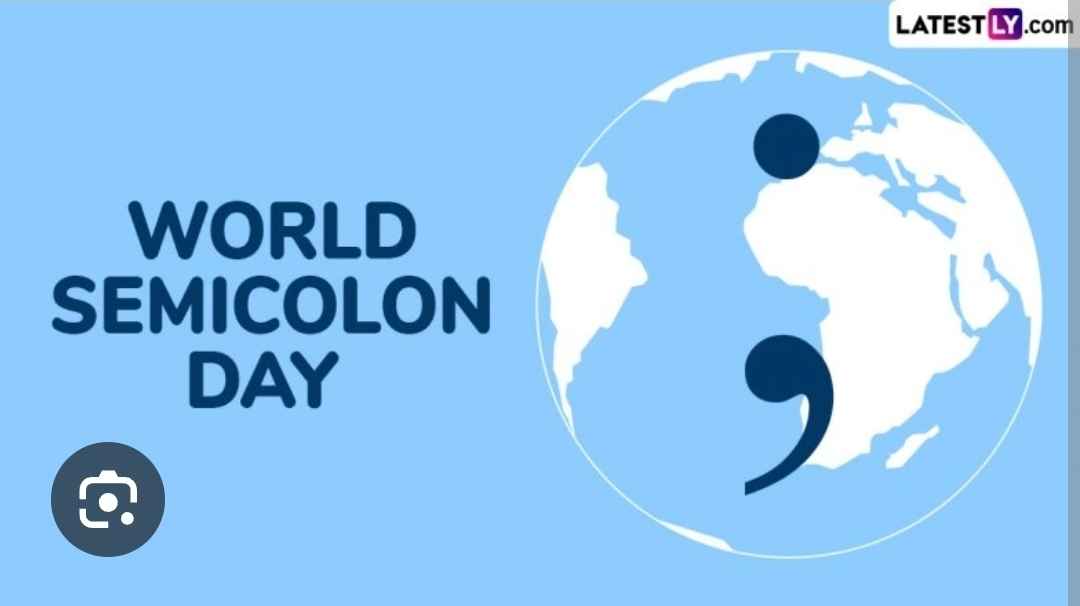
Every April 16, the world commemorates World Semicolon Day, a movement born from Amy Bleuel’s personal pain through the Project Semicolon campaign. She lost her father to suicide, and from that loss, she ignited hope for millions. The simple punctuation mark “;” became a symbol of resistance: my story isn’t finished.
In grammar, a semicolon is a pause, not an end. In life, it’s a decision. A decision to persevere, even though your chest feels like it’s collapsing. From a psychological perspective, this choice is not simple. According to Viktor Frankl, humans are able to endure suffering as long as they still find meaning. The semicolon symbolizes the meaning that even in pain, life is still worth continuing.
However, in many places, including Indonesia, mental wounds are often misunderstood. Depression is considered a sign of weak faith, anxiety is considered a lack of gratitude. However, in modern psychological studies, such as those developed by Martin Seligman, mental health is not simply a matter of strength or weakness, but of emotional balance, the meaning of life, and social relationships.
This is where the meaning of the semicolon resonates with the trilogy of consciousness initiated by Shaykh Al Zaytun.
Philosophical consciousness teaches that life is not simply a series of events, but a journey of meaning. When someone chooses “;,” they realize that their life is not yet finished. They are not merely victims of circumstances, but authors who still hold the pen of their destiny.
Ecological consciousness reminds us that humans do not live alone. They are part of the universe, of an interconnected environment. Even at their lowest point, there is always room to return: to nature, to a calmer rhythm of life, to the breath that still faithfully accompanies them.
Social consciousness affirms that no human being should struggle alone. The semicolon becomes a universal language of solidarity. A small mark on the wrist, a single post on social media, or just a simple sentence: “I’m here for you.” It could be the reason someone chooses to survive today.
Deeper, the semicolon is the quietest form of gratitude. Not gratitude for an easy life, but gratitude for still being given the opportunity to continue. In psychology, the practice of gratitude has been shown to improve mental well-being, reduce depression, and strengthen emotional resilience. Gratitude doesn’t mean denying the pain, but accepting that behind the pain, there is still life worth preserving.
World Health Organization data shows that suicide is one of the leading causes of death among young people worldwide. These numbers aren’t just statistics, but stories cut short too soon. Semicolon Day aims to change that: transforming stigma into empathy, silence into conversation, and despair into hope.
In Indonesia, that small step can start with speaking up. Services like Sejiwa 119 (ext. 8) and LISA Suara Jiwa provide a bridge for those who need a safe space to be heard. Because sometimes, one conversation can save a life.
Ultimately, life isn’t about how many times we almost give up, but how often we choose to continue. A semicolon isn’t a sign of weakness. It’s the truest form of courage.
If you or someone you know finds yourself at that point today, remember:
The sentence isn’t finished.
There are still beautiful paragraphs waiting to be written.**
Indonesia, April 16, 2026
———-